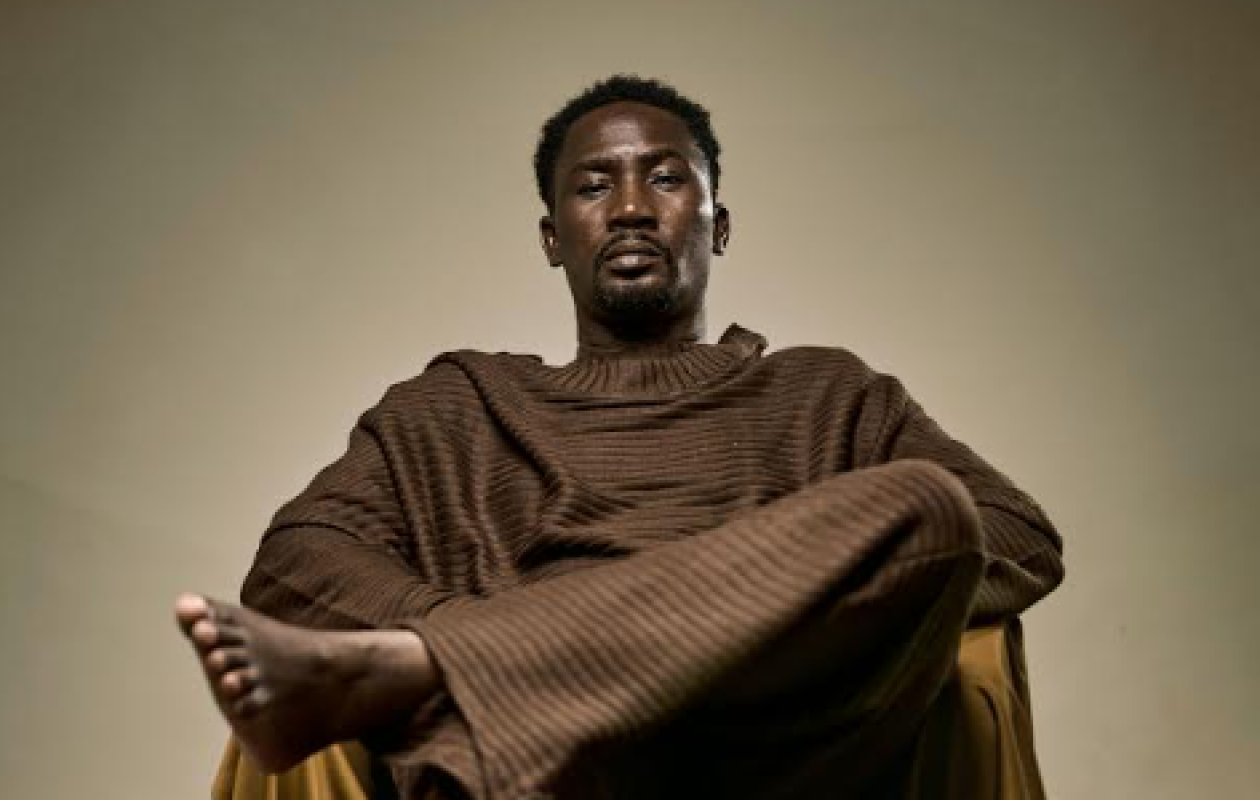
Alif Naaba signe son grand retour : « Nifato est un pont entre les générations »
After several years without a new album, Alif Naaba returns with Nifato , a project that marks a new stage in his career. Between musical openness, transmission, the defense of African languages, a look at society, and reflections on the evolution of the music industry, the Burkinabè artist revisits the genesis of an album conceived as a bridge between generations.
After several years without an album, you're back with Nifato . What did you want to convey through this project?
Nifato is first and foremost a new perspective. It's not just a new album; it's a new way of approaching my music, my audience, and the world around me. Over time, I felt the need to reinvent myself, to broaden my audience, while remaining true to what constitutes my artistic identity.
An artist cannot remain static. They must observe their era, listen to what is happening around them, understand new sensibilities, and be willing to question themselves. I often compare this to software that is regularly updated: if you stop evolving, you end up speaking only to those who already know you.
With Nifato , I wanted to create a dialogue between those who have followed me for a long time and a new generation discovering me today. It wasn't about changing direction, but about bringing new colors to my universe, new sonic textures, without losing the essence.
What remains central is my voice, my writing, and my way of telling stories. I can explore different musical worlds, but my identity remains. That's precisely what interests me: evolving without denying myself.
The title Nifato seems to summarize this desire for openness. Why this choice?
Initially, the album was going to have a different name. But as the work progressed, Nifato emerged naturally because it perfectly captured the spirit of the project. This word conveys the idea of passage, of connection between different generations, different audiences, and different sensibilities. That's what I wanted to do with this album: build bridges.
Today, Africa has become a major cultural space. Our rhythms, our languages, our stories are attracting increasing interest from people around the world. For a long time, we looked outward. I think it's now important to produce works that speak first and foremost to our continent, while also having the capacity to travel beyond our borders.
The album offers more contemporary sounds while retaining your signature style. How did you find this balance?
I've never sought to follow a trend simply because it works. Artistic choices must always have meaning. A collaboration or a new musical style must serve the emotion of a song.
Since the beginning of my career, I have always championed musical fusion. I grew up with many influences, notably reggae, which continues to inform some of my compositions. For me, there is no contradiction between openness and identity.
Music is a living language. A language evolves, it welcomes new words, new expressions, but it retains its history. That's exactly what I wanted to do with Nifato : enrich my musical vocabulary while preserving my core identity.
The most important thing is always the emotion. Regardless of the instruments or styles used, a song must touch people. It is this search for sincerity that guides my work.
You have collaborated with artists like Kayawoto and Meta. How do you choose your collaborations?
I never choose an artist solely because they are popular or because a collaboration might be interesting in terms of communication. An artistic encounter must, above all, have meaning.
With Kayawoto, there was a desire to create a dialogue between two generations. He represents a generation with its own codes, energy, and way of telling stories about the world. I think it's important for generations to be able to meet and learn from each other. With Meta, the connection was made through a shared sensibility, a common vision of music, and a shared understanding of Africa's place in the world.
A collaboration must contribute something. It must enrich a work, not simply respond to a logic of visibility.
Your songs speak of love, human relationships, but also of the Sahel, migration, and social realities. What role does this dimension play in your writing?
I don't try to confine an album to a single theme. Life is made up of many realities, and music should reflect that diversity. There are obviously love songs because human relationships are a constant source of inspiration. But there are also songs about our time, the challenges our societies face, and the issues that concern us all.
I come from a country with complex realities, like many countries in the Sahel. As an artist, I don't claim to offer political solutions. My role is rather to bear witness, to recount what I see and what I feel.
When I talk about migration, for example, I'm not trying to judge. Behind every departure, there's a story, a dream, sacrifices, sometimes disillusionment. Above all, they are human stories. But music must also bring hope. It must allow us to reflect, but also to breathe.
You continue to sing in Mooré while having an international audience. Why this importance given to the language?
Moore is deeply part of my identity. It's the language I grew up speaking, the one in which certain emotions find their most natural expression. I've never considered singing in an African language to be an obstacle to an international career. On the contrary, it's often what gives an artist a strong personality.
Today, many people listen to songs in languages they don't necessarily understand. But they feel the emotion, the energy, the intention. Music transcends borders when it's sincere. Defending our languages is also defending our heritage. They carry our memory, our history, and our way of seeing the world.
How did the creation of Nifato unfold?
An album is always a long process. Some songs had existed for several years, others were born more recently. Little by little, I understood that they formed a coherent whole. We worked between Ouagadougou and Paris. This way of creating allows for different perspectives on the production, but the most important thing always remains the artistic vision.
I'm involved in every step: writing, arranging, production choices, mixing, and mastering. Every detail counts because it contributes to the final emotion. I take the time to listen, revisit certain decisions, and sometimes even completely rewrite a track. The audience hears the final result, but behind each song, there's often a lot of research and work.
Artificial intelligence is transforming creative industries today. What is your perspective on this evolution?
I think we need to avoid two extreme positions: believing that artificial intelligence will replace artists or rejecting its use altogether. Like many tools, everything depends on how it's used. AI can help at certain stages, save time, explore ideas, or support a creative process.
But it will never replace human experience. A song doesn't just come from a melody or lyrics. It comes from lived experience, emotion, a personal story. I therefore see AI as a support tool, not a substitute for creation. We must also pay close attention to issues of copyright, remuneration, and the protection of artists.
You are also involved in structuring the African music sector. How do you see its evolution?
We are living through an important period. For a long time, we talked about the potential of African music. Today, that potential is becoming a reality. African artists are gaining visibility, platforms are showing more interest in our music, and international collaborations are multiplying. But there is still much to be built.
A career is not based solely on the talent of an artist. It depends on an entire ecosystem: managers, producers, sound engineers, publishers, media, venues, festivals, collective management organizations and public policies.
We also need to strengthen the movement of artists across the continent. It's still sometimes easier for an African artist to perform in Europe than in a neighboring country. We need to build a genuine African music market. I remain optimistic because a new generation of professionals is emerging with a great deal of energy, skills, and ambition.
After Nifato , what message do you wish to leave with the public?
I simply hope that everyone can find something in this album. A song that evokes a memory, a melody that makes you want to dance, lyrics that make you think. An album truly comes alive when it connects with its audience. Each person makes it their own, bringing their own story and emotions to it.
Through Nifato , I wanted to show that it is possible to evolve without abandoning who you are. You can embrace new influences, engage with your era, and experiment while remaining true to your values.
This album represents a new stage in my journey. I continue to learn, observe, and create. As long as this curiosity remains, I will continue to make music with the same passion.








Commentaires (0)
Participer à la Discussion
Règles de la communauté
💡 Astuce : Utilisez des emojis depuis votre téléphone ou le module emoji ci-dessous. Cliquez sur GIF pour ajouter un GIF animé. Collez un lien X/Twitter, TikTok ou Instagram pour l'afficher automatiquement.
Se connecter
Commentez avec votre profil, votre photo, et soyez averti des réponses.