Genre et santé au Sénégal : Le ministère valide de nouveaux outils stratégiques pour renforcer l’équité et l’égalité
In Senegal, the implementation of the National Strategy for Equity and Gender Equality (SNEEG 2016-2026) is a major lever for sustainably integrating equity, equality and inclusion into public policies.
In this context, the Ministry of Health and Public Hygiene (MSHP) is strengthening its commitment to the institutionalization of gender within the health sector.
This dynamic aims to guarantee equal access to opportunities, rights, and health services without distinction based on sex, age, background, residence, social class, or cultural origin. This ambition has been championed for several years by the Gender Unit of the Ministry of Health and Public Hygiene (MSHP), through the systematic integration of the gender dimension into the sector's policies, programs, plans, and budgets.
Three strategic documents at the heart of the process
Following the evaluation of the first Gender Institutionalization Plan (GIP 2016-2020), which was extended until 2023, a new strategic cycle was launched. This resulted in the development of three major documents: the 2024 Gender Indicators Report, the 2025-2029 Gender Institutionalization Plan, and the 2025-2029 Communication Plan for Gender Institutionalization.
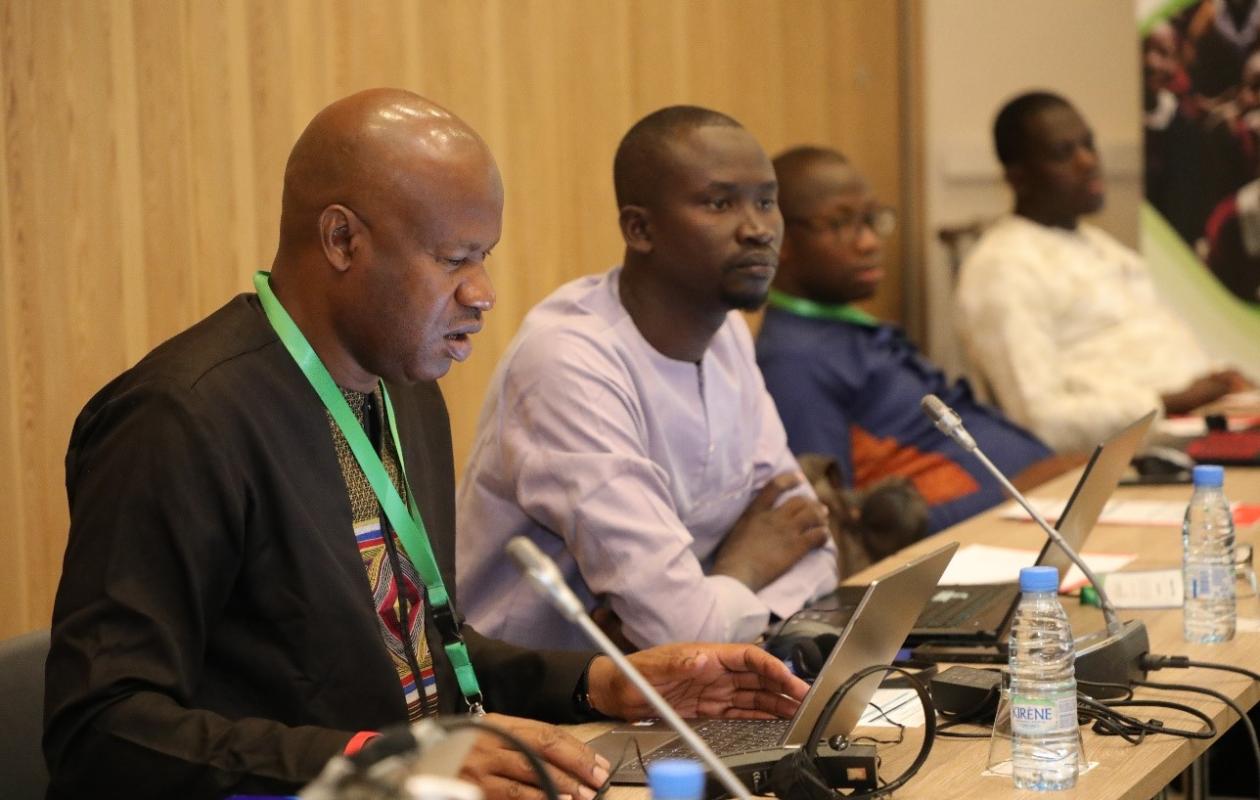
These documents are subject to institutional validation coupled with their dissemination, during the workshop held this Monday, December 29, 2025, under the effective chairmanship of the Secretary General of the MSHP.
Significant inequalities revealed by gender indicators
Presenting the main findings of the 2024 report, the coordinator of the Gender Unit of the MSHP, Aminata Diouf Ndiaye, highlighted persistent disparities, particularly in health governance.
"Out of 113 positions of responsibility, only 13 are occupied by women," she revealed, highlighting a marked male dominance at the central, regional and district health levels.
In the area of reproductive health, the report also notes significant territorial inequalities.
Indeed, gynecologists and obstetricians are mostly concentrated in Dakar, as are midwives, who are nevertheless essential in the fight against maternal morbidity and mortality in the most remote areas.
Tuberculosis, HIV: disparities according to gender
Gender inequalities are also evident in the fight against certain diseases. For tuberculosis, the prevalence is male, with a higher number of men affected. In contrast, for HIV, women achieve better outcomes.
According to the coordinator of the Gender Unit, this trend is explained by women's more regular access to reproductive health services, through programs to prevent mother-to-child transmission.
Conversely, men may encounter obstacles related to socio-cultural norms or their workload, thus limiting their access to health services.
Recommendations for greater fairness
In light of these findings, several recommendations have been made. These include, among other things, rebalancing the distribution of healthcare personnel, particularly gynecologists and midwives, with priority given to regions where maternal mortality remains high.
The Gender Unit also stresses the need to retain medical staff in remote areas in order to ensure sustainable and equitable coverage.
Another key recommendation is to better consider burden factors and social determinants such as education level, income quintile, and place of residence. These factors strongly influence access to and use of health services and must be systematically integrated into sector planning and budgeting.
Through the validation of these new strategic tools, the MSHP reaffirms its commitment to building a more equitable, inclusive and gender-sensitive health system in line with national economic and social development guidelines.






















Commentaires (2)
Participer à la Discussion
Règles de la communauté :
💡 Astuce : Utilisez des emojis depuis votre téléphone ou le module emoji ci-dessous. Cliquez sur GIF pour ajouter un GIF animé. Collez un lien X/Twitter ou TikTok pour l'afficher automatiquement.