« Le métier est mort » : Le cri du cœur déchirant des photographes de presse sénégalais !
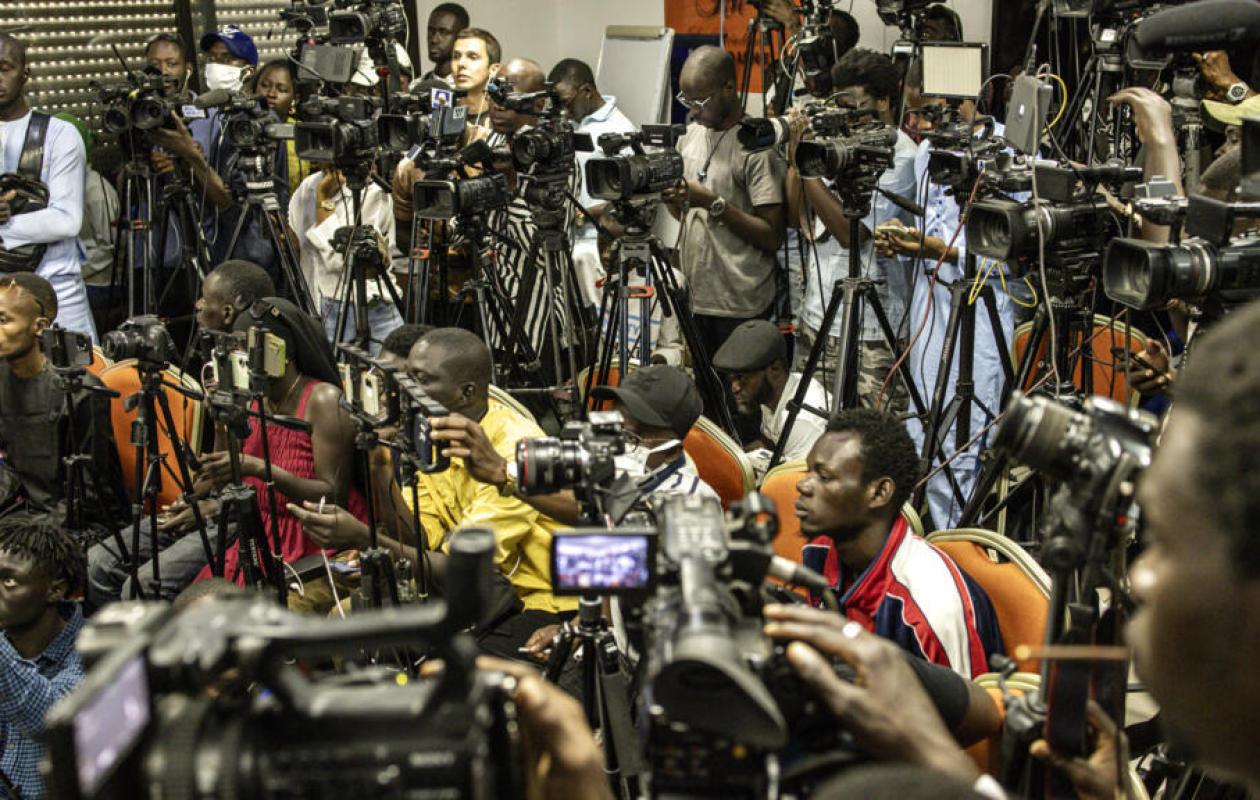
To mark World Press Freedom Day this Sunday, May 3rd, Seneweb highlights the situation of photojournalists in Senegal. Between persistent job insecurity, shrinking access to the field, and digital transformations, the profession seems to be gradually losing its place within newsrooms.
A picture is worth a thousand words, as the saying goes. In the world of media, and especially in journalism, images have always held a unique place. In print media, they capture the moment, give substance to the event, and extend the written narrative. Yet, in Senegal, those who create them struggle to find their place. They are becoming increasingly invisible in Senegalese newsrooms. "The profession of photography is almost dead in newsrooms," says Abdou Cissé, a photojournalist at the daily newspaper *Le Quotidien*. This professional, with over 20 years of experience, emphasizes the scarcity of trained professionals. "Those who can truly be called photojournalists are very few," insists Abdou Cissé. According to him, the problem lies not only in the number of photojournalists, but also in the lack of professionalism among some. "Many don't know how to identify information," he explains. This criticism points to the very nature of photojournalism, where the image is not merely illustrative, but must sometimes reveal what the text leaves unsaid. "A photo must speak. It must allow someone who wasn't there to understand the event," he emphasizes. But for Cissé, "many photographers lack this journalistic eye."
Ndèye Seyni, a photographer for the national daily newspaper *Le Soleil*, shares this observation, pointing to the lack of training for young people. "The profession is currently unstructured, particularly because young people are no longer receiving sufficient training," she states.
Furthermore, the demands of the profession are now clashing with another, equally bleak reality. In many newsrooms, the use of stock photos and search engines has become commonplace. "People prefer to go on Google rather than send a photographer into the field," laments Abdou Cissé. He believes this practice reflects a lack of respect for the profession and contributes to its gradual disappearance. At some public events, the presence of photojournalists is even becoming exceptional. Yet, according to Ndèye Seyni, the perspective of the Senegalese photographer remains irreplaceable during certain events, as they are embedded in a social and cultural context that an outsider's viewpoint doesn't necessarily capture. "These images don't always reflect local reality," she insists.
.
Raymond Khoury also directly links this lack of photographers in some newsrooms to the economic choices made by media outlets. "Local newsrooms no longer want to invest in photographers," explains this former press agency employee. And for those who still work in the field, conditions remain difficult. "It's very complicated to make a living from this profession," Raymond confides. He mentions late payments, sometimes several months after publication, and a lack of visibility regarding image sales. Moreover, in some cases, photographers work without contracts, without guarantees, and without coverage of field expenses. Abdou Cissé also mentions a lack of recognition, particularly in private newsrooms where photojournalists are undervalued.
Adding to this precarious situation is the impact of digital technology. Smartphones and social media have profoundly changed image production. "Today, some journalists prefer to take the photos themselves," observes Abdou Cissé. A practical solution, but one that raises questions about the quality of the final product.
“You can take a picture, but that doesn’t replace a trained eye,” replies Ndèye Seyni. She emphasizes the difference between producing a photograph and producing visual information. Adding to these problems is the confusion between press photography and event photography. Weddings, baptisms, ceremonies… Some photographers move seamlessly from one world to the other, even though “the requirements are not the same,” reminds Ndèye Seyni, who stresses the need for a journalistic approach to image analysis.
All these difficulties are reshaping the landscape of photojournalism in Senegal. Indeed, the profession is weakened on several fronts. And yet, images have never been so central to the dissemination of information, especially in this age of disinformation.

![[ EXCLUSIF] Escroquerie au visa : Ass Dione passe aux aveux, le montant du préjudice dévoilé](https://image.seneweb.com/content/news/2026-21-21//thumb_1260x800_6a0e4fa45e2f9_JtdXe63zlf.jpg)










Commentaires (1)
Participer à la Discussion
Règles de la communauté :
💡 Astuce : Utilisez des emojis depuis votre téléphone ou le module emoji ci-dessous. Cliquez sur GIF pour ajouter un GIF animé. Collez un lien X/Twitter, TikTok ou Instagram pour l'afficher automatiquement.