Centrafrique : des réfugiées soudanaises accouchent sans assistance médicale
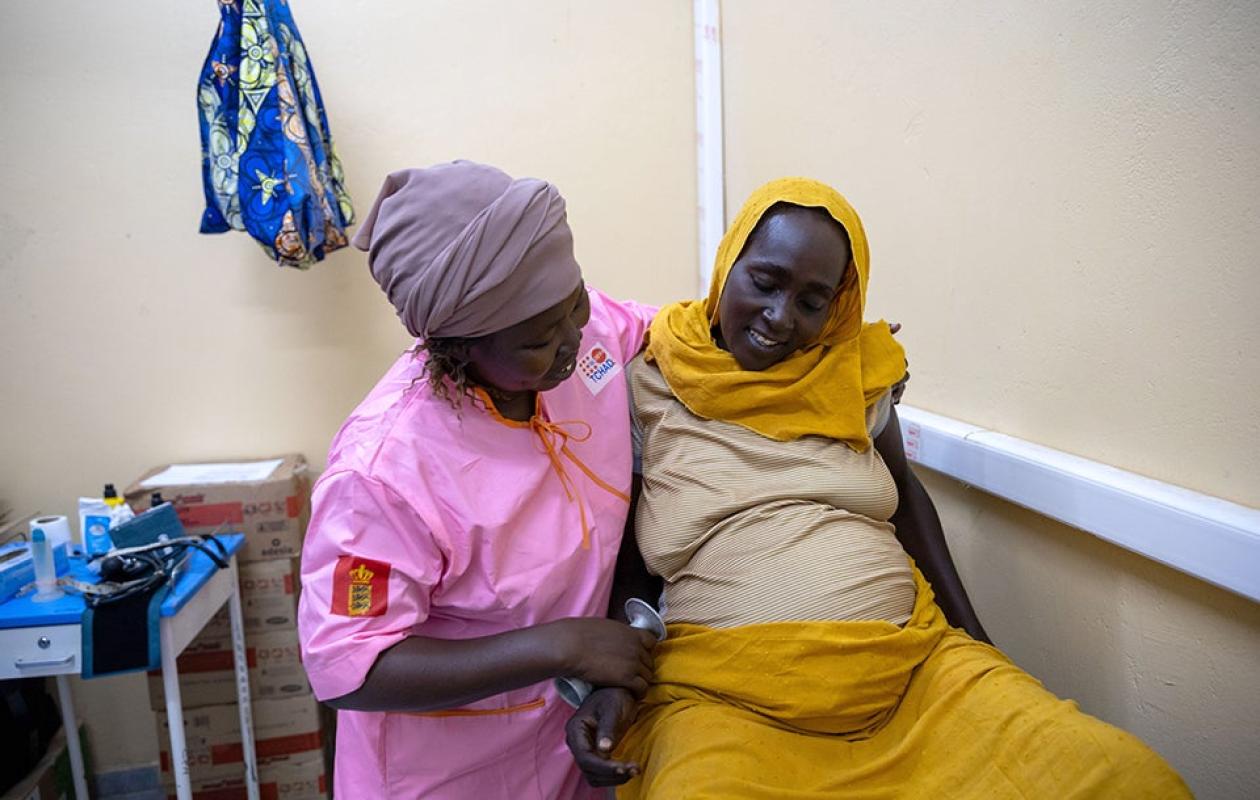
In Birao, in the northeast of the Central African Republic, refugee women from Sudan are now giving birth in extremely precarious conditions.
Maude Ahmad Fadala, living in the Korsi camp, recounts giving birth alone, on the side of a road, after several hours of pain.
"I didn't know if my baby was alive," she confides. "I don't know how the nurses check if the newborn is alive, if it cries or not. I was lost. My baby and I were sick."
Weakened by an infection and unable to reach a healthcare facility, she says she experienced childbirth without any assistance: "There was no doctor, no midwife. I don't know how we survived."
This situation is not isolated in a region where access to prenatal care remains limited. According to local medical teams, many women arrive at the hospital in advanced stages of labor, without prior monitoring. "All the women who don't come to prenatal appointments... when they come here to give birth, it's an ordeal; it's either the baby or the mother who suffers," explains Delphine Zanabe, a midwife at the Birao District Hospital.
In this context, health services have been weakened by funding cuts affecting several programs supported by the United Nations Population Fund (UNFPA). Several support services for pregnant women have been closed, resulting in the elimination of midwifery positions and the disappearance of transportation services to healthcare centers.
“Budget cuts have reduced women’s access to maternal health services,” emphasizes Marie Justine Mamba Ibingui, a specialist in gender-based violence at UNFPA. “Today, women no longer have access to these services. Consequently, some are at risk of dying in pregnancies that are not receiving medical care.”
For humanitarian teams, the situation is particularly worrying in a region already marked by years of instability. The head of UNFPA in the Central African Republic believes that "the risk of maternal mortality will increase if there is no solution," in a context where resources remain very limited.
The figures illustrate this extreme vulnerability: the country records approximately 829 maternal deaths per 100,000 live births, one of the highest rates in the world, according to the United Nations. The World Health Organization points out that the majority of maternal deaths occur in contexts of conflict or institutional fragility.
Since the outbreak of the Sudanese Civil War, the arrival of refugees in northeastern Central African Republic has further increased the pressure on already overwhelmed infrastructure. In Birao, health facilities must now care for both the local population and tens of thousands of refugees.
Several midwives have also lost their jobs following the reduction in international funding, exacerbating the shortage of medical personnel. One of them, forced to leave her post, confided: "The children born in my arms... I abandoned them just like that."
On the ground, the consequences are immediate: untreated infections, unattended home births, and delayed obstetric emergencies. According to United Nations estimates, more than 40% of births in the Central African Republic still take place outside of medical facilities.














Commentaires (0)
Participer à la Discussion
Règles de la communauté :
💡 Astuce : Utilisez des emojis depuis votre téléphone ou le module emoji ci-dessous. Cliquez sur GIF pour ajouter un GIF animé. Collez un lien X/Twitter, TikTok ou Instagram pour l'afficher automatiquement.