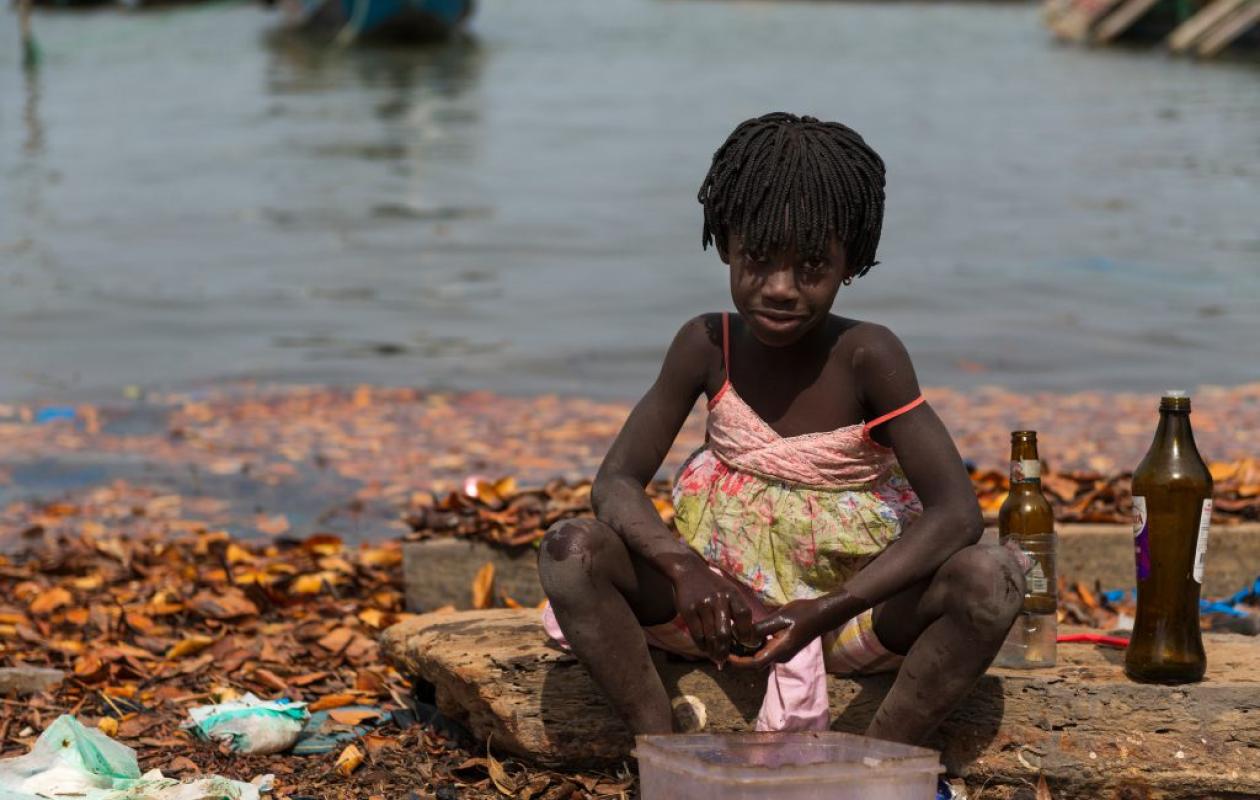
Guinée-Bissau : plus des trois quarts des enfants sont victimes de violences domestiques
In Guinea-Bissau, more than three-quarters of children are victims of domestic violence. This was announced by the acting director of SOS Children's Villages. According to the newspaper Odemocrata, Domingos António Francisco Gomes revealed that 77% of Guinean children aged 0 to 14 have already been victims of domestic violence.
The data presented reveals that 20% suffer corporal punishment, 48% are victims of psychological violence and 9% face other forms of violence.
According to the website of the Guinean-Bissau Journal, Domingos António Francisco Gomes made these statements during the launch of the "Family School" project. In his speech, he explained that the social context in which this project is situated requires structured responses, supported by data and concrete evidence.
"Therefore, we believe it is important to present national statistical data that illustrate the level of vulnerability of Guinean children and families," he said.
The representative from SOS Children's Villages also mentioned that the latest report from the United Nations Children's Fund (UNICEF) on the analysis of the situation of children's rights and well-being in Guinea-Bissau indicates that 97% of children under 18 suffer at least one deprivation, while 75% suffer three or more. The report also highlights that 52% of children simultaneously experience four deprivations.
He added that four out of ten Guinean children live in absolute poverty, stressing that these deprivations are mainly linked to living conditions, housing and basic sanitation.
Mr. Gomes also warned that most cases of rape and other forms of sexual violence go unreported to the relevant authorities. In some cases, he said, girls are forced to marry their abusers or return to the families and communities where the crimes took place, causing them further social and psychological harm.
The acting director of SOS Children's Villages also denounced what he considers a disregard for current legislation, a situation which, according to him, contributes to increasing discrimination and social exclusion, particularly for children with special needs, who face significant difficulties within their families, their communities and the social system itself.
According to O Democrata, the Minister of Women and Social Solidarity, Cadi Florença Dabó Correia, stated on this occasion that the family constitutes the first space for the care, education and protection of the child.
"It is within the family that values, social and emotional skills, as well as the foundations for harmonious coexistence in society, are built," she said.
The governor acknowledged that many families face significant challenges related to economic, social, and educational vulnerabilities, which have a direct impact on the well-being and development of children and young people.
"The Ministry of Women and Social Solidarity is firmly convinced that child protection cannot be ensured solely through institutional interventions. It requires an integrated approach, based on prevention, family education and the active participation of communities," he said.
The minister also reaffirmed that the government of Guinea-Bissau is fully prepared to continue working closely with SOS Children's Villages, as well as with its national and international partners, with a view to strengthening public social protection policies, promoting children's rights and moving towards the empowerment of families.

















Commentaires (6)
Participer à la Discussion
Règles de la communauté :
💡 Astuce : Utilisez des emojis depuis votre téléphone ou le module emoji ci-dessous. Cliquez sur GIF pour ajouter un GIF animé. Collez un lien X/Twitter, TikTok ou Instagram pour l'afficher automatiquement.