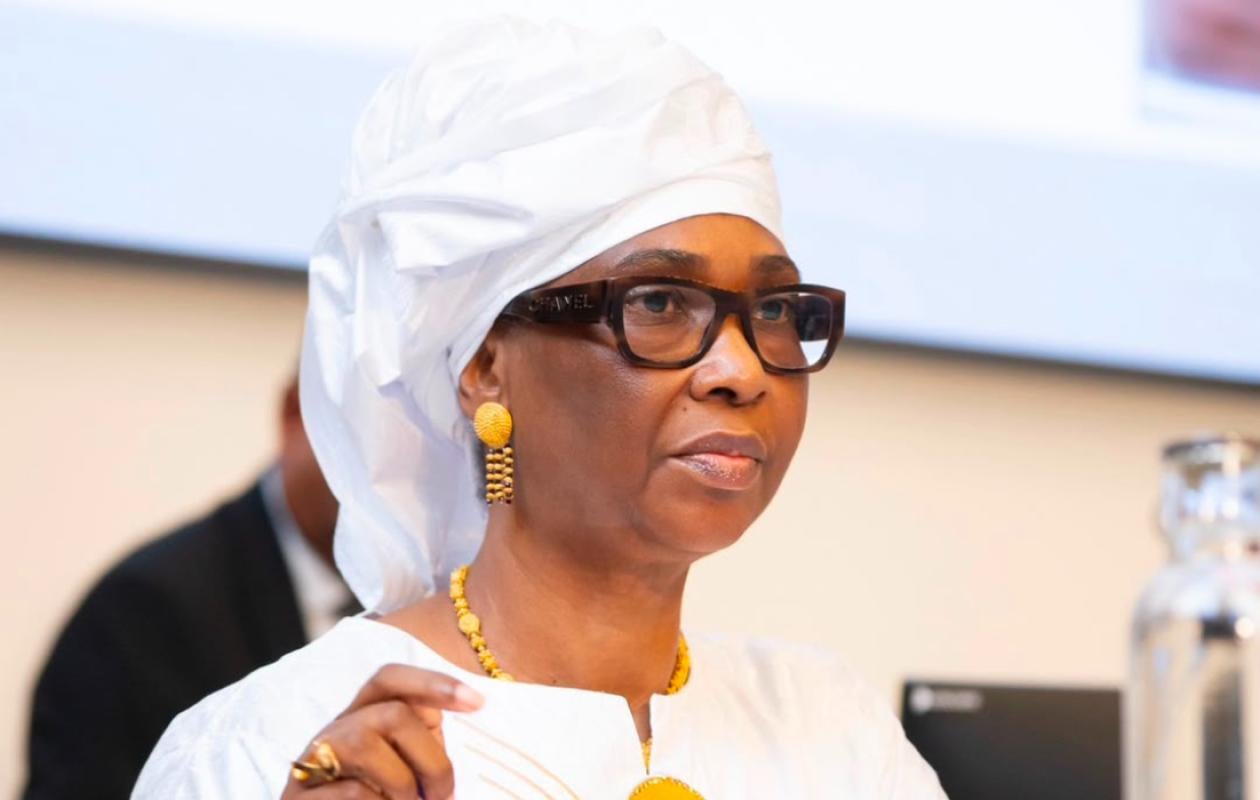
OIF : après les auditions, Coumba Bâ s’impose progressivement comme la candidature de compromis
Behind closed doors, the hearings of the four candidates to succeed Louise Mushikiwabo probably reshuffled the cards more than they fixed them.
Although no serious observer is yet willing to predict the outcome of a vote that will only be decided in November by the heads of state and government, several African diplomats present at the Francophonie Ministerial Conference nevertheless believe that the Mauritanian candidate, Dr. Coumba Bâ, has emerged from the discussions with strengthened political capital.
Far from grandstanding, her intervention was most convincing due to her keen understanding of the expectations of member states and governments, her restraint, and her ability to maintain a compelling political stance without seeking confrontation. Where some candidates focused on a series of announcements or spectacular proposals, the Mauritanian candidate prioritized a methodological approach centered on governance, institutional reform, and the strategic repositioning of the OIF's multilateral dimension.
According to several diplomats who attended the hearings, this approach precisely matches the expectations of a significant portion of member states. "Many are now looking less for a charismatic figure than for a leader capable of uniting them," one of them summarized. "The Francophonie needs a non-divisive figure now more than ever," he added.
This perception seems all the more significant given that the hearing process fostered credibility more than declarations of intent. The ministers' questions focused as much on management capacity as on political vision, the methods of financing reforms, and the organization's positioning in the face of current geopolitical divisions.
In this regard, several observers believe that Coumba Bâ has successfully avoided two pitfalls: a complete break with the organization's record, as well as a simple defense of the status quo. Her discourse has been consistent with reformist approaches, proposing a Francophonie more focused on results, youth, digital technology, culture, the promotion of French, the economy, and crisis prevention.
This stance could allow him to gradually expand his support base beyond his natural circle.
Facing her, Louise Mushikiwabo obviously retains considerable advantages. Her experience leading the organization, her knowledge of its internal mechanisms, and the networks she has built over the past eight years make her a naturally strong candidate. Her record could convince some states, particularly those committed to institutional stability. Even if this stability requires a third term, which, according to sources in Paris, is proving difficult to accept.
But some diplomats also acknowledge that the opening of this first real competition profoundly changes the dynamics. In a now open election, the authority of the office no longer automatically guarantees the reappointment of its holder.
The hearings thus appear to have highlighted a new reality: the campaign is no longer simply a matter of continuity versus change. It now focuses on the candidates' ability to unite very different political spheres within a Francophonie beset by international crises, regional tensions, and growing expectations of effectiveness.
It is precisely on this ground that the Mauritanian candidacy appears to have scored points.
Several African diplomats interviewed believe that Dr. Coumba Bâ is currently the figure most likely to forge a broad compromise between the various perspectives within the Francophone world. Her close ties to African realities, her experience with multilateral mechanisms, and her perceived balanced stance on key international issues reinforce this perception.
However, it would be premature to draw a definitive conclusion.
Between now and the Siem Reap Summit, the diplomatic balance will continue to shift based on bilateral consultations, political decisions, and the strategies of the capitals. The hearings were just one step, certainly important, but not decisive.
One thing seems to emerge from this first sequence: while many still saw a few weeks ago the race being played mainly around the outgoing Secretary General, the candidacy of Coumba Bâ is now considered, by several diplomats present in Paris, as one of the most serious to lead the next stage of the Francophonie.















Commentaires (8)
Participer à la Discussion
Règles de la communauté
💡 Astuce : Utilisez des emojis depuis votre téléphone ou le module emoji ci-dessous. Cliquez sur GIF pour ajouter un GIF animé. Collez un lien X/Twitter, TikTok ou Instagram pour l'afficher automatiquement.
Se connecter
Commentez avec votre profil, votre photo, et soyez averti des réponses.