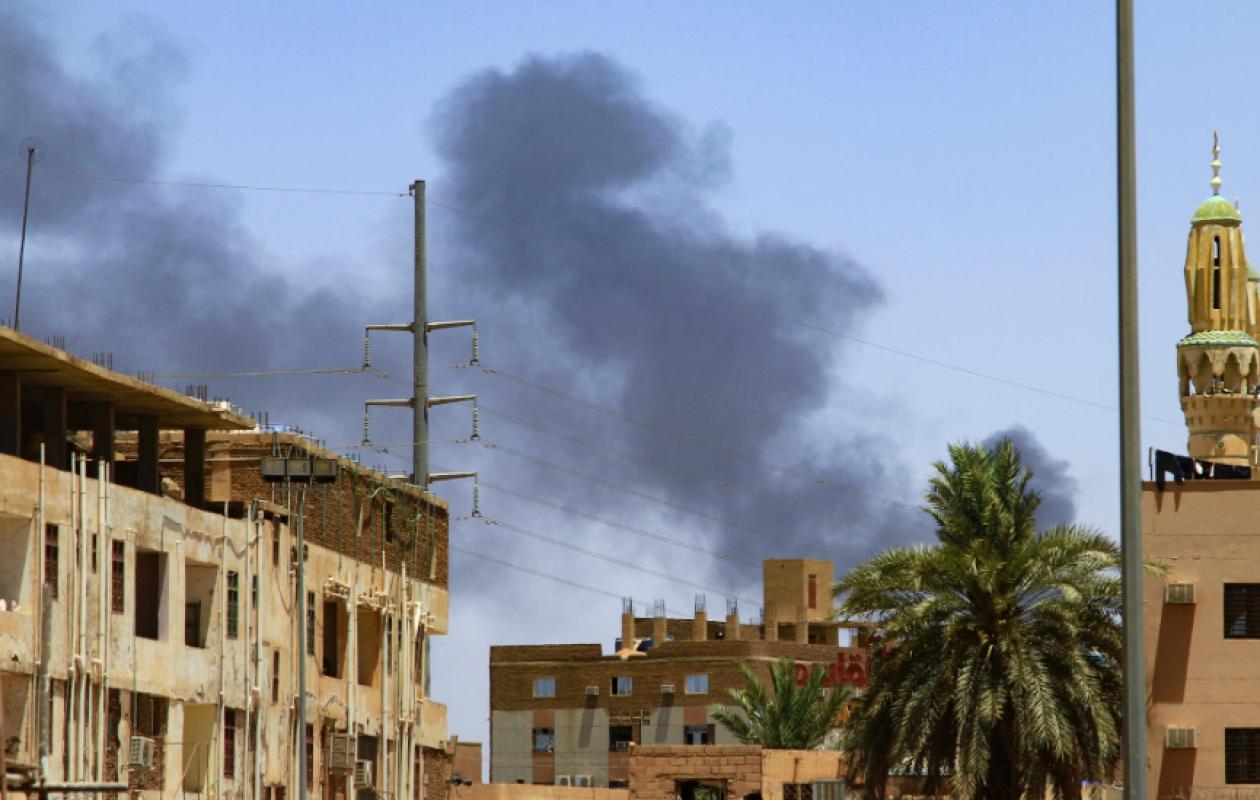
Soudan : chronologie de l’effondrement du pays !
In 1989, General Omar al-Bashir seized power by force. He established a repressive regime based on two pillars: the army and Islamist networks. It was in this context that an armed rebellion emerged in Darfur, beginning in 2003. Groups from long-marginalized communities rose up against the central government. Al-Bashir's response was brutal: he armed local Arab militias, the Janjaweed , to crush the uprising.
In 2011, after decades of civil war, South Sudan seceded. The country found itself with two distinct armed forces: on one side, the Janjaweed , rebranded by al-Bashir as the Rapid Support Forces (RSF) , under the command of Mohammed Hamdan Daglo, known as Hemedti ; on the other, the regular army , led by General Abdel Fattah al-Burhan. This military duality, never truly resolved, would become the initial source of the ensuing chaos.
In 2019, a massive popular uprising swept away the al-Bashir regime. Al-Burhan then emerged as the country's strongman, governing alongside Hemedti. But the two generals quickly betrayed their commitments: the transition to civilian rule was suspended. The Sudanese people, once again, took to the streets to demand democracy.
Faced with popular pressure, Al-Burhan decided in 2020 to hand power back to the people, but on one essential condition: the integration of the Rapid Support Forces (RSF) into the regular army, placing them under his sole authority. This is where the rifts began, because Hemedti already had his own men, operational autonomy, and control over a considerable portion of the country's resources, particularly oil; he had gradually built himself into a veritable parallel power. In other words, he was, in a sense, the president of a country. Abandoning all of this to submit to Al-Burhan's orders amounted to signing his own political capitulation.
Hemedti crossed the Rubicon and committed his forces to a war against the regular army. The dream of a peaceful Sudan vanished, giving way to a conflict for which the Sudanese people, once again, paid the heaviest price.
Sudan is not just a country at war, it is a territory of exceptional strategic and economic value, which explains why its conflict extends far beyond its borders.
A crossroads of resources and routes: Africa's third-largest gold producer, the meeting point of the Blue Nile and the White Nile, and a crucial passage between Africa and the Middle East, Sudan possesses rare advantages. Ten percent of global maritime traffic passes through the Bab el-Mandeb Strait , on its immediate periphery. As for the Blue Nile, Africa's longest river, it represents a vital artery upon which Egypt depends for its water supply. Such a territory was bound to attract covetous eyes.
Foreign powers with divergent interests: Several external actors play an active role in the conflict, by arming, financing or supporting one or the other of the belligerents.
The United Arab Emirates alone embodies the complexity of these power struggles: accused of being the main financier of Mohammed Hamdan Daglo, also known as Hemedti's, Rapid Support Forces (RSF) through the massive purchase of Sudanese gold, they simultaneously maintain concessions in Sudanese ports that link them to Abdel Fattah Al-Burhan's regular forces. A foot in both camps.
Ethiopia , for its part, only intervenes according to its own interests, without a clear or consistent stance .
Egypt cautiously supports the regular army , which it sees as the traditional guarantor of Sudanese stability and therefore, of the security of its access to the Nile.
Russia may be playing the most calculated game. Present since 2017 under the name Wagner, now renamed Africa Corps, the Kremlin obtained gold concessions in exchange for its support of al-Bashir's regime. Since 2023, Wagner has aligned itself with Hemedti's Special Reform Forces (SRF), supplying them with modern weapons from its African bases. At the same time, Moscow is believed to have negotiated with the opposing side: General al-Burhan was reportedly offered Russian military assistance in exchange for establishing a naval base in Port Sudan on the Red Sea.
Behind these geopolitical maneuvers, one reality is undeniable: the leaders are waging war, and it is the population that pays the price. Sudan has become a chessboard for foreign ambitions, while millions of civilians live under bombs, in exile, or in famine.












Commentaires (7)
Participer à la Discussion
Règles de la communauté :
💡 Astuce : Utilisez des emojis depuis votre téléphone ou le module emoji ci-dessous. Cliquez sur GIF pour ajouter un GIF animé. Collez un lien X/Twitter, TikTok ou Instagram pour l'afficher automatiquement.