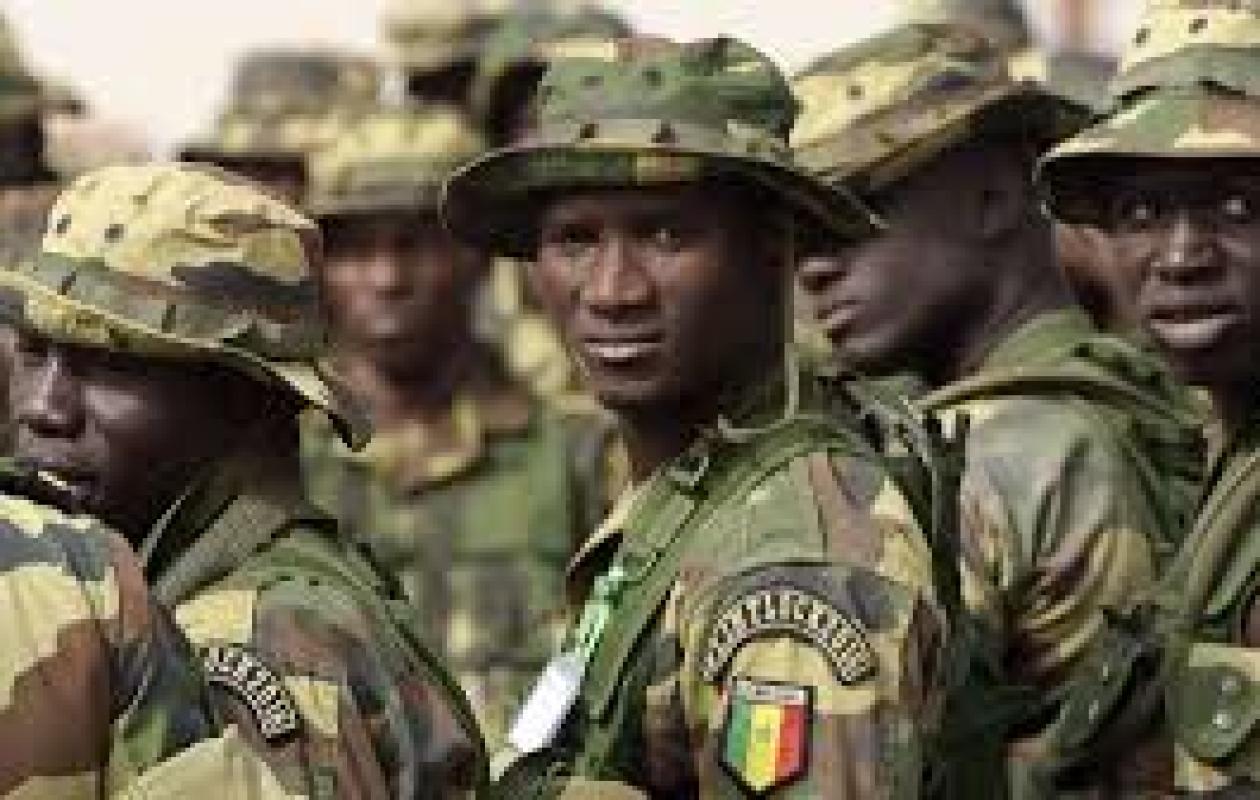
Armée-nation au Sénégal : que reste-t-il du pacte en 2026 ? (Par Amadou Moctar Ann)
In West Africa, where eight military coups disrupted the constitutional order between 2020 and 2023, Senegal stands out as an exception. Since independence, its armed forces have never overthrown a civilian government. This seemingly commonplace fact is actually the product of a carefully cultivated political pact: the concept of the army-nation, inherited from Senghor and revived today by President Bassirou Diomaye Faye. However, in 2026, this pact is being tested by new threats: cross-border terrorism, the reshaping of the regional architecture, rising youth expectations, and so on. What remains of this founding ideal, and under what conditions can it survive?
There are concepts that transcend generations without losing their relevance, because they embody a question that each era reformulates in its own way: what is the purpose of an army, and for whom? In 2026, the concept of the nation-army returns to the forefront of Senegalese public debate with renewed intensity. Not as a ritualistic formula recited during the April 4th parades, but as a deliberate political choice, enshrined in state planning documents, debated in academic circles, and translated into programs aimed at young people.
This resurgence is not insignificant. It occurs within a regional context where, in several neighboring countries, the military institution has ceased to be the servant of the Republic and has become its master. Grasping what the nation-state army truly means (what it meant in the past and what it is asked to accomplish today) requires moving beyond official pronouncements to seek, in political theory as well as in the country's history, the reasons for its persistence and the silent cracks that threaten its coherence.
`
The nation-state: an invention born of revolutions
Before the great revolutions of the 18th century, armies were dynastic instruments, composed of mercenaries or professional soldiers in the service of the prince. The American and French Revolutions brought about a decisive break: the defense of the homeland became the business of all citizens. The nation in arms, according to the formula of the National Convention member Lazare Carnot, was the logical culmination of popular sovereignty. War was no longer the privilege of the lords. It was the duty of the citizen.
This model reached its peak with universal conscription in the 19th and 20th centuries. Compulsory military service became an instrument of national integration in many countries: a common language was learned and solidarity was forged between populations that were otherwise separated.
The theoretical tension: between professionalism and society
The question of the relationship between the armed forces and political society did not originate in Africa. It is as old as political philosophy itself. Plato, in The Republic, already pondered the paradox of the guardians: how can one ensure that those entrusted with the protection of the city do not turn against it? The Latin phrase Quis custodiet ipsos custodes? (Who guards the guardians?) encapsulates a tension that two millennia have not resolved.
It was during the Cold War that this question received its most influential academic formulation. The solution to the guardians' paradox lies in military professionalization: an army that masters its craft, circumscribes its domain, and obeys the political order without interfering. This configuration is embodied by "objective civilian control," which emphasizes "autonomous military professionalism" and opposes the liberal idea of integrating the military into political and institutional life (Huntington, 1957).
The concept of the nation-state as an army, as it has developed in postcolonial African states, represents a third way, born from a dual necessity: to build a national identity within pluralistic societies and to achieve economic development with scarce human resources. The army is not merely a coercive force. It is also a training ground, a place of work, and a symbol.
The contemporary decline of the model and its unexpected return
The end of the Cold War shook the model of the "nation in arms." The suspension of compulsory military service in many countries, the professionalization of armed forces, and the rise of overseas operations distanced the soldier from the ordinary citizen. The military profession became just another job.
However, in 2026, this model experienced an unexpected resurgence. The war in Ukraine, which began in February 2022, brought the issue of general mobilization and the relationship between civil society and the defense effort back to the forefront. Several countries have reinstated, or are considering reinstating, forms of military service. The question of the link between the army and the nation now spans all continents, including Africa, where it arises with particular urgency.
Senegal and its army: a unique relationship
Senegal occupies a unique place in African political history. Since independence, the Senegalese army has never attempted a coup and enjoys a good reputation. This seemingly commonplace fact is actually remarkable on a continent where more than two hundred coup attempts have been recorded between 1950 and 2023.
During the independence celebrations on April 4, 1961, the Senegalese army played a central role in the festivities and helped to embody the image of the new Senegal. President Léopold Sédar Senghor himself considered the military institution a fundamental element of the state under construction (INA, 1963).
This inaugural ceremony was not merely symbolic. After Senegal's independence in 1960, Senghor, supported by his Chief of Staff, General Jean-Alfred Diallo, emphasized the economic and social role the military should play in nation-building. The role of the military in development took on a new dimension after the 1962 political crisis, at the initiative of General Diallo himself (Tiquet, 2016).
In his policy report to the congress of his party, the Senegalese Progressive Union, in Thiès in February 1962, Senghor defined the project as "forming the new Senegalese: a man prepared for action, oriented towards action," an action that should be "united, carried out by and for the entire Nation, within a unanimously agreed upon and implemented national project." (RASEF, 2023) The army was one of the vehicles for this training, along with the school system.
A national melting pot
Senegal is a country marked by ethnic, religious, and regional differences. The army, through the mixing it facilitates, functions as a melting pot: the barracks is one of the few spaces where a young Casamance native interacts daily with a man from Fouta or Baol-Baol in a relationship of equal status.
Born in the momentum of post-independence nation-building, the Senegalese army has always been more than a defense force: it embodies a republican ideal rooted in the people, committed to safeguarding peace as well as improving the living conditions of citizens.
The long history of this report unfolds in several stages. Under the presidency of Abdou Diouf, the economic constraints linked to Structural Adjustment Programs reduced the operational capacity of the armed forces, while the Casamance crisis refocused their mission on internal security. Under Abdoulaye Wade, the state favored public-private partnerships for its major infrastructure projects, with the army intervening only through ad hoc programs such as the Reva or Goana Plans, or during natural disasters.
The turning point came under Macky Sall. With the Emerging Senegal Plan as a backdrop, the army was entrusted with a role in building a modern Senegal, through the strengthening of human and logistical capacities, participation in the construction of infrastructure and a contribution to health, education and agriculture (RTS, 2025).
What is remarkable about this evolution is less the continuity of the concept than the plasticity of its content. From one decade to the next, the nation-state as army has designated different realities: sometimes agricultural projects, sometimes regional security, and sometimes civil-military cooperation. What the concept has retained through these transformations is its role as a link: first between the state and its periphery, then between elites and the population, and finally between institutions and society.
Casamance: the moment of truth
The conflict in Casamance - which has pitted the Movement of Democratic Forces of Casamance (MFDC) against the central state since 1982, and remains the longest armed conflict in West Africa - constitutes the most severe test of the Senegalese army-nation model (ISS Africa, 2024).
By 2026, the situation was calming down, though not fully resolved. In February 2025, in Bissau, a delegation from the Senegalese government and a delegation from the Provisional Committee of the Unified Political and Combatant Wings of the MFDC met for negotiations conducted under the auspices of Guinea-Bissau and facilitated by the Centre for Humanitarian Dialogue (HD, 2025). Prime Minister Ousmane Sonko stated that he had reached an agreement with elements of the MFDC to end the conflict following these talks. Despite this progress, sporadic incidents persisted (APA, 2025).
The Casamance case highlights an uncomfortable truth: the nation-state, to remain a unifying ideal, cannot be limited to the pride of parades. It requires a policy of equitable territorial development, a listening ear to peripheral demands (based on legality and legitimacy), and a state presence that is not limited to the presence of soldiers.
2024-2026: A new face of the nation-army
With the election of Bassirou Diomaye Faye in March 2024 and the appointment of Ousmane Sonko as Prime Minister, the concept of the army as a nation takes on a new significance. The theme chosen for Armed Forces Day 2024, "Towards Technological and Industrial Sovereignty of the Armed Forces," reflects the government's ambition to equip the Senegalese armed forces with their own technological and industrial resources, thereby reducing their dependence on foreign equipment.
In his speech on the occasion of the 65th anniversary of independence, President Faye declared that the defense and security forces, under the army-nation concept, symbolized "the diversity and cohesion of their socio-cultural components" and offered "a fine example of what Senegalese living together should be."
During the Council of Ministers meeting on November 12, 2025, the Head of State asked the Minister of the Armed Forces to accelerate the deployment of a Strategic Plan for the development of the military industry and innovation in defense and security, based on two guiding principles: the consolidation of national sovereignty and the protection of national interests.
The "Waajal Xale Yi" program, launched jointly by the Ministry of the Armed Forces and the Ministry of National Education in the fall of 2025, embodies this approach. In his General Policy Statement, the Prime Minister emphasized the commitment to "systematizing the army-nation concept in all relevant areas of activity." Aimed at students, the program seeks to cultivate in young people a sense of duty, respect for the community, and environmental awareness.
This orientation is part of the Senegal 2050 Vision, which President Faye presented as "a national social pact to build a sovereign, just and prosperous Senegal", aiming to "overcome divisions and challenges and to completely revise the classic patterns of the past".
The regional paradox: when the army "devours" the nation
Between 2020 and 2023, soldiers overthrew the governments of Niger, Burkina Faso (twice), Sudan, Chad, Guinea, and Gabon. This wave of violence is unprecedented since independence and has reignited a debate that was thought to be settled: is the militarization of African politics structural or circumstantial?
According to a survey published in 2024 by Afrobarometer, the preference for democracy remains a minority view in Burkina Faso and Mali, where respectively 82% and 66% of respondents say they support a military takeover if leaders abuse their positions for personal gain (Africa XXI, 2025).
This figure reveals a crisis of legitimacy that precedes the security crisis: the coup leaders are exploiting governance failures to legitimize themselves, without ever assuming their own share of responsibility in these setbacks.
What these experiences highlight is that the concept of a nation-state as army can backfire. When the army sees itself as the only legitimate institution, the only actor capable of defending the public interest against corrupt politicians, it imperceptibly slips from the role of servant to that of sovereign. An army that believes itself to be the guardian of the national soul can easily convince itself that it has the right, even the duty, to act in place of the people.
Why has Senegal, so far, escaped this logic?
The political crisis of 2021-2024, followed by the actual holding of the election on March 24, 2024, and the victory of Bassirou Diomaye Faye, constituted a moment of truth. The Senegalese army remained in its barracks. This discreet but decisive gesture confirmed the strength of the republican pact, in a region where others might have seized the opportunity.
Three factors explain this. The first is institutional: Senegal's republican tradition, inherited from the long political experience of the four communes, has fostered a culture of citizenship and the rule of law that has permeated the military institution itself. The second is sociological: the Senegalese armed forces recruit from all regions of the country, without distinction of religious, political, philosophical, or moral beliefs, and thus remain rooted in civil society rather than detached from it. The third is strategic: participation in United Nations peacekeeping operations has projected the institution outward, giving it a professional horizon that extends beyond national politics.
These factors are not eternal guarantees. They constitute a capital of legitimacy that can erode. The nation-state army cannot be decreed once and for all. It is rebuilt with each generation. This is precisely why current policies (the Presidential Prize for Military Innovation, the Waajal Xale Yi program, and the military programming law) have a scope that extends beyond the sole domain of defense. They are also a policy of social cohesion, a way of reminding young people that the army is not a distant institution, but their institution.
The new tensions that the "nation-army" must confront
The security environment in Senegal has changed. The terrorist threat, long confined to the central Sahel, is now approaching Senegal's borders. Attacks by armed groups have spilled over from Mali and Burkina Faso into coastal countries. Benin and Togo have been hit. Faced with this asymmetric threat, the Senegalese army is called upon to play a role that goes beyond the conventional defense of the territory. The fight against terrorism requires a fine-grained territorial network, human intelligence, and cooperation with local populations—which, paradoxically, brings us back to the founding principle of the nation-state army: to defeat a diffuse threat, the soldier needs the trust of the citizen.
Furthermore, gas and oil production off the coast of Senegal has given maritime security unprecedented importance. The French Navy must now protect strategic offshore infrastructure, which raises the question of resources in a constrained budgetary context.
In addition to these physical challenges, there is the digital dimension. By 2026, cybersecurity is redefining the battlefield: cyberattacks against infrastructure, massive disinformation on social media, and the manipulation of public opinion constitute real threats for which the traditional concept of the army-nation offers no immediate solution. How can the link between the army and society be maintained in a domain where the enemy is invisible, operations are covert, and democratic control is difficult to exercise?
Three ways to rebuild the pact
1. Reinventing national service: lessons from a long history and a global resurgence
Since independence, the Senegalese state has tried several civic service formulas to mobilize youth in economic and social development: youth camps in 1960, training sites in 1962, then the first generations of national civic service in 1965 and 1968, which did not succeed (DIOUF, 2022).
Several voices in Senegal are advocating for a revival of national service in a form adapted to the realities of the 21st century. The idea is not to return to mass conscription, but to create a framework in which every young Senegalese person would have a shared experience combining civic education, an introduction to defense, and community engagement.
This situation in Senegal is part of a global trend that, by 2026, has put national service back at the heart of the debate. In Europe, Lithuania was the first country to reinstate compulsory military service in 2015, following the annexation of Crimea. Latvia followed suit in 2024. Today, military service is compulsory in ten European Union member states (Toute l'Europe, 2026). Sweden reinstated conscription in 2017 for both men and women, for a period of nine to fifteen months, with selection based on motivation and qualifications. Croatia reinstated two months of compulsory military service on January 1, 2025. Denmark extended conscription to women on July 1, 2025 (CNEW, 2025).
These examples do not constitute a model that can be directly exported to West Africa. The geopolitical, demographic, and institutional contexts differ. They do, however, attest to a cross-cutting truth that security studies have documented: national service, when well-designed, is not merely an instrument of defense. It is a mechanism for fostering civic cohesion and, in pluralistic societies, a crucible of national integration—provided that the military institution remains open to civic values and not the other way around.
For Senegal, the path to explore is not that of mass conscription, unsustainable both budgetarily and politically in the current context, but rather that of a reformed national civic service based on specific and measurable objectives. This service would rest on three interconnected pillars: civic training structured around national history, republican institutions, and the rights and responsibilities of citizens; a defense and security awareness component, provided by the armed forces in collaboration with the Ministry of National Education, modeled on what the "Waajal Xale Yi" program is tentatively initiating; and a community engagement phase in the regions furthest from urban centers, precisely where the sense of belonging to the Senegalese nation is most fragile.
Such a system sets clear requirements: stable, multi-year funding enshrined in the military programming law, a revamped legal framework, a rigorous evaluation of its impact on social cohesion, and shared governance between the Ministries of Defense, Education, and Youth. Without these conditions, the revamped national service risks joining the long list of Senegalese reforms that were announced with great fanfare but ultimately failed to materialize. "The countries that succeed will not have copied a model; they will have adjusted their own to the rhythm of their demographics, their geopolitics, and their social contract" (Reynaud, 2025). This is precisely the approach Senegal must adopt.
2. Strengthen the capacities of parliamentarians and local elected officials
The army-nation pact presupposes a "minimum" level of transparency regarding the use of force. This transparency can only exist if those responsible for oversight have the necessary tools to do so. However, in Senegal, as in many African countries, parliamentarians and local elected officials often lack the technical expertise required to effectively question strategic choices, assess equipment needs, or measure the impact of military operations on civilian populations. Examining a defense budget without security training is akin to reading a musical score without understanding the music.
The answer lies not only in formal control mechanisms, but also in investing in human skills. Intensifying training programs on defense and security issues for members of relevant parliamentary committees, mayors of border areas or regions with a high military presence, and representatives of local authorities would foster a civilian security culture. A local elected official who understands the implications of the military presence in their community is better equipped to act as a liaison, a mediator, and, if necessary, a constructive critic.
This skills development strengthens the link between the armed forces and the nation from the ground up: when elected representatives take ownership of defense issues, they cease to be passive observers and become active participants in shaping them. An army that knows it is being observed by informed stakeholders has every reason to uphold its republican standards.
3. Embracing the regional dimension: between a security architecture in crisis and Senegal's new responsibilities
The concept of a nation-state was conceived within a state-national framework, but the threats Senegal faces in 2026 are inherently transnational. This reality demands a theoretical and practical reformulation of what it means to defend the nation. Contemporary security studies have established that state security can no longer be analyzed in isolation. It is embedded in dynamics of interdependence that render national borders insufficient as a framework for analysis and action (RASS-PGPA, 2024). Senegal, a coastal state, Sahelian by its eastern geography, bordering The Gambia and neighboring Guinea-Bissau and Mauritania, perfectly illustrates this interdependence.
The immediate challenge is that of a regional architecture in flux. ECOWAS is experiencing a serious crisis resulting from the various coups d'état in West Africa. A new security architecture is emerging around the Alliance of Sahel States, which brings together the military juntas of Mali, Burkina Faso, and Niger, and strengthens leaders seeking to remain in power.
In this fractured landscape, Senegal occupies a unique position. At the ECOWAS summit on December 15, 2024, it was decided to extend diplomatic efforts and offer six additional months of dialogue to encourage the ESA countries to remain within the organization. The mediation of the presidents of Senegal and Togo was explicitly mentioned as a means to dissuade these countries from their stance. This mediating role that Senegal is assuming is not accidental: it stems directly from the legitimacy conferred by its institutional stability and the republican stance of its armed forces. The Senegalese army is, in this context, as much a diplomatic tool as a military one. Its reputation for non-interference in political affairs allows it to engage with juntas without endorsing their principles.
The regional dimension is not limited to the institutional crisis of ECOWAS. It also encompasses a geography of threats that imposes new operational imperatives. The spread of terrorism from the central Sahel to coastal countries—illustrated by the incidents in northern Benin and Togo—forces Senegal to consider national defense beyond its borders: Casamance itself remains partially supplied by the flow of weapons and fighters circulating in this porous sub-region.
Senegal's response to this transnational threat has been structured around two complementary axes. The first is maritime. In November 2025, Dakar hosted the 9th Symposium of Chiefs of Naval Staff and Coast Guard Commanders of the Gulf of Guinea, themed around cooperation between the Gulf of Guinea and the nations of the Atlantic region. This event reaffirmed the Senegalese Navy's commitment to playing its full role in addressing these threats through a cooperative approach that brings together states from our region, the Atlantic world, and beyond. The Grand African NEMo 2025 exercise, co-organized by the Yaoundé Architecture, brought together eighteen nations bordering the Gulf of Guinea and nine partner nations in a vast maritime area stretching from Senegal to Angola, combining nearly seventy scenarios and involving fifty-five units at sea and twelve aircraft (Maritime Africa, 2025).
The second axis is sub-regional and bilateral. The Senegalese Navy organized a conference of the chiefs of staff of the navy and coast guard of the countries of zone G including Senegal, Cape Verde, Gambia and Guinea-Bissau, aimed at consolidating operational cooperation, strengthening the sub-regional framework for sharing operational information and organizing joint maritime patrols (Impact.sn, 2024).
These initiatives reflect a genuine operational awareness, but they run up against two obstacles that African security governance has well documented. The first is financial: the ECOWAS Standby Force is struggling to become operational due to a lack of stable funding, while regional cooperation against transnational threats (criminal trafficking, terrorism, and maritime security) remains insufficiently funded compared to the ambitions outlined in strategic documents (Crisis Group, 2016). The second is institutional: the fragmentation of the regional bloc between the reduced ECOWAS and the ESA creates security blind spots in which non-state armed groups establish themselves with alarming ease.
For Senegal, addressing the regional dimension of its security requires much more than participating in naval exercises or sending troops on UN missions. It presupposes a coherent doctrine that links the national and regional levels, an active defense diplomacy that goes beyond political mediation, and a resolute investment in early warning mechanisms and intelligence sharing with neighboring countries that share the same vulnerabilities. The concept of a nation-state army, to remain relevant in this context, must expand to include a dimension that could be described as a regional army—without losing the civic and republican foundation that defines its unique character.
Finally: a plebiscite to be renewed
The nation-state army is a reflection of the state of the state. Where the state is weak, fragmented, and illegitimate, the army tends to fill the void—sometimes for the worse. Where the state is well-established, where its institutions enjoy a minimum of legitimacy, and where the armed forces are integrated into a shared national project, the army can be what it is meant to be: a tool at the service of the community.
The phrase Senghor uttered in his first speech as head of state on September 6, 1960, deserves to be recalled: “At the first sign of aggression, the entire country will rise up and take up arms. Senegal may, perhaps, be erased from the political map of Africa; but the honor of our name will not be erased.” This rhetoric of the “nation in arms” is not militaristic nationalism. It expresses something more subtle: the idea that defense is a collective matter, that the army is not a separate entity, but the most resolute expression of the national will.
In 2026, this idea will be put to the test. Senegal is betting that its army can remain simultaneously republican and popular, professional and rooted in the community, operational and civic-minded. This bet is not a sure thing. It requires a state capable of honoring its commitments to its soldiers, a political class that does not seek to exploit the armed forces for partisan ends, and a civil society that remains vigilant regarding the conditions of this pact.
The nation, said Ernest Renan, is a daily plebiscite. The nation-army, in Senegal as elsewhere, is a plebiscite of the same order: a renewed choice, never guaranteed, always to be won back.
Amadou Moctar Ann, Lecturer and Researcher in Political Science,
Researcher at the Doctoral School of Legal, Political, Economic and Management Sciences at UCAD and former Country Risk Analyst at Anticip/Risk&Co
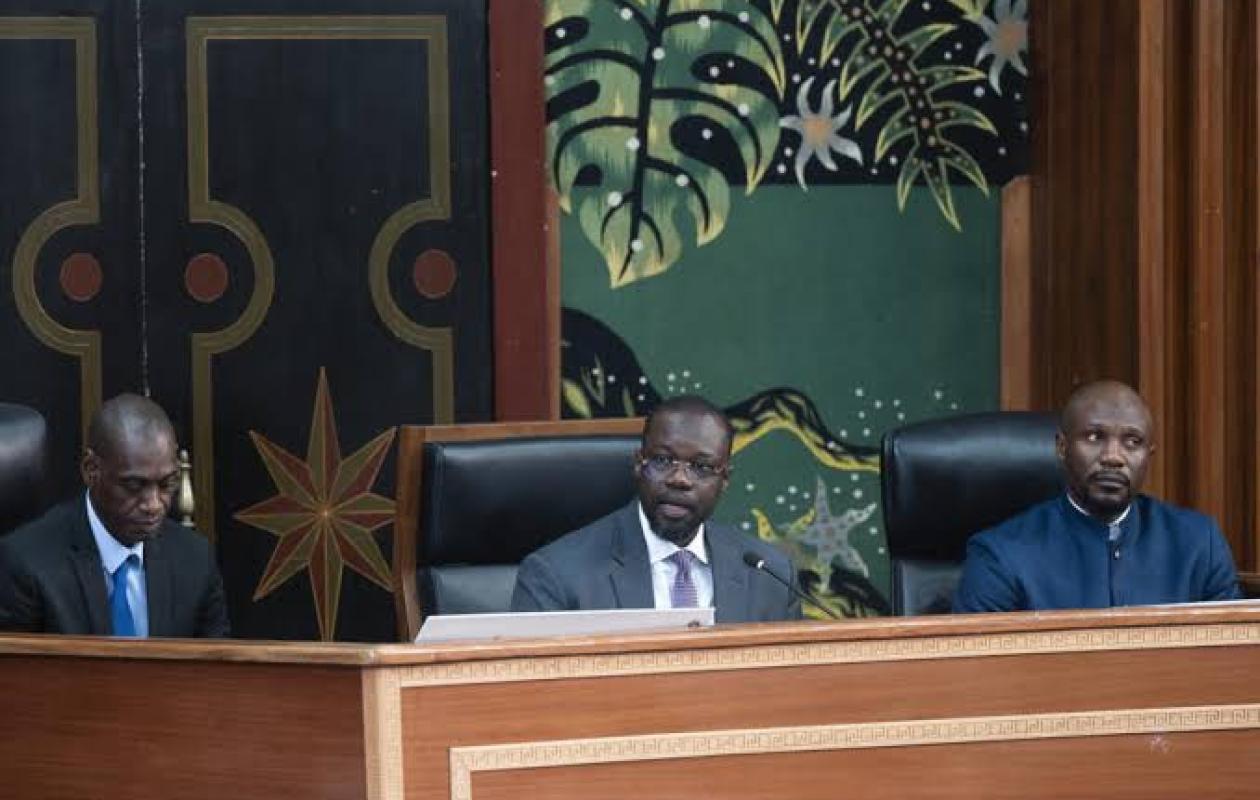
![[Exclusif] Révision de la Constitution : Le Conseil constitutionnel invalide le vote des députés](https://image.seneweb.com/content/news/2026-28-09//thumb_1260x800_6a4fdec36aa84_Tpa745ZYpD.jpg)










Commentaires (2)
Participer à la Discussion
Règles de la communauté
💡 Astuce : Utilisez des emojis depuis votre téléphone ou le module emoji ci-dessous. Cliquez sur GIF pour ajouter un GIF animé. Collez un lien X/Twitter, TikTok ou Instagram pour l'afficher automatiquement.
Se connecter
Commentez avec votre profil, votre photo, et soyez averti des réponses.