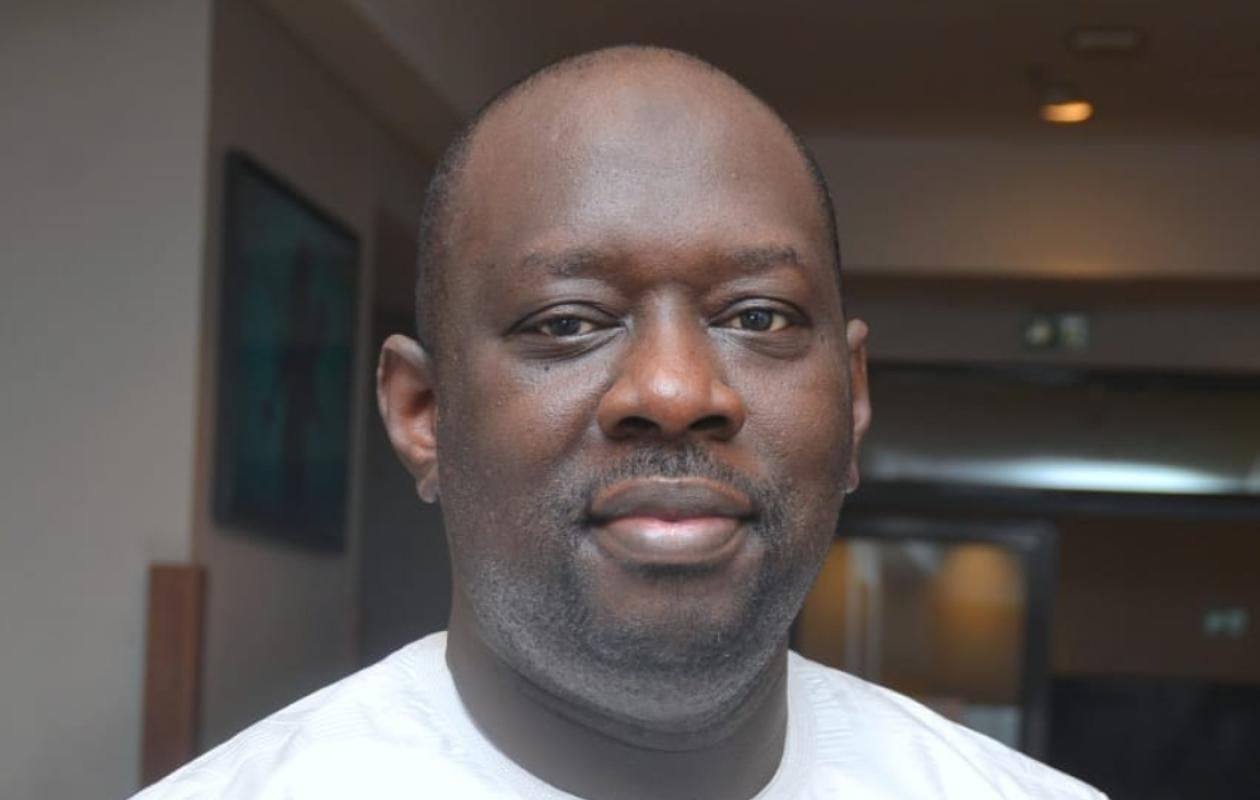
Budgets communaux : un déséquilibre silencieux qui freine le développement – le cas de Taïba Ndiaye (Matar Mamour Ndiaye)
Decentralization is one of the pillars of public governance in Senegal. It is based on a fundamental principle: bringing decision-making closer to the citizen in order to better meet local needs.
However, this ambition is hampered in several local authorities by a reality
a worrying budget situation, marked by a persistent imbalance between operating expenses and investment expenses.
The examination of the financial situation of the commune of Taïba Ndiaye, located in the department of Tivaouane and comprising 35 villages for an estimated population of 30,000 inhabitants, illustrates this problem on a national scale.
Between 2022 and 2026, the municipal budget remained virtually unchanged, increasing from 985,909,685 FCFA to 998,187,819 FCFA. This change, in absolute terms, cannot be considered mere stability. When considered in relation to inflation, population growth, and the continuous increase in social and economic needs, it objectively represents a loss of economic capacity and public action, reflecting a decline in the local situation.
This observation is all the more striking as it contrasts with the evolution of national public finances over the same period. The Senegalese state budget has seen sustained growth, reflecting a significant effort in terms of infrastructure investments, social policies, and financial transfers to local authorities.
For the 2026 financial year, 708,537,819 FCFA, or about 71% of the budget, are allocated to operating expenses, while 289,650,000 FCFA, representing about 29%, are devoted to investment and infrastructure.
It is also revealing to recall that the municipality's budget structure has not always been so unbalanced. In 2019, operating expenses amounted to 479,900,000 FCFA, or approximately 48% of the budget, while investment funds reached 519,000,000 FCFA, representing approximately 52%.
A numerical comparison of the budget structure between 2019 and 2026 allows us to measure
concretely, the extent of this evolution.

This development highlights a profound reversal of budgetary priorities. So
that in 2019 investment represented the majority of the municipal budget, the
The situation reversed in 2026, with a largely dominant functioning, confirming
that the budget imbalance to the detriment of investment has never been so pronounced.
Beyond the approved budgets, the analysis of management accounts sheds light on the situation.
An essential complement. Over several recent fiscal years, the management accounts show
to appear levels of expenditure executed higher than the forecasts recorded in the
initial budgets. As an example, the execution status as of December 31, 2024 showed
already a revenue level of 1,228,143,879 FCFA. This situation highlights a gap
recurring discrepancies between budget authorizations and actual execution, prompting questions about
the accuracy of revenue forecasts and the overall coherence of the programming
budgetary. A careful examination of these accounts also reveals that the financial volume
The amount actually mobilized regularly exceeds the threshold of one billion FCFA, contrasting with
approved budgets that remain below this level.
It is also worth emphasizing that the skills actually transferred to
Local authorities remain limited in their scope and area of intervention.
Therefore, the high level of operating expenses raises questions about their adequacy with
the missions actually carried out and reinforces the need for a gradual rebalancing in
in favor of productive investment.
In Taïba Ndiaye, as elsewhere, local development requires a vision and strategic decisions.
responsible and a clear focus of public resources towards investment. That is
precisely because resources are limited and needs immense that the priority
should be given to investments capable of sustainably improving conditions
to improve the lives of the people and to prepare for a better future.
Matar Mamour Ndiaye
Political Officer














Commentaires (19)
Cette répartition calamiteuse et excessive des ressources publiques explique l'état d'asphyxie budgétaire dans lequel se trouve aujourd'hui la commune de taiba aucune marge de manœuvre, aucune capacité d'investissement, aucune projection structurante pour répondre aux défis de notre chère commune🥲
Nous, les jeunes de la commune avons besoin de vérité de transparence et surtout de solutions durables.
Le débat est lancé et il est nécessaire.
En soulevant un « déséquilibre silencieux », Matar Mamour interpelle utilement les décideurs publics et les acteurs du développement sur la nécessité de réformes budgétaires plus équitables et mieux adaptées aux besoins des populations.
Merci Président Matar !
Comment peut on allouer les dépenses de fonctionnement à 71% et 29% à l’investissement et aux infrastructures .
Cela montre que les priorités du maire sont ailleurs.
Merci encore Matar Mamour Ndiaye pour la clarté ✅
Investissement et infrastructures 29%
Le maire travaille pour le maire ou bien pour la commune ? TAIBA NDIAYE NEKHNA !!!
La commune de Taïba Ndiaye illustre ainsi clairement la nécessité d’un rééquilibrage budgétaire en faveur de l’investissement, condition indispensable à un développement local réel et durable, conformément aux objectifs mêmes de la décentralisation.
Participer à la Discussion
Règles de la communauté :
💡 Astuce : Utilisez des emojis depuis votre téléphone ou le module emoji ci-dessous. Cliquez sur GIF pour ajouter un GIF animé. Collez un lien X/Twitter, TikTok ou Instagram pour l'afficher automatiquement.