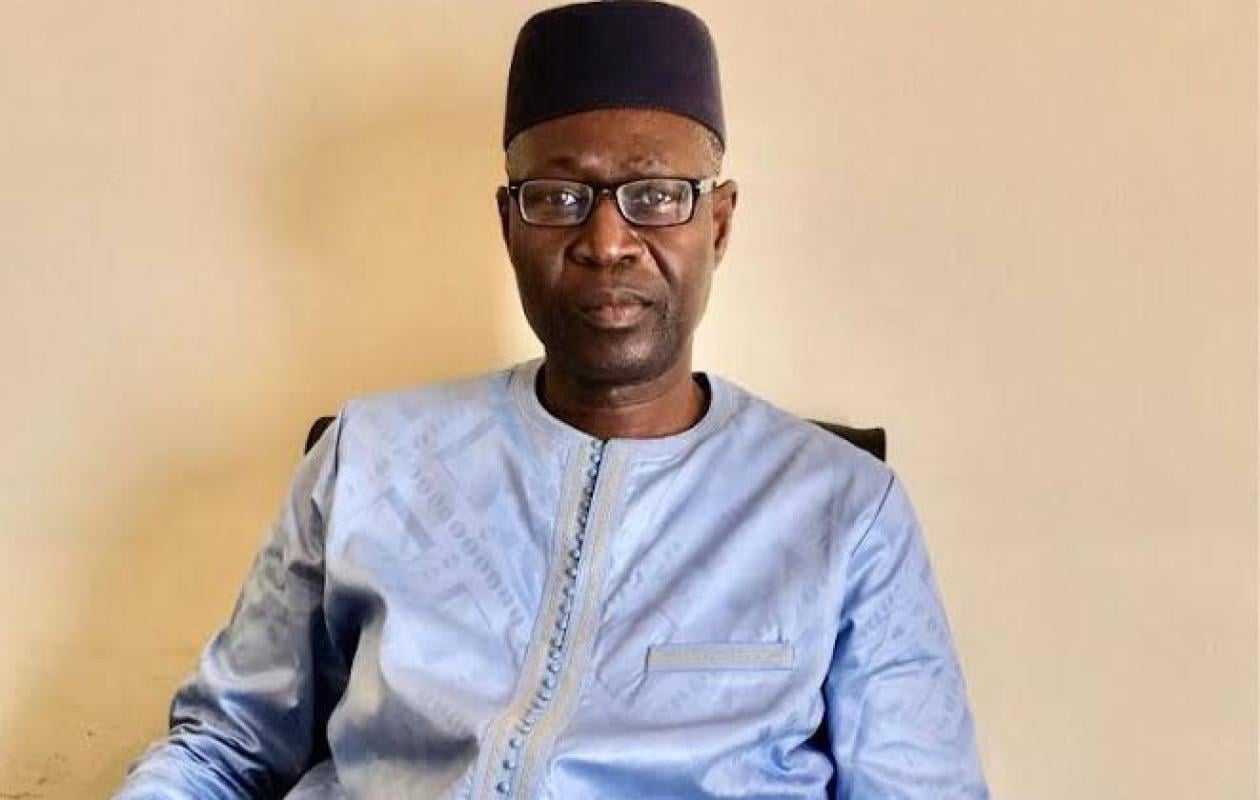
GRANDE INTERVIEW : FIN DE L’ILLUSION SOUVERAINISTE ? LE PRESIDENT DIOMAYE OUVRE LA PORTE AU FMI (Par Pr Amath NDIAYE)
By acknowledging, during his major interview, that an agreement with the International Monetary Fund would be an asset and by emphasizing the need for concessional financing—while admitting that Senegal requires long-term resources that the regional market cannot provide—President Bassirou Diomaye Faye is sending a strong signal. This represents a shift toward economic realism in the face of financing constraints.
The IMF, linchpin of the return to financial credibility
The president's statement marks a turning point: financial sovereignty has reached its limits, particularly in a structurally deficit-ridden economy characterized by a chronic imbalance in both the trade and current account balances. In this context, financing in the national currency is not a sufficient solution, given the continued high demand for foreign exchange.
The mention of an agreement with the International Monetary Fund is therefore a key signal. A program with the IMF helps restore confidence, reduce risk premiums, and facilitate access to external financing. It acts as a true mark of macroeconomic credibility.
Beyond financing, this signal is essential to attract foreign direct investment (FDI). These investments are themselves crucial for the structural transformation of the Senegalese economy and the implementation of the Senegal 2050 strategic agenda. Without a credible foundation, FDI remains limited or demands high risk premiums.
This recognition reflects a major shift: purely sovereign financing, particularly via the regional market, is showing its limitations in the face of rising rates, refinancing constraints and the weakening of the sovereign credit rating.
The structural need for long-term and concessional financing
The other central message of the speech is even more structuring:
Senegal needs long-term, concessional financing that the regional market cannot provide.
Resources mobilized from the World Bank or the African Development Bank offer long maturities, low rates and grace periods, adapted to the structure of public needs.
Conversely, the regional market primarily offers short- and medium-term financing, which is often more expensive and has limited capacity. This results in a structural misalignment between long-term needs and available instruments.
In this context, access to this financing necessarily involves a program with the International Monetary Fund, which structures the macroeconomic framework and catalyzes support from partners.
Finally, one point remains implicit in the speech: the President does not clearly state that engagement with the IMF often comes with stringent requirements, particularly regarding debt management. The question of restructuring, although not publicly acknowledged, remains central.
By opening the door to the International Monetary Fund and recognizing the limitations of the regional market and financing in national currency in a deficit economy, Bassirou Diomaye Faye is marking a turning point towards economic realism.
Now, the essentials remain:
transform this diagnosis into a coherent strategy, attract FDI and assume the necessary adjustments, including on debt.
Professor Amath Ndiaye
FASEG-UCAD
![[EXCLUSIF] Ndiaga Seck : Ce qu'il a dit sur Ousmane Sonko](https://image.seneweb.com/content/news/2026-21-18//thumb_1260x800_6a0b59b4699aa_zsVjCNITAk.jpg)
![[ EXCLUSIF] De l'amour à la trahison : pourquoi Ahmadou Lamine Dia a livré Ndiaga Seck aux policiers de Linguère](https://image.seneweb.com/content/news/2026-21-19//thumb_1260x800_6a0ba9ae394fb_B6LUdDvsqZ.jpg)







Commentaires (8)
Participer à la Discussion
Règles de la communauté :
💡 Astuce : Utilisez des emojis depuis votre téléphone ou le module emoji ci-dessous. Cliquez sur GIF pour ajouter un GIF animé. Collez un lien X/Twitter, TikTok ou Instagram pour l'afficher automatiquement.