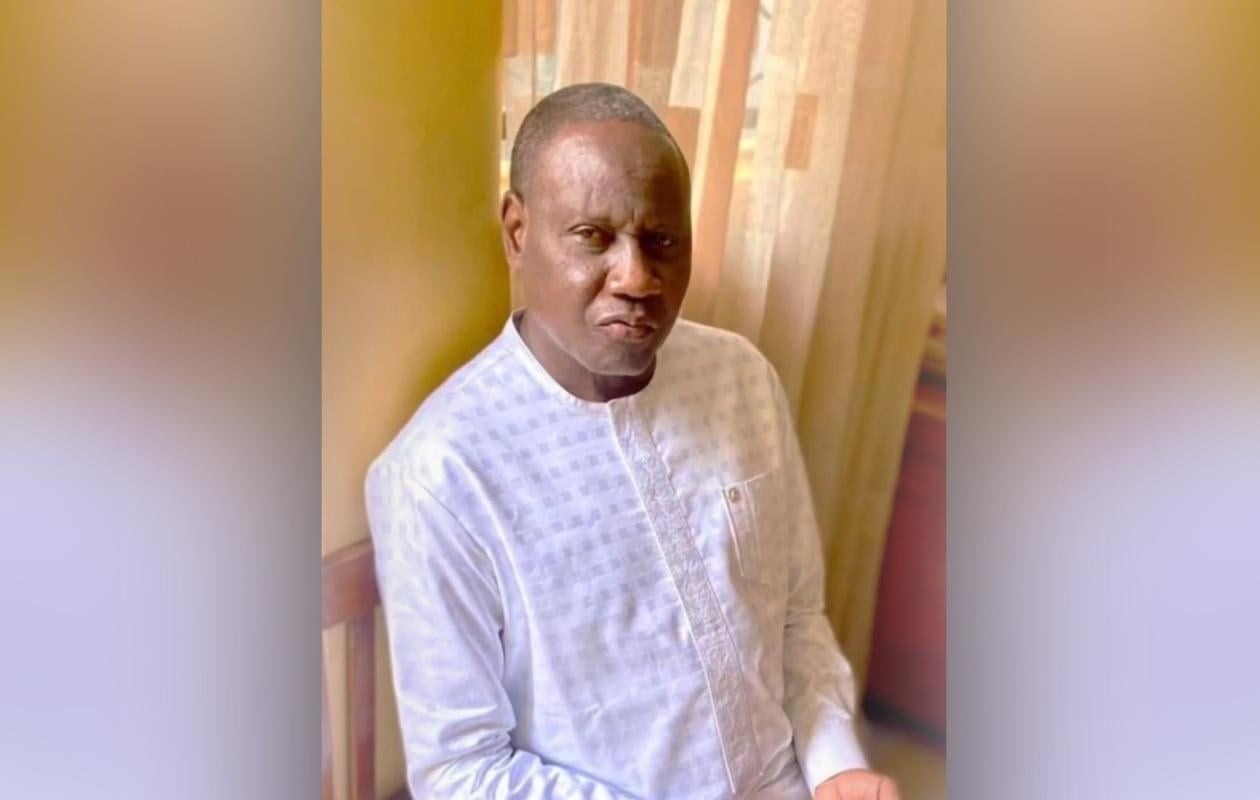
Hommage à Maître Lamine Kane (par Alioune Abitalib Diop)
There are moments when life, in its silent brutality, imposes a pain that no language can fully contain. These moments remind man, often distracted by the illusion of duration, of the fragility of his existence and the brevity of his earthly abode.
Because human beings, ever since they began shaping matter and ordering society, too often forget that they are only guests of the moment, inscribed in a temporality that they believe they control.
However, some lives defy this illusion because they become permanently inscribed in the collective memory and cross generations like silent, solid and fruitful landmarks.
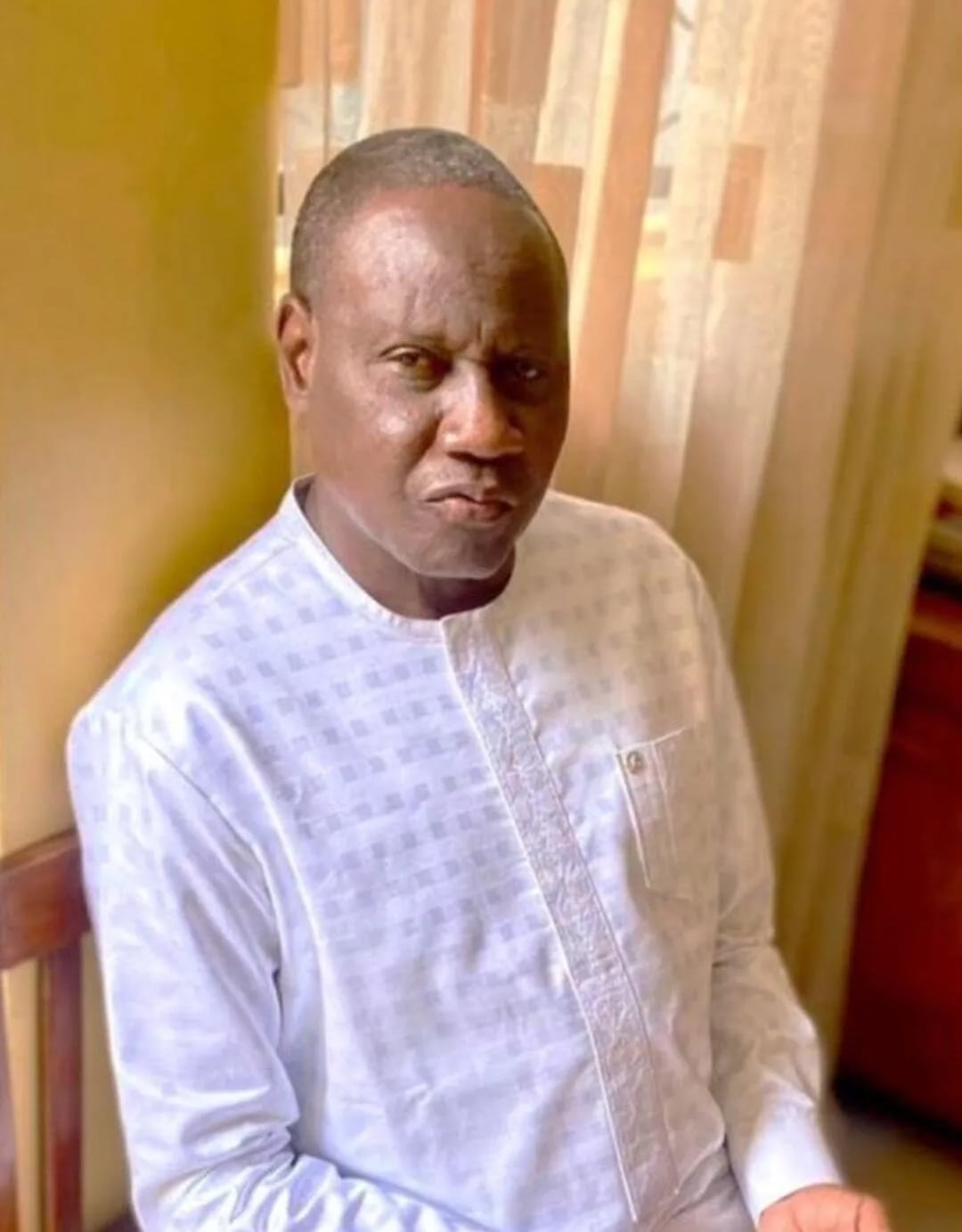
In all humility, Master Lamine Kane's life was one of those.
Some lives are truly worthwhile because they are entirely devoted to a just cause: the transmission of knowledge, teaching, and the patient development of the individual. These are lives dedicated to nurturing fruitful and fertile minds, capable of serving their country and, beyond, the human community. His life is a prime example of this rare lineage.
Teacher, educator, education inspector, director of a Franco-Arabic school, accomplished sportsman, football coach, he was above all a builder of souls, a sower of consciences and a shaper of humanity.
The size of the crowd that came to accompany his final journey to Mbour on December 11, 2025, an unprecedented event according to the local press, testifies less to an ordinary mourning than to the deep recognition of a community towards one of its moral, educational and cultural pillars.
For him, teaching was never simply about transmitting knowledge. It was about awakening vocations, sparking the desire to learn, creating a deep and almost visceral connection to the community of those who read, those who learn, those who know.
Ironically, our last conversations took place just days before his passing on December 10, 2025, even as he continued his commitment as a school principal, despite his academic retirement. He remained driven by the same principle: to offer children, often from the most vulnerable backgrounds, a high-quality, nearly free education in modern facilities made available through local solidarity.
This was one of the last stones he laid in the edifice of the youth of Mbour.
Master Lamine Kane contributed, with consistency and discretion, to forging a civic consciousness rooted in knowledge, respect, and dignity. He trained entire generations of executives, intellectuals, and high-level athletes in Senegal, and particularly in Mbour.
I was one of his students in 1987 at the annex school, which later became Tafsir Demba Sall. He entrusted me with the responsibility of his class, a trust that still honors me. These were my first lessons in duty, discipline, and a sense of responsibility, learned between the school, the headmaster's office, and his family home.
I can still picture those tropical winter mornings, at the first light of day, when I would go to their compound to pick up the classroom key. His father was often sitting on the veranda, his immaculate boubou, his white beard, his gaze turned towards the East, a rosary between his fingers, seated on his mat. It was undoubtedly in those moments of silence and simplicity that I first understood what serenity was.
A passionate sportsman and former footballer turned coach, Maître Kane guided the two biggest clubs in the city, Stade de Mbour and Mbour Petite Côte. He instilled, through sport as much as through education, the values of discipline, perseverance, and solidarity.
A tireless defender of culture, identity, and the dialogue that underpins our shared life, he was so deeply rooted in his community that many in Mbour considered him a son of the Lebou people. He defended his community, here as elsewhere, without distinction, with unwavering fidelity and rare loyalty.
He confided in me one day how, still a young boarder, he had taken the lead in a strike at the military Prytanée, thus putting an end to his dream of a military career, a dream that his younger brother carried to the rank of General.
This faith in cultural and spiritual dialogue was undoubtedly and certainly strengthened during his meeting, in 1980, with President Léopold Sédar Senghor at the presidential residence of Popoguine.
The poet-president welcomed him in Pulaar, in the spirit of a joking relationship. Senghor addressed him in terms which, translated, mean: "Lamine the Pulaar, you are my slave." These words sealed a profound conviction within him: that of a Senegal founded on exchange, mutual recognition, religious dialogue, and fraternity.
A self-proclaimed Hal Pulaar, and Walo-Walo by lineage, he proudly spoke of his ties to Mame Fâ Wade Welle, mother of Seydi Hadji Malick Sy (may God be pleased with him). But beyond these affiliations, he stood above all against injustice. Throughout his life, he fought for human dignity, particularly for the preservation of his city's land, refusing compromise and surrender.
Behind an austere exterior hid a man of great gentleness, profound sensitivity, and infinite love for his family. He often spoke of his brothers, his sisters, their children, with an emotional reserve that betrayed the tenderness of his words.
He loved Medina, Tefess, Mbour, Senegal and, beyond that, humanity. A sincere Muslim, a discreet Sufi, he often walked humbly in his sports tunic, never revealing, nor letting on, the depth of his inner life and spiritual journey.
For all he has contributed to education, youth, and society, Master Lamine Kane deserves posthumous national recognition. I remain convinced that local and national authorities will, in due course, pay him the tribute he deserves.
May God, in His infinite Mercy, welcome him to the Paradise of Firdaws.
Alioune Abitalib DIOP
Former student – Talibé – of Master Lamine KANE
@: aabitalib@hotmail.fr









Commentaires (6)
Participer à la Discussion
Règles de la communauté
💡 Astuce : Utilisez des emojis depuis votre téléphone ou le module emoji ci-dessous. Cliquez sur GIF pour ajouter un GIF animé. Collez un lien X/Twitter, TikTok ou Instagram pour l'afficher automatiquement.
Il a beaucoup apporté pour la jeunesse du département de M’bour. Paix à son âme.
Se connecter
Commentez avec votre profil, votre photo, et soyez averti des réponses.