Le 4 avril 2026 : un moment d’énonciation de la cohérence institutionnelle du pouvoir exécutif ,( Par M. Khadiyatoulah Fall)
The celebration of April 4, 2026, can be understood as a politically significant event, a scene where operations of representation, legitimation, and regulation of power converge. Through the gestures, postures, and symbols employed, a shaping of executive power emerges, reflecting a genuine symbolic economy. It is important to clarify, however, that the analysis presented here is limited to the interpretation of a specific moment of enunciation and should not be construed as the affirmation of a stable or definitive mode of power. In a context marked by media and political discourse that tends to frame the executive branch in terms of tension, the Prime Minister's attitude can be interpreted as an operation of interactional reframing, in the sense used by Erving Goffman. It is less about producing a discourse than about stabilizing a definition of the situation through the control of public appearances.
Furthermore, the centrality of the word "stability" in the presidential message of April 3, as well as the activation of its semantic network, stems from the production of a "state effect," in the sense of Pierre Bourdieu: an operation by which the institutional order presents itself as coherent, continuous, and legitimate. This discursive orientation prioritizes the consolidation of the institutional order rather than the dramatization of the rupture.
In line with this approach, the analyzed sequence is characterized by a mastery of the forms in which power manifests itself. It does not seek to excessively occupy public space or multiply signs of authority. Rather, it operates within a logic of restraint, where the consistency of attitudes and the sobriety of postures produce a stable and legible overall image.
Restraint as a form of exercising power
In state rituals, nothing is insignificant. Postures, silences, and the rhythms of presence all contribute to an economy of power. The Prime Minister's attitude—controlled presence, low expressive intensity, and adherence to protocol—does not reflect a withdrawal of power. It stems from a deliberate effort to regulate visibility.
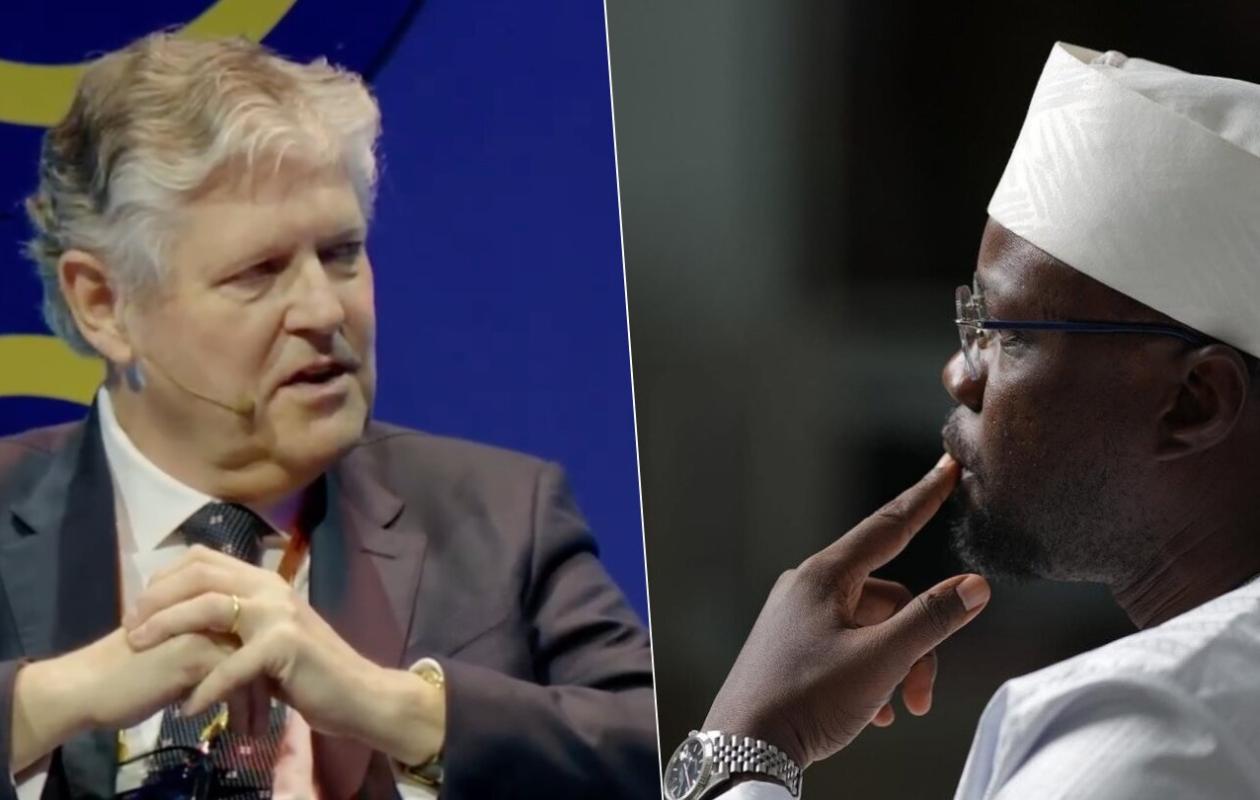
The detour through Michel Foucault allows us to refine the analysis: power is not exercised solely through decisions or discourses, but through mechanisms that organize behaviors and forms of public appearance. Restraint thus emerges as an active modality of power. It consists less in withdrawing than in controlling the conditions under which power is displayed. Clothing, in this context, is not merely a matter of aesthetic choice; it fully participates in shaping power. In a state ritual, attire contributes to structuring the overall image and making the actors' positions legible. The Prime Minister in African dress and the President in Western clothing do not represent symbolic competition, but a controlled articulation of different registers: one refers to cultural and historical roots, the other to adherence to institutional and diplomatic codes. Together, they produce a unified image of power, capable of maintaining both rootedness and openness without setting them in opposition.
What emerges from this combination is not hesitation or juxtaposition, but coherence. Power thus appears capable of assuming several registers simultaneously, without producing dissonance, and of integrating them into a stable representation of the State.
A stabilization of political readings
The political field is permeated by attempts to impose interpretive frameworks. Media and political discourse evoking tension or duality at the top of the executive branch is part of these dynamics.
The events of April 4th, in this context, represent a moment of stabilization. The consistency of observed attitudes and the absence of visible dissonance render these interpretations less credible. This is not a direct response to these interpretations, but rather a shift in perspective. By establishing an image of unity and coordination, the events diminish the impact of conflicting interpretations without having to explicitly confront them. What emerges here is not additional rhetoric, but evidence produced by the facts: that of an executive branch operating in an orderly and transparent manner. A controlled differentiation of roles. What appears in these events is a differentiation of roles within the executive branch, without fostering competition.
The President embodies the continuity of the State and the stability of the institutional order.
The Prime Minister, through his stance and involvement in government action, drives the implementation process. This distribution of responsibilities is not based on opposition, but on complementarity. It avoids overlaps while ensuring overall clarity. The observed coherence stems precisely from this articulation: each individual fully occupies their function without encroaching on that of the other. It is not a mere juxtaposition of roles, but an arrangement that produces an ordered image of power. Through this sequence, the new regime appeared to be experimenting with a form of executive balance based not on the dominance of one pole, but on a controlled coordination of functions.
Visibility of power in the international arena
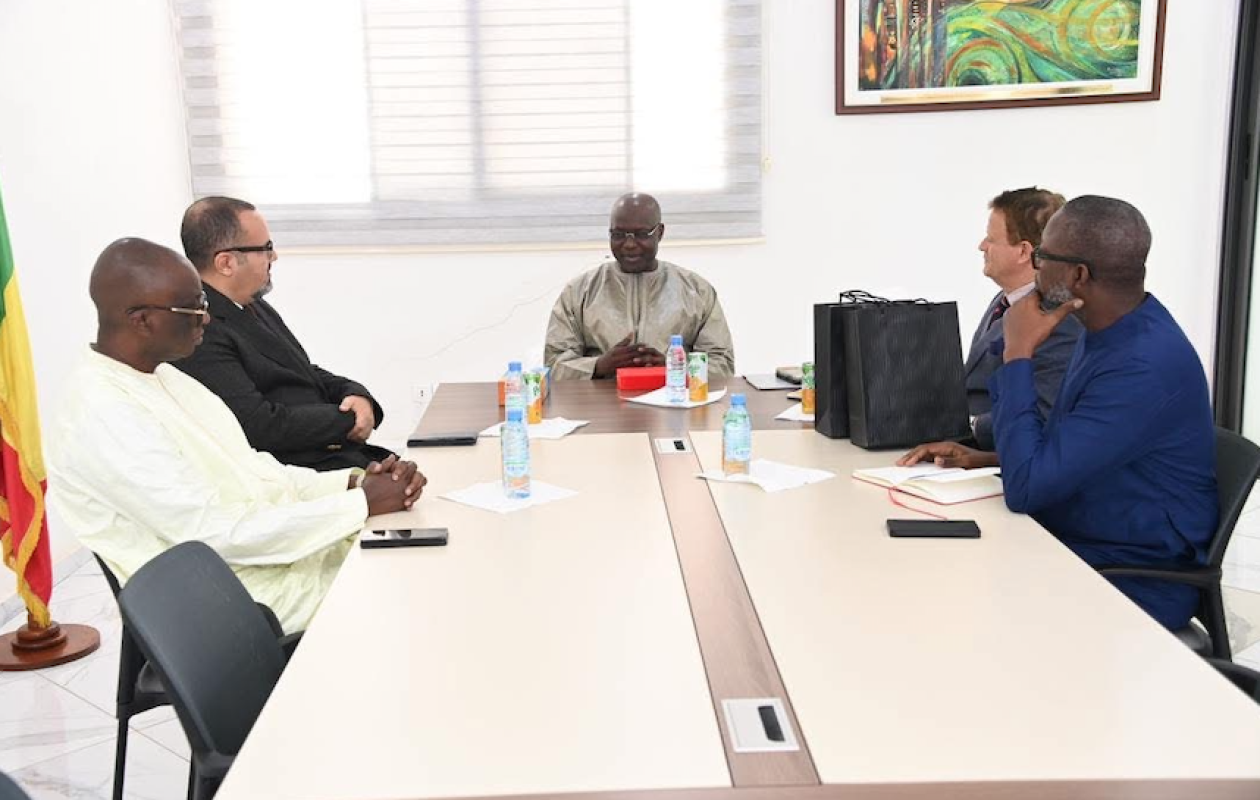
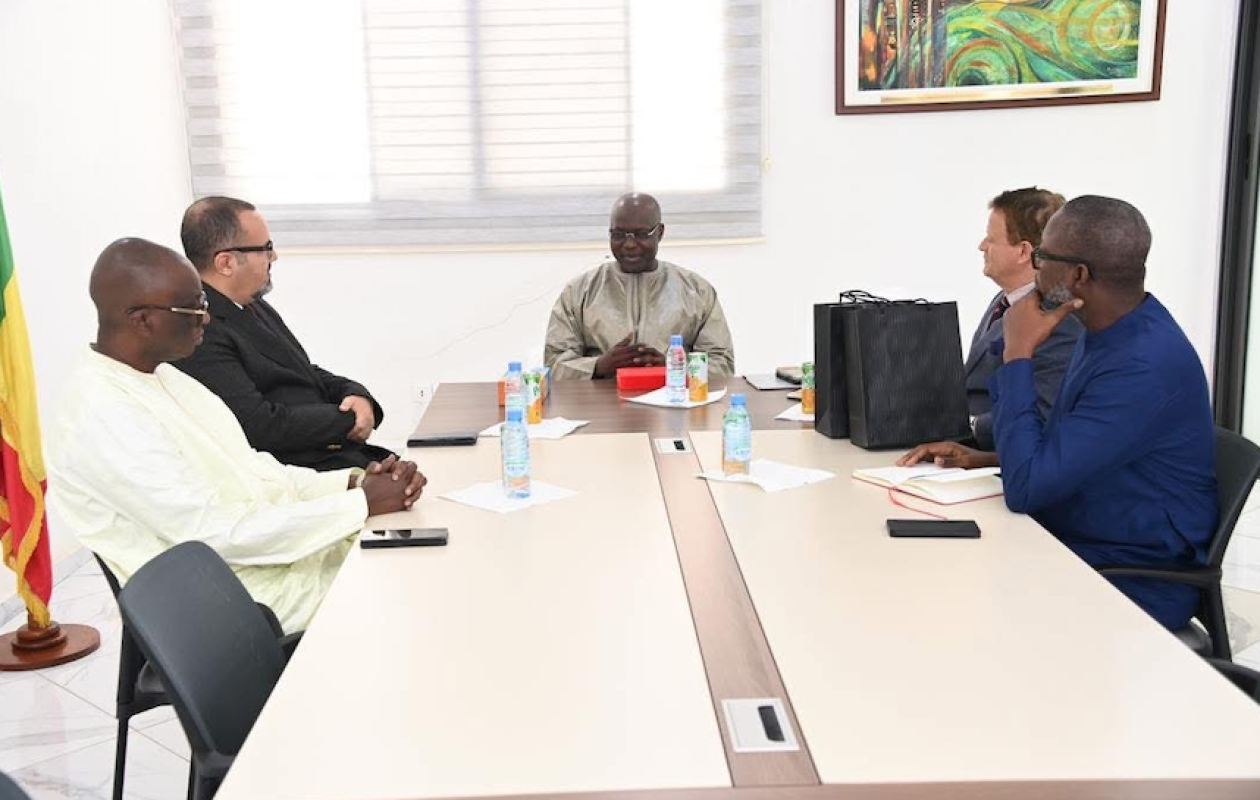
The presence of foreign actors at the ceremony gives this sequence a significance that transcends national boundaries. It immediately situates the event within a broader field of observation, where gestures and postures are also directed towards external partners.
In this context, the image of a coordinated executive, without visible dissonance, becomes a central element in the representation of the State. It contributes to the production of symbolic capital, in the sense of Pierre Bourdieu: power presents itself as coherent, continuous and controlled, and thus makes itself credible in the eyes of those who observe it.
The events of April 4th thus function as a presentational scene, in Erving Goffman's sense, where the state orchestrates its public image. This shaping is not merely a matter of appearance; it conditions how it can be interpreted. In the international arena, this legibility constitutes a resource. It aligns with what Joseph Nye describes as a form of power of attraction: a state's capacity to produce a sufficiently coherent and controlled image to inspire confidence and make its positions predictable. The observed coherence is therefore not limited to an internal stabilizing effect. It also operates as an external signal, indicating that the state is able to represent itself in an orderly fashion, without apparent contradiction between its various components. The state does not simply act; it presents itself as intelligible. And this intelligibility constitutes, in the international arena, a resource in itself.
Conclusion
The events of April 4, 2026, can thus be understood as a moment when the institutional coherence of the executive branch was affirmed. The Prime Minister's attitude, far from indicating a withdrawal of power, contributed to a regulation of public appearances that stabilized interpretations and reduced the scope of conflicting readings. The entire sequence of events revealed an executive branch capable of articulating its roles, controlling its public presence, and projecting an orderly image of power.
By Mr. Khadiyatoulah Fall, Professor Emeritus, Quebec, Canada




















Commentaires (2)
Participer à la Discussion
Règles de la communauté :
💡 Astuce : Utilisez des emojis depuis votre téléphone ou le module emoji ci-dessous. Cliquez sur GIF pour ajouter un GIF animé. Collez un lien X/Twitter, TikTok ou Instagram pour l'afficher automatiquement.