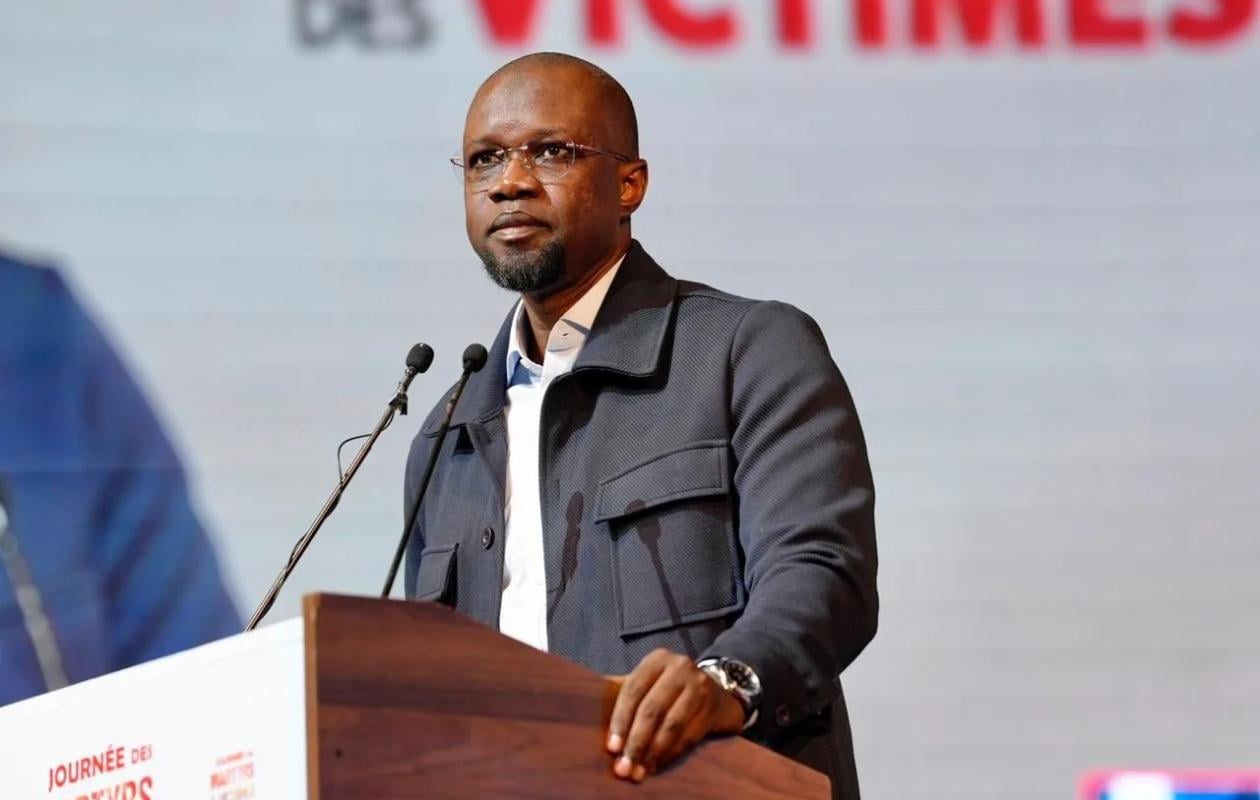
Le Sénégal en route vers un parti-État de fait ? (Par Abdou Fall, ancien ministre d'Etat)
Our country is undoubtedly going through one of the most unique institutional moments in its contemporary political history.
Today we are in an unprecedented situation where power now seems to be organized around a double center of gravity within the camp that won a majority in the 2024 presidential election.
Initially perceptible through the difficult duality between the two heads of the executive branch, the President of the Republic and his Prime Minister, this political tension has gradually changed in nature.
It now tends to be structured around an even deeper confrontation, that between the heads of the two main institutions of the country, the Presidency of the Republic and the National Assembly.
This development represents a major break in Senegalese institutional history.
Since 1963, our political system has been built around a strong presidentialism, structured around a central figure combining both executive authority and political leadership of the parliamentary majority.
This architecture, despite its limitations, had ultimately produced a certain degree of institutional legibility.
However, the strong trend that is emerging historically, as a viable model for the present and the future, seems to be moving towards more horizontal, inclusive and participatory forms of governance.
The current shift seems, contrary to this evolution, to be leading towards an even more vertical and highly concentrated model of power in the hands of a leader who has become almost omnipotent.
For the first time, the President of the Republic finds himself facing a President of the National Assembly who is also the undisputed leader of the majority party and the direct political authority of most of the deputies in that majority.
This situation creates an atypical form of cohabitation within the power structure itself, with a Head of State legally possessing all of his constitutional prerogatives, but confronted with a parliamentary majority politically structured around another center of authority.
More profoundly still, this sequence already seems to be permeated by the prospect of the 2029 presidential election.
Three years before this deadline, the two main figures in power appear to be engaged in an anticipated competition for the future embodiment of the State.
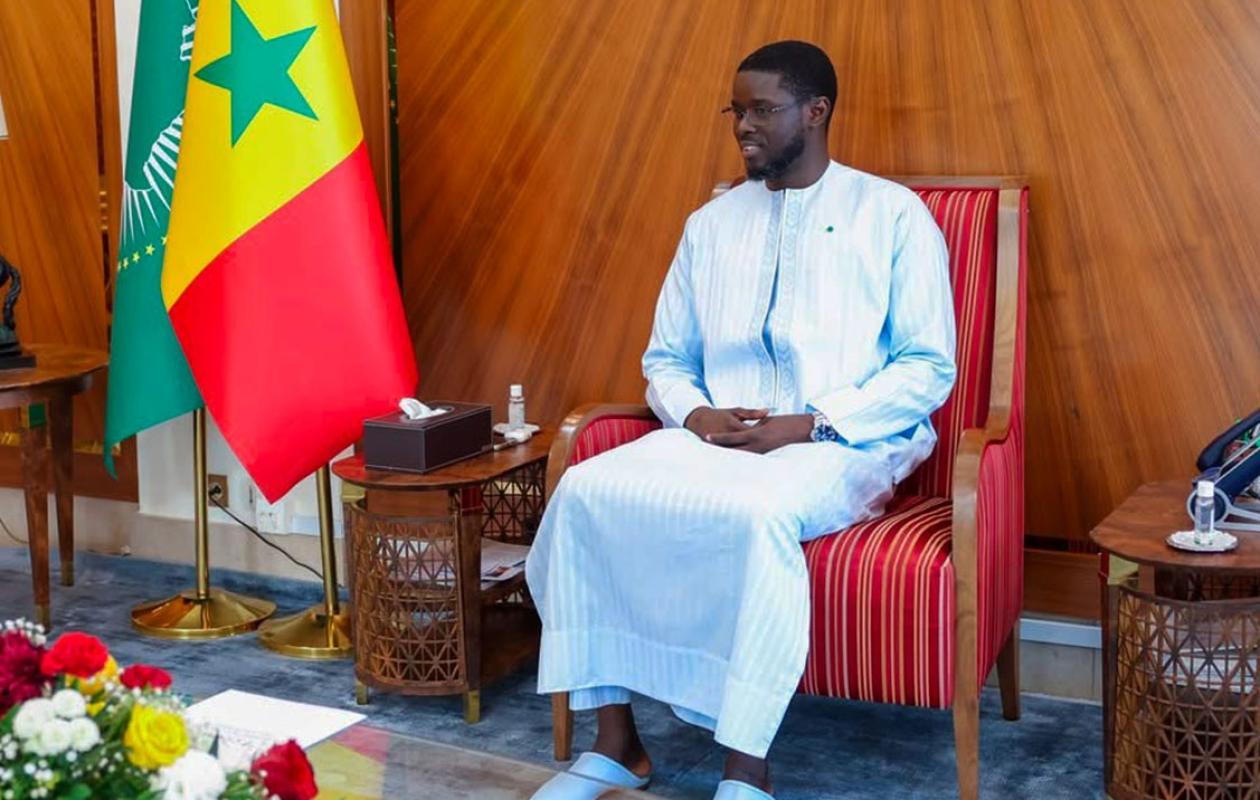
It is in this context that the question of the formation of the next government takes on decisive importance.
Its composition will provide a particularly illuminating glimpse into the real power dynamics at the top of the state.
Because, beyond administrative arbitration, it is the question of political control of the state apparatus that is now being raised.
The camp of the President of the National Assembly, clearly strengthened by the failure of the attempt to marginalize its leader, now seems to be engaged in a logic of asserting its political preeminence over the executive itself.
With the electoral legitimacy it claims, this movement intends not only to fully exercise the parliamentary prerogatives provided for by the Constitution, but also to have a direct influence on the definition of government policy and on the appointment of ministers called upon to occupy strategic positions.
This is the unique aspect, but also the fragility, of the current situation.
In classic cohabitation experiences observed elsewhere, particularly in certain semi-presidential regimes, a different parliamentary majority clearly has the power to conduct its government policy, while the Head of State retains reserved areas.
In Senegal, the emerging pattern is quite different.
The President of the Republic formally retains all of his constitutional prerogatives.
But he faces a politically stronger parliamentary majority, with legal means to set the rules of the game in his relationship with the President of the Republic and the government.
This camp is clearly seeking to impose a right of political intervention in an area that the Constitution places under the authority of the Head of State.
This ambiguity raises a major question: what will ultimately prevail?
Political compromises between actors engaged in an internal competition for power?
Or the spirit of the institutions and the principles of the rule of law?
But beyond this duality at the top of the state, another, even more significant development seems to be gradually emerging.
The real novelty of this political sequence lies less in the rivalry between the two poles of power than in the unprecedented concentration of all institutional levers in the hands of a single partisan apparatus.
The executive branch, the National Assembly and most of the political apparatus are now placed under the exclusive control of a single political force.
At the same time, both parliamentary and extra-parliamentary opposition appear to be largely marginalized in the actual functioning of the system.
The paradox is then striking.
The two main factions that structure the national political debate today actually belong to the same majority bloc.
They simultaneously occupy the positions of majority and quasi-internal opposition, while each vying for the future exclusivity of executive power.
In other words, the bulk of political competition now tends to shift within the dominant party itself, and no longer between the government and an opposition capable of exercising a genuine institutional counterweight.
It is precisely in this type of configuration that party-state systems historically arise.
Not necessarily through the formal suppression of political pluralism, but through the progressive absorption of all the strategic functions of the State into a single partisan matrix, where internal rivalries eventually replace the classic democratic game of alternations and counter-powers.
It is also worth recalling that this logic once corresponded to the vision of certain African and French politicians who considered African societies as insufficiently mature to manage political pluralism.
They then proposed, for Francophone Africa, the model of "multi-tendency single parties".
This perspective deserves all the more consideration given that some Pastef leaders, and in particular its leader, have never concealed their doctrinal inclination towards forms of governance based on a strong political centralization of state power.
Even more significantly, the two main figures of the ruling bloc seem to share, since coming to power, a common distrust of the classic mechanisms of consultation with the political opposition and intermediary bodies.
This stance has manifested itself on subjects that have historically been dealt with in Senegal through dialogue and the search for national consensus, particularly everything related to electoral processes and the rules of the democratic game.
However, one of the essential foundations of the Senegalese exception has long resided precisely in this collective capacity of political actors and civil society to preserve, despite tensions, minimal spaces for republican consultation.
Therefore, a fundamental question deserves to be calmly asked: is Senegal sliding towards a de facto one-party state?
Such a development would constitute a major historical break for our democracy.
Because Senegal's strength has always resided in the existence of institutional balances, political counter-powers and spaces of pluralism which have allowed the country to avoid the forms of lasting confiscation of power observed elsewhere on the continent.
Naturally, the ongoing changes may also contain positive opportunities.
Contemporary citizen aspirations everywhere are pushing for more control, sharing and transparency in the exercise of power.
But these transformations cannot be left to mere internal power struggles or tactical arrangements between competing factions of the same power.
On the contrary, they demand a clear-sighted national debate, clearly committed institutional reforms, and constant democratic vigilance.
Otherwise, Senegal could run the risk of transforming a promise of democratic refounding into a mere reconfiguration of the instruments of state power domination.
And this would then be, without a doubt, one of the greatest political paradoxes of contemporary Senegal, to see the country which had progressively built its democratic singularity around political pluralism and the culture of dialogue enter, in the 21st century, into a dynamic of partisan and highly personalized concentration of state power.
By Abdou Fall
Former Minister of State

![[Édition Spéciale] Tout Sur la Composition du Nouveau Gouvernement](https://image.seneweb.com/content/news/2026-23-01//thumb_1260x800_6a1ddca812d4e_URisx1rdt4.jpg)









Commentaires (5)
Participer à la Discussion
Règles de la communauté :
💡 Astuce : Utilisez des emojis depuis votre téléphone ou le module emoji ci-dessous. Cliquez sur GIF pour ajouter un GIF animé. Collez un lien X/Twitter, TikTok ou Instagram pour l'afficher automatiquement.