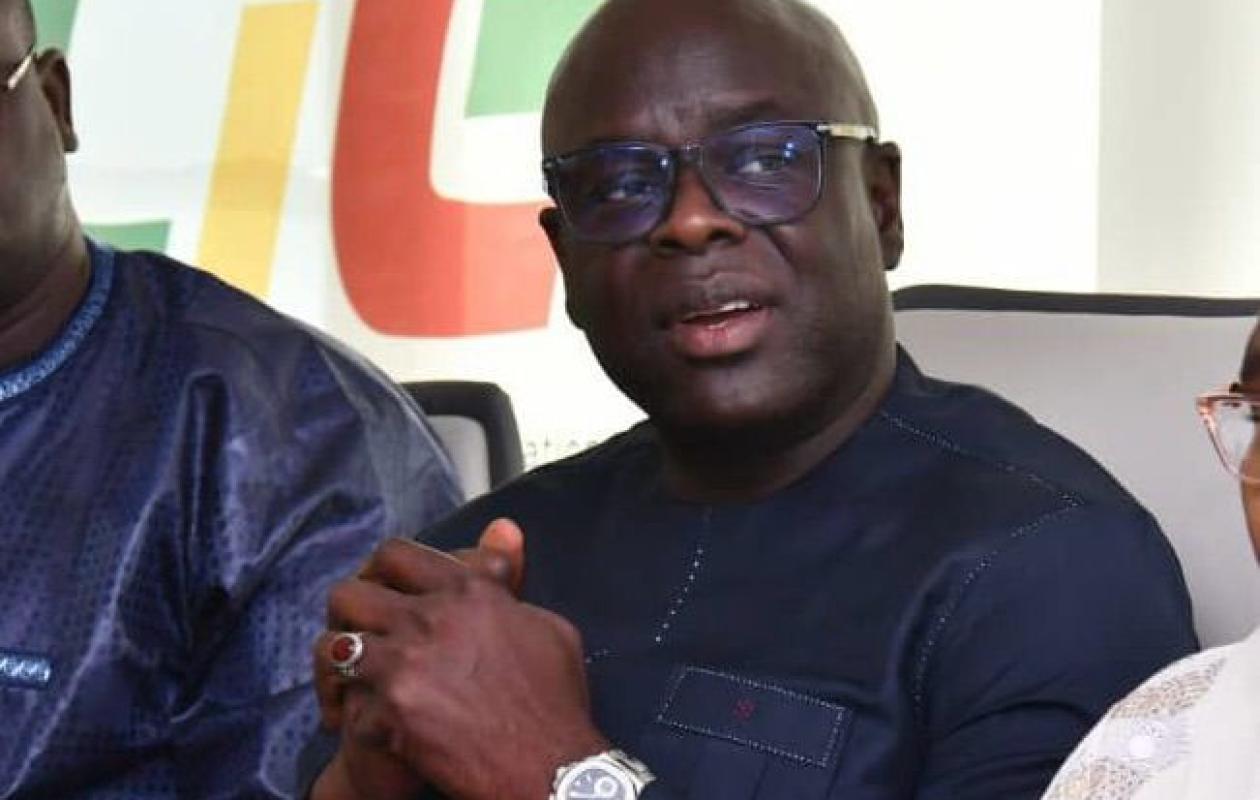
Le Sénégal face à la malédiction des alternances inachevées (Par Abdoulaye Dieng)
In Senegal, every change of government is born from an immense popular hope for a break with the past. But all too often, this hope ends up clashing with a tenacious reality: the remarkable capacity of the political system to survive change.
The political history of Senegal thus seems to follow a paradoxical trajectory: that of a people deeply attached to justice and democracy, yet confronted with changes of government that struggle to truly transform the system they claim to overthrow. Behind the image of a democracy often presented as stable, a profound tension persists between popular aspirations and the actual practices of power.
Since independence, Senegalese political life has largely been structured around a system in which the ruling party holds a decisive advantage over institutions and the administrative apparatus. Under these conditions, electoral contests, while formally democratic, have often been perceived as influenced by the power of those who already control the state. Faced with this reality, the Senegalese people have developed a unique political consciousness: that of a vigilant people, committed to justice and capable, when abuses become intolerable, of bringing about democratic reforms themselves.
The first major turning point came in 2000 with the election of Abdoulaye Wade. This historic moment was marked by a word that became emblematic: SOPI, meaning change. For many Senegalese, this change of power was supposed to usher in a new political era based on the restoration of public values and the transformation of governance practices.
In retrospect, the assessment appears more nuanced. The change in power profoundly altered the political balance without transforming the system itself. Corruption became commonplace, easy money gained increasing ground, and certain values that had historically structured Senegalese society gradually weakened. The promised change did not dismantle the system; it simply reconfigured it.
Macky Sall's rise to power follows a pattern now well-known in Senegal: that of a figure from within the system who, after a dramatic break with the existing regime and after being perceived as the victim of internal injustice, enjoys massive popular support. This change of power is driven by a powerful slogan: "Yakaar," meaning hope. Many Senegalese have seen in it the promise of fairer and more transparent governance.
But this hope gradually clashed with the realities of exercising power. Corruption reached alarming levels, the management of public resources was challenged, and political life became increasingly harsh. The political crises of recent years have profoundly affected the national consciousness: dozens of young people lost their lives, thousands were arrested, and a significant portion of the population felt they were witnessing an authoritarian drift incompatible with Senegal's democratic history.
Over time, a deep disillusionment has taken hold in public opinion, fueled by the feeling that the promises of change brought by the various changes of government ended up dissolving into the realities of power.
It is within this context of accumulated disillusionment, political fatigue, and moral imperative that a new dynamic emerged around Ousmane Sonko, ushering in an unprecedented political era in Senegal. Through his rhetoric, his consistency, and his political courage, he embodied, for a large segment of the youth and public opinion, a break with traditional Senegalese political practices. The confrontation between this movement and Macky Sall's regime reached a level of tension rarely seen in the country's recent political history, while simultaneously strengthening the popular momentum around a project of radical change.
In Senegal, the system is not simply a regime or a leader. It is a set of practices, networks of interests, and institutional mechanisms that, from one political transition to the next, manage to reconstitute themselves and preserve the essential elements of their equilibrium. This is how what could be called the curse of incomplete transitions has taken hold: those moments when the people bring about a major political change, but the system manages, once again, to survive the change.
The third transition of power then took shape in an unprecedented context. The man many Senegalese hoped to see directly assume the presidency was unable to run. In these exceptional circumstances, an original political strategy was adopted: to put forward Bassirou Diomaye Faye, designated by Ousmane Sonko himself and presented to the people as the continuation of his own struggle—"Sonko moy Diomaye"—as the candidate of a collective political project. Prevented from running himself, Ousmane Sonko then made the bold move of placing the project above his own person, publicly transferring the legitimacy of this struggle to the people through this candidacy, in a gesture of both political generosity and strategic acumen rarely seen in recent Senegalese political history.
The Senegalese people overwhelmingly endorsed this strategy. The change of power crystallized around a slogan that became a moral compass for a large part of the population: "Jub, Jubal, Jubanti"—to set the state right and put it back on the right path. It was not merely a political change, but a promise of moral restoration for the state and public life.
During the first months of power, the prevailing impression was one of coherence between the president and his prime minister, driven by a shared vision and supported by a popular majority determined to definitively turn the page on the past. Yet, less than two years after this historic transfer of power, questions are emerging. This is obviously not about judging a mandate that is still underway, but about observing certain political directions that already seem to be straying from the spirit of the project presented to the people, because transitions of power are also judged by their initial orientations, which often reveal the true direction the government is taking. The Senegalese people did not mobilize simply to witness a reshuffling of the system. They paid a heavy price to turn this page: years of political tension, lives lost, mass arrests, and an unprecedented citizen mobilization. This collective memory explains the profound determination today to prevent the reappearance of the figures, practices, and compromises that recall the old system.
This is why the idea of ill-timed political dialogues or alliances, aimed at slowing down or diluting the popular will, now appears out of step with the political maturity of Senegalese society. Recent experience has shown that these mechanisms often serve to prolong the survival of a system that the people have specifically decided to move beyond.
And one cannot help but hope that chance plays no part in politics. The current president himself once cited, to illustrate the capacity of people to hold their leaders accountable, the example of the Malian people who mobilized even within the presidential palace to demand accountability—in a rather direct manner—from their head of state. This reference recalls a simple truth: in a vibrant democracy, power is always exercised under the watchful eye of the people.
A people's political maturity is measured by its ability to recognize the moment when history must move forward. The Senegalese people have reached that moment: the mandate is clear, and so are the objectives. After so many incomplete power transitions, they no longer simply want to change the people; they want to transform the system. Ending the curse of incomplete power transitions has become a historical imperative. This time, the Senegalese people will not let history repeat itself.
_By Abdoulaye Dieng_
_Entrepreneur_

![[EXCLUSIF] Affaire Pape Cheikh Diallo : 88e interpellation, l'identité du marabout proche des lutteurs arrêté dévoilée](https://image.seneweb.com/content/news/2026-18-30//thumb_1260x800_69f3ec2461579_kX0bYOesMf.jpeg)
![[EXCLUSIF] Affaire PCD : Un célèbre acteur et 2 agents du Port écroués, le maître coranique C. B. Mbacké et un vétérinaire libérés](https://image.seneweb.com/content/news/2026-18-30//thumb_1260x800_69f390db21da9_TjrX268QWW.jpg)










Commentaires (3)
Participer à la Discussion
Règles de la communauté :
💡 Astuce : Utilisez des emojis depuis votre téléphone ou le module emoji ci-dessous. Cliquez sur GIF pour ajouter un GIF animé. Collez un lien X/Twitter, TikTok ou Instagram pour l'afficher automatiquement.