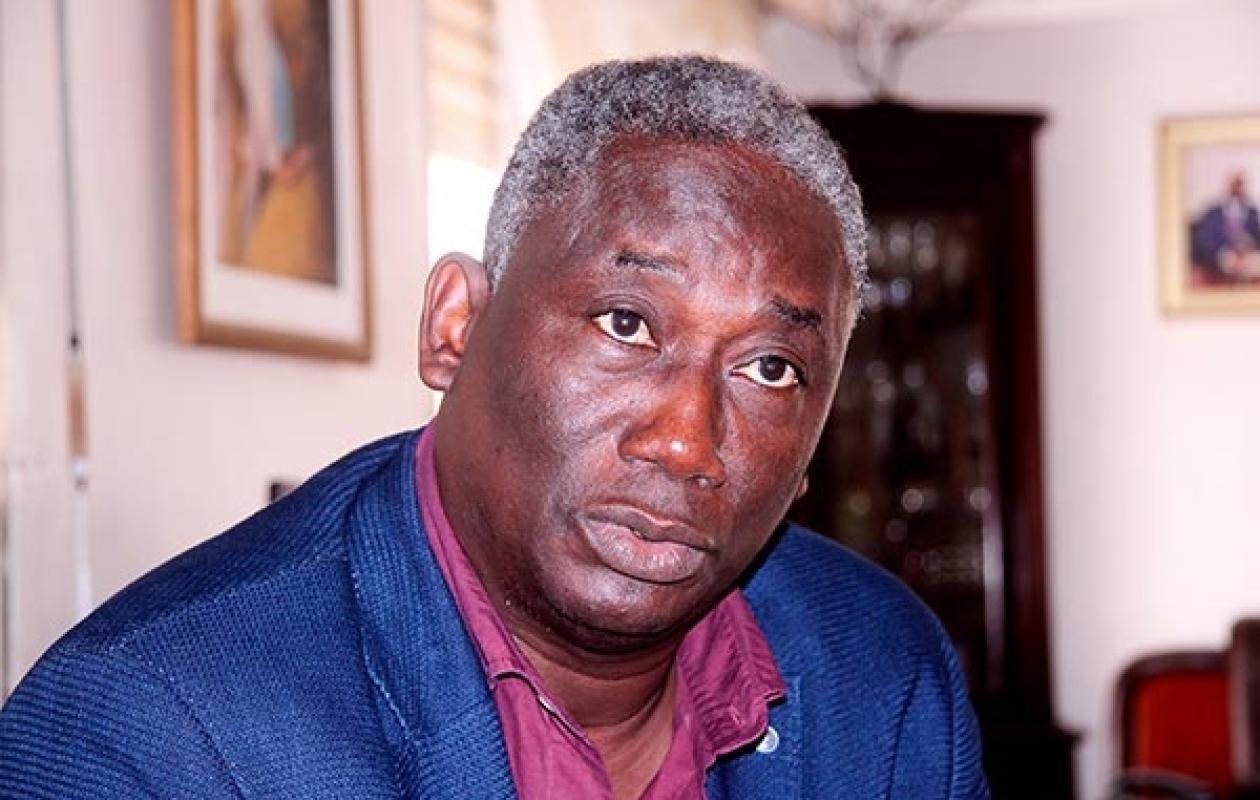
Le Sénégal face à une mutation politique et institutionnelle inédite (Par Abdou Fall)
Through these reflections inspired by my experience in public life, I modestly wish to contribute to the debate sparked by the profound political changes currently taking place in our country.
Senegal is perhaps experiencing one of the most unique sequences in its contemporary institutional history.
Since Pastef came to power in the 2024 elections, the transformations observed now go beyond the simple framework of a classic democratic alternation.
They seem to be gradually establishing a new relationship with power, institutions, and democratic practice itself.
For a long time, Senegal distinguished itself by a relatively balanced model of pluralist democracy, based on political, institutional and social regulatory mechanisms which, despite their imperfections, had made it possible to preserve a certain republican stability.
However, this balance now appears to be undergoing a profound recomposition.
Driven by near-total domination over institutions, the new power seems to be engaged in an unprecedented logic of political concentration, structured around the majority party and its central leadership.
The events that followed the dismissal of the Prime Minister revealed the extent of this transformation.
What might have appeared to be a political sanction quickly turned into a demonstration of partisan power.
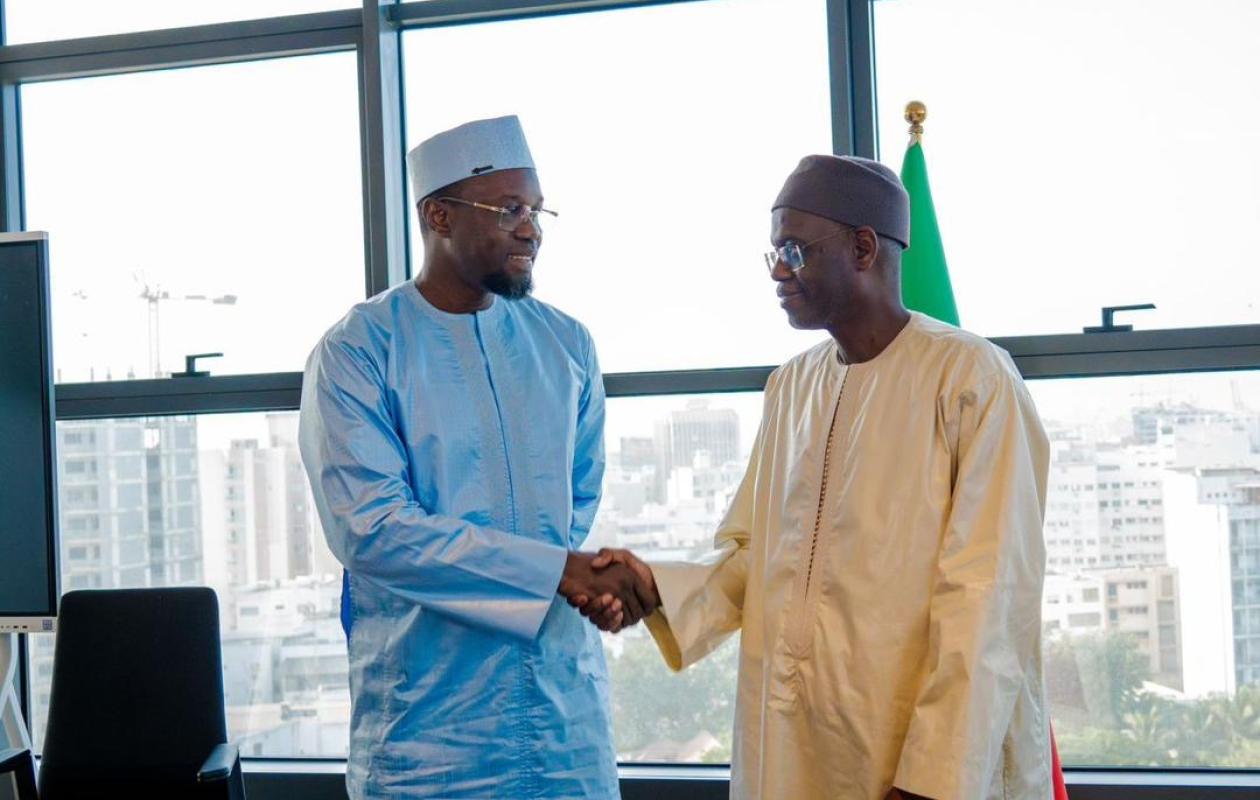
The accelerated return of the former Prime Minister to the National Assembly, followed by his accession to the presidency of this institution, profoundly reshaped the real balances of power.
Senegal is now discovering a new political configuration, that of a de facto dual leadership, where the head of the second institution of the Republic appears, in the relations of power, in a position of force majeure vis-à-vis the head of the executive himself.
This situation does not explicitly result from a constitutional revision.
Rather, it stems from a gradual shift in the real center of power, facilitated by political circumstances, internal power dynamics, and the President of the Republic's relinquishment of certain of his prerogatives as head of state.
The question that arises then becomes fundamental.
Can such a substantial shift in the actual balance of institutions occur without political clarification, national debate, and a new democratic consensus?
Because, beyond the individuals and circumstances, it is the very nature of the Senegalese political system that now seems to be in question.
The country appears to be entering a zone of ambiguity where several sometimes contradictory logics overlap: electoral legitimacy, partisan centralization of power, personalization of leadership and progressive weakening of traditional mechanisms of institutional regulation.
This development raises an even deeper question.
Several influential players in the ruling movement, including at the highest level, themselves claim that their rise to power was less a classic democratic alternation than a form of "electoral insurrection" or a historical break with the previous political order.
This analytical framework is not neutral.
Because can a liberal democracy function sustainably in a political environment where power thinks of itself in terms of "revolution" or radical anti-systemic refounding?
In other words, to what extent can the coexistence between "revolutionary" culture and the liberal rule of law remain stable and viable?
This is probably one of the most important questions that Senegal will have to face clearly in the weeks and months to come.
This is by no means about contesting a legitimacy derived from universal suffrage, nor about denying the new power its right to carry out the reforms it deems necessary.
However, it remains clear that any leadership team, in a Republic worthy of the name, remains subject to the imperative of discernment between what falls under the majority rule and what belongs to the exclusive prerogative of popular sovereignty.
In any mature democracy, the progressive concentration of political, institutional and symbolic levers around a dominant party or a highly personalized leadership necessarily calls for vigilance, reflection and debate.
Senegal has long derived its uniqueness from its ability to preserve mechanisms of balance, dialogue and moderation.
This legacy deserves to be examined today in light of the transformations underway.
The institutions of the Republic, political and social forces, civil society, intellectuals, the media, but also the citizens themselves, are now being called upon.
Certain institutional changes, when they are neither collectively considered nor explicitly accepted, often end up producing consequences that nations discover when it is often too late to correct them.
Abdou Fall
Former Minister of State









Commentaires (0)
Participer à la Discussion
Règles de la communauté :
💡 Astuce : Utilisez des emojis depuis votre téléphone ou le module emoji ci-dessous. Cliquez sur GIF pour ajouter un GIF animé. Collez un lien X/Twitter, TikTok ou Instagram pour l'afficher automatiquement.