
L’Etat sénégalais à l’épreuve de la gestion active de la dette publique : l’usage des TRS (Total Return Swaps) peut-il être assimilé à de la « dette cachée » ?
The Financial Times article published on March 23, 2026, is the starting point of the controversy. The newspaper reports that Senegal quietly borrowed approximately €650 million through TRS (Transferable Refinancing Schemes) from the Africa Finance Corporation (AFC) and First Abu Dhabi Bank (FAB), with Bank of America estimates suggesting that the total structured borrowing in 2025 could reach as high as $1 billion. The specific terms of the transactions are now known. For the AFC deal, Senegal received €105 million in exchange for transferring ownership of €150 million of CFA franc bonds, bearing interest at a variable rate of 3.5% to 4%. In June 2025, a second three-year agreement was reached with First Abu Dhabi Bank, allowing Senegal to borrow €300 million by transferring ownership of approximately €400 million of bonds. In each transaction, Senegal absorbs an initial discount of approximately 30%, meaning that it gives up 150 million euros of securities to receive 105 million euros in cash.
Legal classification reconsidered in light of the facts
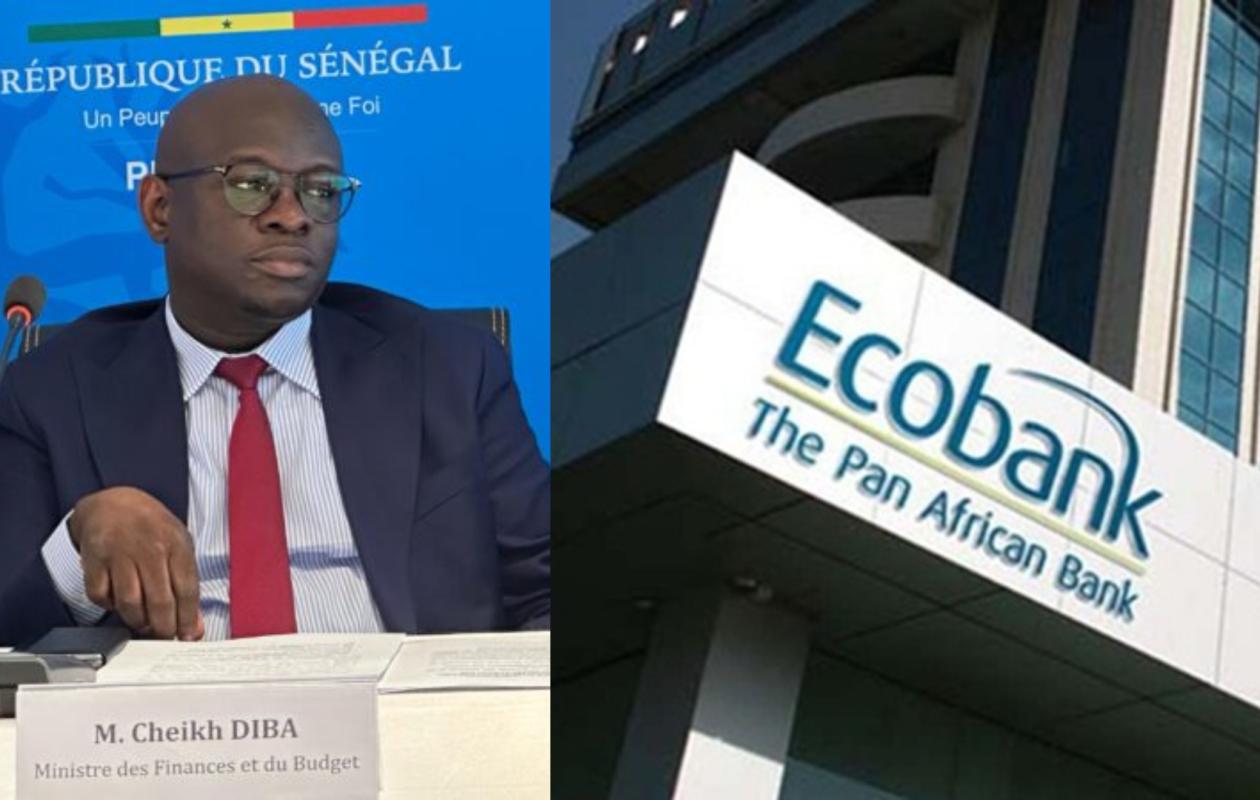
The most salient factual element revealed by the FT reconfigures the legal classification. This is not a "standard" Treasury Bond: the AFC and the FAB hold the legal title to the pledged bonds and receive the economic returns (coupons, potential capital gains, and contractual protection against losses in the event of bond depreciation). This transfer of ownership of the sovereign bonds has a major legal effect: these transactions could grant the new creditors preferential rights over existing bondholders, a claim the Finance Minister has contested, asserting the absence of preferential treatment or attached collateral.
The minister nevertheless admitted that if interest rates were to rise and reduce the value of bonds held by counterparties, this could trigger what he calls an " independent amount " (a clause that allows for an additional margin call) of approximately 30% to cover the risk, without specifying the exact triggering conditions. This clause transforms the Treasury Bond Ratio (TBR) into a potentially regressive instrument for the State: Senegal cannot fully benefit from the improvement in its credit rating (increase in the value of its securities), but it is exposed to an obligation to make additional payments in the event of a downgrade. Moreover, the recent downgrade of Senegal's local currency rating, which occurred on March 27, could have the effect of depreciating the value of the underlying securities, triggering the independent amount clause, exacerbating financing tensions, and ultimately fueling further potential downgrades.
Nature of the commitment: is it a debt?
Legally, financial instruments traded on futures markets are not classified as debt-generating. From an economic perspective, however, the IMF's position settles the debate. An IMF spokesperson stated that the Senegalese authorities had informed the Fund's staff of the existence of several short-term debt transactions, but that the specific terms of these transactions had not yet been communicated to the Fund. The IMF clarified that, as a general rule, such short-term debt would be considered external debt for the purposes of its debt sustainability analyses. This position of the IMF analytically validates the substance-over-form approach: regardless of the legal classification, the economic effects necessitate consolidation within public debt aggregates.
These derivative structures do not disperse risk; they concentrate it, obscure it, and delay its recognition until it becomes unmanageable. Senegal has effectively sold the "volatility" of these bonds: it does not benefit from rising prices, but it absorbs losses in the event of a decline. This structure is economically comparable to selling credit default swaps on its own sovereign bonds; Senegal is, in a sense, selling protection on its own credit.
Where applicable, the accounting for TRS in public debt aggregates raises complex questions: should the notional value of the contract, the market value ( mark-to-market ), or only the projected net cash flows be used? These questions remain open and require methodological clarification.
A question of "hidden" debt?
Debt management operations fall under the category of treasury operations, governed by the fundamental principle of contractual freedom in their management. The only formal constraint is parliamentary authorization, in accordance with Article 27 of the Organic Law on Finance Laws (LOLF). In this regard, the Ministry of Finance does indeed have legal authorization: Article 12 of the initial Finance Law (LFI) for 2026 explicitly authorizes the use of TRS-type instruments.
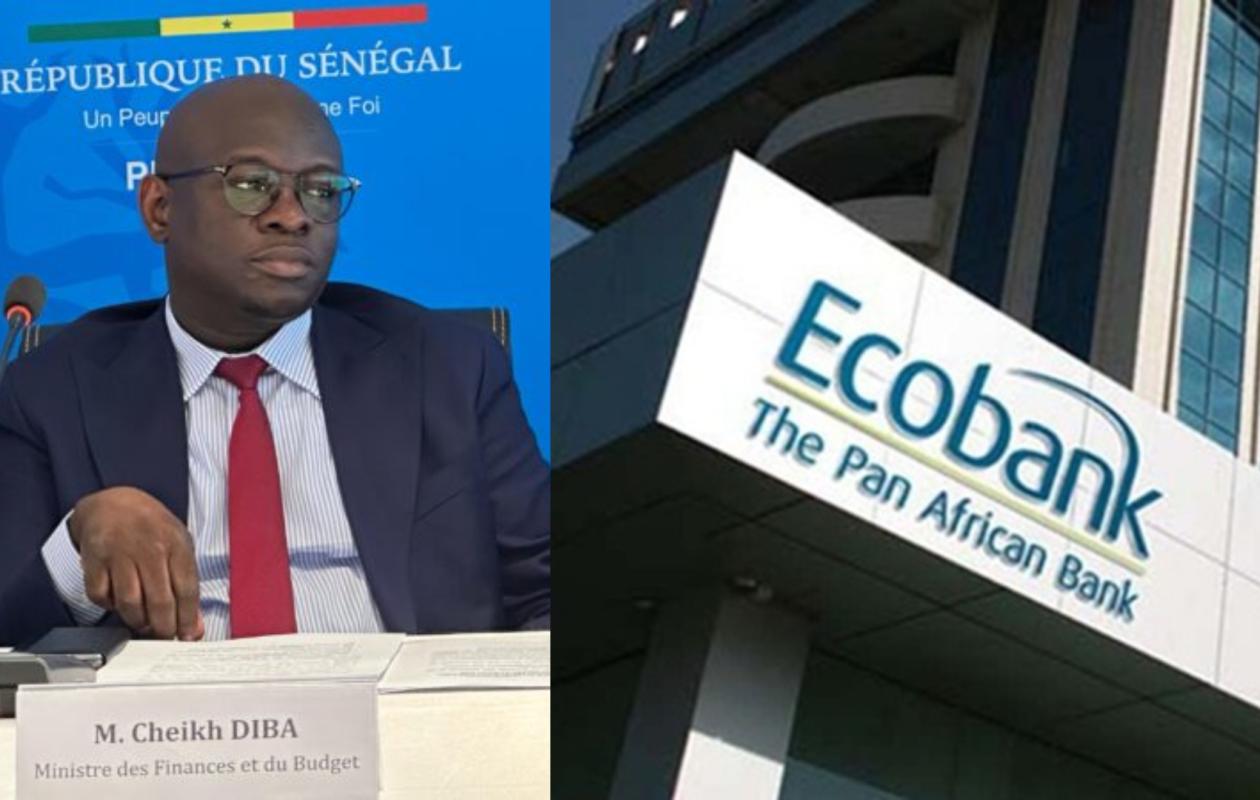
Based on this consideration, if we define hidden debt as debt deliberately concealed from the National Assembly, the answer is no. Annex VI of the 2026 Finance Law explicitly mentions the projected expenses related to Treasury Bills and similar financial instruments (TBIs) for the 2026 fiscal year, amounting to 14.3 billion CFA francs. The National Assembly is therefore aware of the existence of these instruments and their projected cost. Minister Cheikh Diba further specified that all information relating to Treasury Bills was communicated to the National Assembly on November 29, 2025, and shared with financial partners.
As for structured contracts incorporating a TRS, their non-publication is not contrary to the principles of budgetary transparency: these contracts fall within the sphere of financial contracts subject to banking secrecy, which constitutes a legitimate and recognized limit to the obligation of publicity.
Is the use of TRS legitimate?
The TRS (Transferable Settlement Schemes) did not emerge in a vacuum. These operations took place within a context marked by the suspension of the program with the IMF, the downgrade of the sovereign rating, and increasing pressures on the country's financing capacity, following the confirmation of at least $7 billion in undeclared debt, bringing the total outstanding amount to over $40 billion, or more than 130% of GDP. In this context, TRS appear as an instrument of last resort: disguised financing where a country quickly obtains cash in exchange for its obligations, while continuing to pay interest and assume additional risks. In other words, TRS prevented Senegal from defaulting.
However, the government's argument regarding savings (7% compared to 11-12% on Eurobonds) needs to be put into perspective: Senegal actually bears a double burden: the yield on the bonds used as collateral and a financing rate indexed to Euribor plus a margin. The comparison with Eurobonds is therefore biased because it omits the initial 30% haircut and the asymmetric protection clauses. African finance ministers facing market access constraints should thus treat any proposal involving real-time refinancing rates (RTRs), synthetic structures, or collateralized derivative overlays with extreme caution. Warren Buffett's famous quote, cited by analysts, remains entirely relevant: derivatives are "weapons of mass destruction," particularly when sovereigns under pressure resort to them to resolve immediate financing problems.
Ultimately, the Senegalese case illustrates the tension that has existed between short-term financial ingenuity and long-term debt sustainability. The specter of a toxic debt crisis, similar to the one that affected French local authorities in the 2010s, looms over the Senegalese state. The legal classification of these instruments as derivative contracts cannot obscure their fundamental economic nature: the IMF froze funding for a $1.8 billion program after the initial discovery of irregularities in the September 2024 declarations, and the TRS (Total Recoverable Securities) further complicate the restoration of trust with international financial institutions, without which a lasting improvement in Senegal's public finances remains jeopardized.
By Mor Thiam



















Commentaires (2)
Participer à la Discussion
Règles de la communauté :
💡 Astuce : Utilisez des emojis depuis votre téléphone ou le module emoji ci-dessous. Cliquez sur GIF pour ajouter un GIF animé. Collez un lien X/Twitter, TikTok ou Instagram pour l'afficher automatiquement.