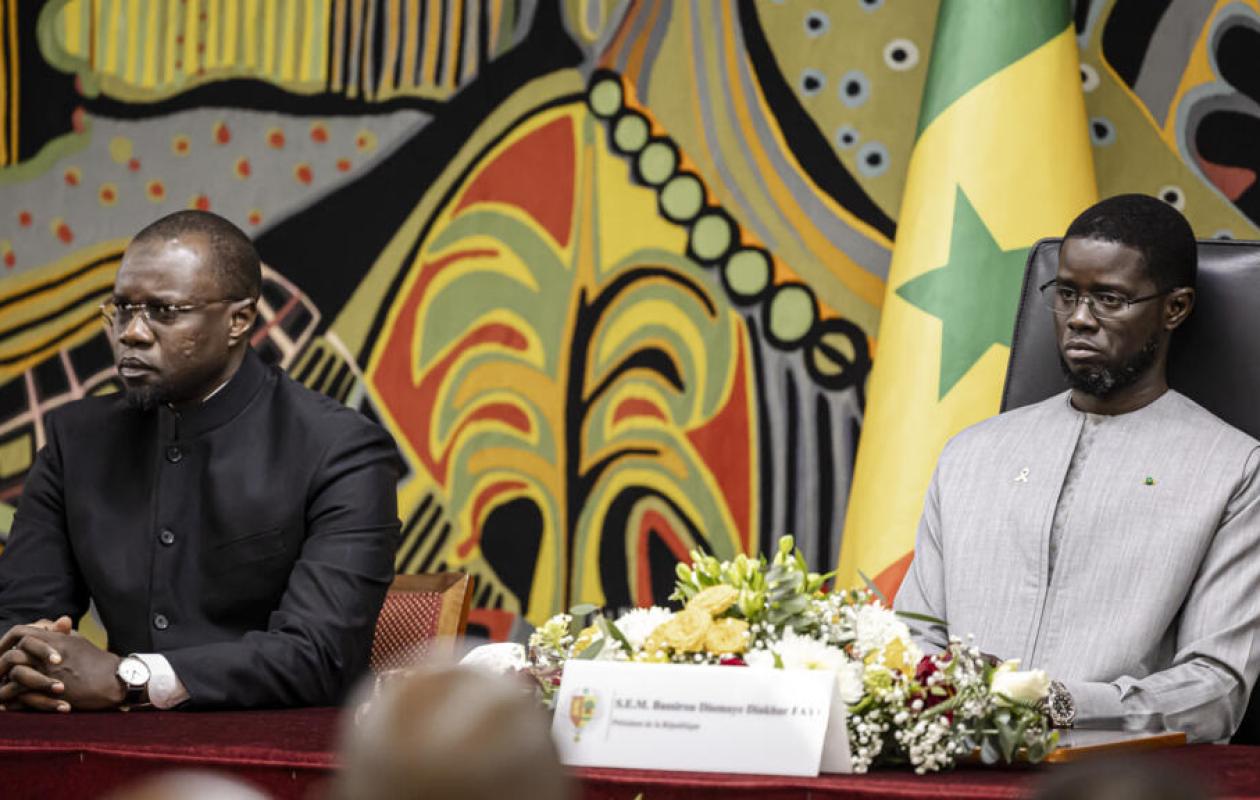
Mes conseils au duo Diomaye-Sonko : Tout est possible ! (par Ndiaga Loum)
In "Archives of the North," Marguerite Yourcenard writes: "In every era, there are people who don't think like everyone else, that is to say, who don't think like those who don't think." On July 12, 2023, a few days after President Macky Sall announced he would not run for a potential third term, I humbly invited him to go further by initiating national reconciliation, doing everything possible to include the then-opposition leader, Ousmane Sonko, and not trying to obstruct his candidacy in 2024. He preferred to listen to the hawks and fanatical extremists in his own camp, before attempting, six months later, to do exactly what I had suggested to him a few months earlier. It was too late, and he lacked both tact and clear-sightedness. Here is an excerpt from what I wrote in this opinion piece, which was widely reprinted in the press on July 12, 2023: “Doing the opposite and embarking on a campaign to eliminate a formidable opponent and his political machine by rejecting his candidacy will plunge us into the uncertainty of a future whose uncontrolled consequences could wipe out all the gains made after the historic act of July 3, 2024. Ousmane Sonko has nothing to lose in a reconciliation with an outgoing head of state, despite the pain of the injustices he has clearly suffered in the context of a fiercely contested political battle; and the outgoing head of state, too, has nothing to lose. On the contrary, he has everything to gain by taking two symbolic steps in record time that enhance the reputation of Senegal ( Teranga) and from which he will personally reap the benefits by seeking the votes of the entire world to lead its most representative institution.” In doing so, many will be too discreet to mention the ICC, but everyone will cherish the dream of seeing their country's name associated with the highest leadership of the UN. If Macky Sall had followed this path, his UN candidacy today would not be supported by a third country (Burundi) and might not have provoked so much disapproval.
It's always a mistake to be right too soon.
Today, I am deliberately adopting a more informal tone when addressing the Diomaye-Sonko duo. I know nothing that you don't already know. I am simply offering reminders that an outside observer may have more in mind and more at heart, compared to the weighty and all-consuming preoccupations of those in power, who may be led to neglect what shouldn't be neglected and to overvalue what doesn't deserve it.
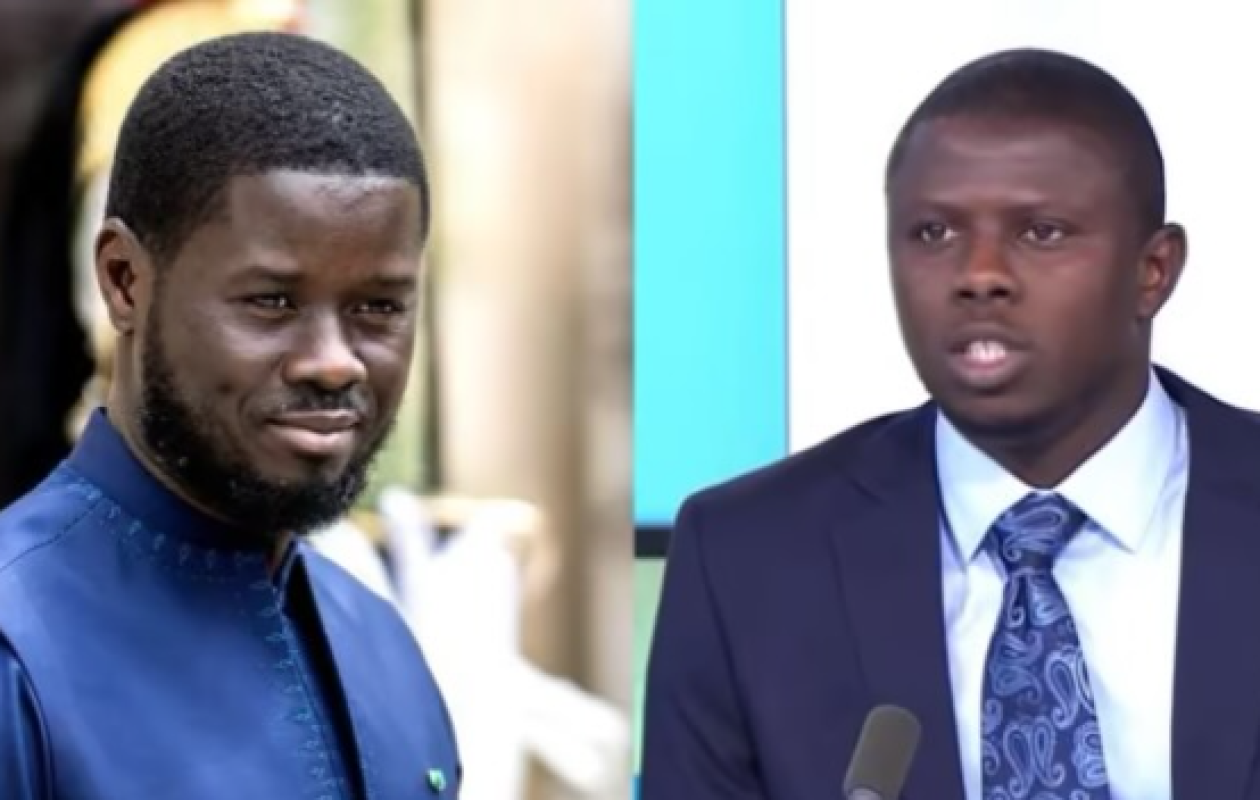
In August 2024, in an interview with the national daily newspaper Le Soleil , I was asked, " Do you think the Diomaye-Sonko duo will withstand the vicissitudes of politics?" Here is my answer : " Those who base their opposition strategy on a potential disagreement between the Diomaye-Sonko duo are not actually analyzing the situation; they are simply expressing their wishes and prayers. In wishing for this, they are out of touch with the majority of the population, who elected this duo and want to see them govern in harmony. Since the president and prime minister have understood the message sent by the people, they will do everything possible to maintain this agreement at the highest level of government. For the time being, they can intelligently divide the responsibilities without being bound by laws that, in any case, are destined to be changed in the near future to rebalance power." The president, freed from partisan constraints, manages the nation's equilibrium and its international influence. The prime minister has administrative tasks as head of government, but also a political function as leader of the majority. (...) The Diomaye-Sonko duo possesses a sociological legitimacy that remains stronger than institutional and legal fictions. By voluntarily, pragmatically, and effectively expanding the prime minister's scope of action, the president violates no constitutional text unless he chooses to be bound by an obtuse, reductive institutional interpretation... In essence, 54% of Senegalese elected a duo; it would be a form of political intelligence, realism, and wisdom to accept things as they are. This is the tacit pact that the people have signed with the Diomaye-Sonko duo. What happened in the meantime to allow the satanic demons of division—the system—to triumph and thus contradict a revolutionary history written in blood and sweat? All is not lost. To remedy this, here, in my humble opinion, are two other things to do:
What is the system? It's not just men and women; it's a nebulous network built on shared practices of resource predation, corruption, bribery, and the manipulation of political and institutional levers of power to capture a broad clientele with external ramifications and ultimately strong social roots. In the eyes of the system, Diomaye and Sonko are "two sides of the same coin": there isn't one they like more than the other, there's one they hate more than the other. Subjected to all manner of malice, pushing cruelty to the point of physical stigmatization, with these morphological considerations—reasoning symptomatic of human stupidity—this is what the system said about the current president: "How will he sit with Biden and Macron?" These are the same elements of the system that are now asking Diomaye to wage a proxy war: "Jay ma guerre bi ." How do we fall into the system's trap? The system? It lures you in, it dazzles you, it captivates you, it monopolizes you, it leads you astray. It repeats ad nauseam : "You owe nothing to anyone, your election is solely the will of God." Of course! Moreover, it's not only power that stems from divine will. Everything we are as individuals, everything we do on earth, stems from divine will. But God doesn't come to us directly to make us and make us do things. He works through intermediaries whose decisive encounter and interrelationships shape us into who we are (parents, friends, colleagues, etc.). From these interactions that punctuate our individual journeys at every stage of our lives emerges a "finished cultural product," what the French sociologist Bourdieu calls habitus , which acts in any situation as a general matrix for judgment and action. Recognizing the merit of all those people who have been instrumental in shaping who we have become is also a way of giving thanks to God. But in politics, especially in our part of the world, the satanic demons of division know how to manipulate divine will to break alliances and agreements, and shamelessly encourage betrayals, as long as it serves their own interests. If you listen attentively and they perceive you as impressionable, they will take advantage of it without a shred of shame. They are thus able to rebuild their personal political careers on the ruins of shattered friendships. This is the typical behavior of an opportunist who consoles himself and eases his conscience by arguing that there are no lasting friendships in politics, only opportunities. For those within the system, lying, betraying, and even killing are fundamental to their original understanding of politics. Winning at all costs is neither morally decadent nor dishonorable to them. On the contrary, it's seen as intelligence or political genius. It's the very milk they've been fed, from one regime to the next. That's why political opportunism doesn't bother them at all. Ask them for advice, and you already have their answer: "You have the money, you're the supreme commander of the armed forces, you're the guardian of the Constitution, you have the judiciary under your command; you can cunningly manipulate all these attributes at your disposal to create the conditions favorable to your re-election." The system can indeed transform a personality if you don't keep your feet firmly on the ground. It dictates the postures you adopt, it dehumanizes you, it turns you into a robot. It fosters apathy, distance, condescension; it encourages snub, then defiance. It elitizes you, it distances you from the common people, it makes you into something you're not. It makes you dependent on ostentation, on excessive protocol and deference, to the point that you can no longer imagine living outside the gilded halls of His Majesty. The intoxication of power becomes a ritualized and secularized construct, so natural that you're no longer even aware of it. Its psychological effects on leaders inevitably lead to a loss of empathy. If you don't have a clear-sighted, courageous, and sufficiently influential advisor to encourage you to rediscover what's natural, ordinary, and authentic, then you become mired in it. You never recover. When the negative effects on his reputation become apparent, all that will remain, as a means of repair or correction, are symbolic acts of populism, corruption, bribery, and the deployment of communication gimmicks recommended by newly graduated political marketing consultants. These consultants' traditional remedies, tried and tested elsewhere, are as socially disconnected here and now as the very actions that made the leader they advise unpopular. This is how the system manages to convince you that you can win the sympathy of the Senegalese people, hope for their support of a new political project, all while promising you that they will be completely unmoved by the possibility of a betrayal perceived as such, like a family tragedy. What the system doesn't tell you is that in politics, general perception often takes the place of immutable reality. Ultimately, what matters in politics is neither what is, nor what is said, but what is perceived.
What more can be said to Diomaye and Sonko? Should the historical and emotional bond built with your son's godfather, the son of your daughter's godmother, be sacrificed on the altar of a sudden personal political ambition discovered through the realities of exercising power? "Lou ko diar?" This might have been effective in a traditional, Machiavellian political argument, but it no longer holds sway in the current sociological, demographic, and electoral context of Senegal. This predominantly young population, with an average age of 19, actually possesses more virtues than an ordinary politician, seasoned by the old regimes, could possibly imagine. In truth, if Pastef's project has been so successful, it is because it aligns with the new ethical demands of this young population. Showing these young people, who will constitute the overwhelming majority of voters in the upcoming elections, a face contrary to their ethical principles will only provoke anger and rejection. It's better to maintain one's authenticity and accept defeat or compromise than to vainly hope for victory by stubbornly adopting the outdated and antiquated behaviors of those who still consider betrayal a mere lesson in political realism. This might have worked until 2021. That's no longer the case since March 2021, a month that marks a turning point in Senegal's recent political history and necessarily calls for a new way of thinking about politics. Everything must be done to remain true to the principles for which one was elected. The best way to achieve this is to maintain one's authenticity. The most zealous, and often the most inexperienced, who have read a few snippets of Niccolò Machiavelli's major work ( The Prince ) through Wikipedia or AI-powered conversational tools, will attempt to rewrite history. Every flatterer lives at the expense of the one who listens to him. If there's one thing to take away from President Abdou Diouf's memoir, it's this warning against courtiers who elevate authority to the status of the "divine," but who are quick to deplete the ranks of your inner circle as soon as you lose power. When we discuss history, it's to draw lessons for the present and the future. Recent history has already shown us that satanic demons personified, ready to sacrifice friendly or even familial relationships for purely political or personal interests, can lead to unimaginable, irreparable, tragic extremes. May God preserve us from ever having to write a letter from beyond the grave, as Sankara metaphorically imagined, addressed to Blaise! Life wouldn't be worth it. Political ambition, so precarious, and the ephemeral destiny intrinsically linked to it, even less so! Personal reputation and that of loved ones would be eternally tarnished. Bad taste has no court but conscience. When you read these words, take them as advice from an observer who wishes you nothing but happiness, having discreetly celebrated, within the privacy of his family, this March 24, 2024, as a new chapter in the history of democracy, bearing the promise of a profound revolution, a systemic break perfectly aligned with the new demographic and sociological reality of the continent and the country. Remember never to betray the hopes of this swarm of young people, once desperate and resigned, who today vehemently express their legitimate expectations on social media, while closely monitoring the level and quality of execution of "their" project. I remain optimistic. Everything is still possible! The period of estrangement between Diomaye and the young patriots will come to an end. I don't say this because I believe it. I say it because I hope it's what I do hope for! I say it because I wholeheartedly desire it! If all the stories circulating about the mutual admiration between the two friends (Diomaye and Sonko) are true, if all these beautiful tales are authentic, they reveal a profound sensitivity. Certainly, power doesn't make you more human, but it shouldn't make you less human either. When admiration is this reciprocal, the separation can only be dramatic. This is what makes me optimistic about the future of the relationship between Sonko and Diomaye. Senegal will benefit. The sensitive human being will prevail over the insensitive politician. The exemplary relationship we will leave to posterity would be so beautiful that it would explore the realms of the improbable and the impossible, thus invalidating the terrible assertion that politics is the graveyard of friendships. Followers of Machiavelli would say, "Oh, what romantic naiveté!" I would retort, like Albert Camus, "One must imagine Sisyphus happy!" Happiness is not necessarily about reaching the goal; it lies in the effort of reaching it.
Ndiaga Loum, Full Professor, UQO










Commentaires (20)
Participer à la Discussion
Règles de la communauté
💡 Astuce : Utilisez des emojis depuis votre téléphone ou le module emoji ci-dessous. Cliquez sur GIF pour ajouter un GIF animé. Collez un lien X/Twitter, TikTok ou Instagram pour l'afficher automatiquement.
Se connecter
Commentez avec votre profil, votre photo, et soyez averti des réponses.