
Nos meilleurs vœux au Gouvernement (par Yoro Dia)
I extend my best wishes to the Government. I have always believed that the majority and the opposition should exchange greetings because they are partners in the same democratic process, which should be a matter of ladies and gentlemen—that is to say, of civility and courtesy, as in Great Britain where a simple table separates the government from the opposition in the oldest parliament in the world. The new opposition, which has replaced Molotov cocktails with the intellectual rigor of ideas, the stark clarity of thought with the vulgarity and brutality of Pastef, and the "marble of the Senate with the dust of the Colosseum," draws inspiration from this tradition of democratic elegance, but also and above all from our own traditions, which say, "Senegal is one, no one can be one," thus making dialogue an integral part of the Senegalese social contract.
This is why we welcome the outstretched hand of the Minister of Foreign Affairs, who calls for a consensus on foreign policy to allow Senegal to maintain its standing in Africa and the world, after having disappeared from the global radar due to the low-level diplomacy of Ms. Yassine Fall. With jihadists at our borders, we should be seeking the same consensus on defense policy, but unfortunately, the President of the Republic has never proposed one, and his Minister of the Armed Forces is more focused on events than strategy. We hope that by 2026, the President of the Republic and his Minister of the Armed Forces will finally present us with a defense policy. President Macky Sall, who increased the defense budget by 250% between 2012 and 2024, understood that while governing is about planning, defending is about preventing. Let's hope that in 2026 our Minister of the Armed Forces will move beyond mere events and focus on strategy, because the army is for waging war, and war is at our doorstep. Despite Pastef's resounding failure on the economy, we hope that in 2026 the government will manage to turn things around, because time is running out and Senegal has already lost two years. 2025 was an annus horribilis. 2025 will be remembered as a year of economic regression for which our fundamentally incompetent Prime Minister is solely responsible.
Senegal has been sinking deeper into the abyss every day since the Prime Minister accused our state of being a fraud. This statement marked the beginning of our economic descent into hell. 2025 will be remembered as the year Guinea caught up with us and Côte d'Ivoire surpassed us. Senegal's decline will continue in 2026 because the power struggle at the top of the state will continue to paralyze the country, as they will focus more on their political survival than on the economy. From the outset, we understood that constant tension is the driving force behind Pastef, and the pacification of the political landscape by the new opposition has only served to shift this tension to the heart of Pastef, creating a rift born from the clash of personal ambitions between Diomaye and Sonko. Diomaye will win this internal war not because he has a sound strategy, but simply because he cannot afford to lose. Diomaye cannot lose and Sonko cannot win. Diomaye cannot lose for two obvious reasons. Even if he sleeps, he wins because he has nothing to lose: he is already President with this gift of a mandate, in addition to possessing the thermonuclear weapon of a decree that allows him to end the chess game against the Prime Minister at any time.
Finally, as I've been saying since April 2024, the only risk Senegal faces is wasting time because we have a strong state and solid institutions. And this state, which was able to withstand the shock of the major conflict between Senghor and Dia, will easily manage the minor squabble between Diomaye and Sonko. So there's no reason to be afraid, only one regret: the Pastef debacle. Rarely has a regime held so many cards to accelerate progress, but its incompetence will cause us to lose the race towards emergence that pits us against Côte d'Ivoire. But don't they say in Abidjan that "Premier Gaou" isn't "Gaou"? Senegal will soon return.
Dr. Yoro Dia, Political Scientist, Former Minister
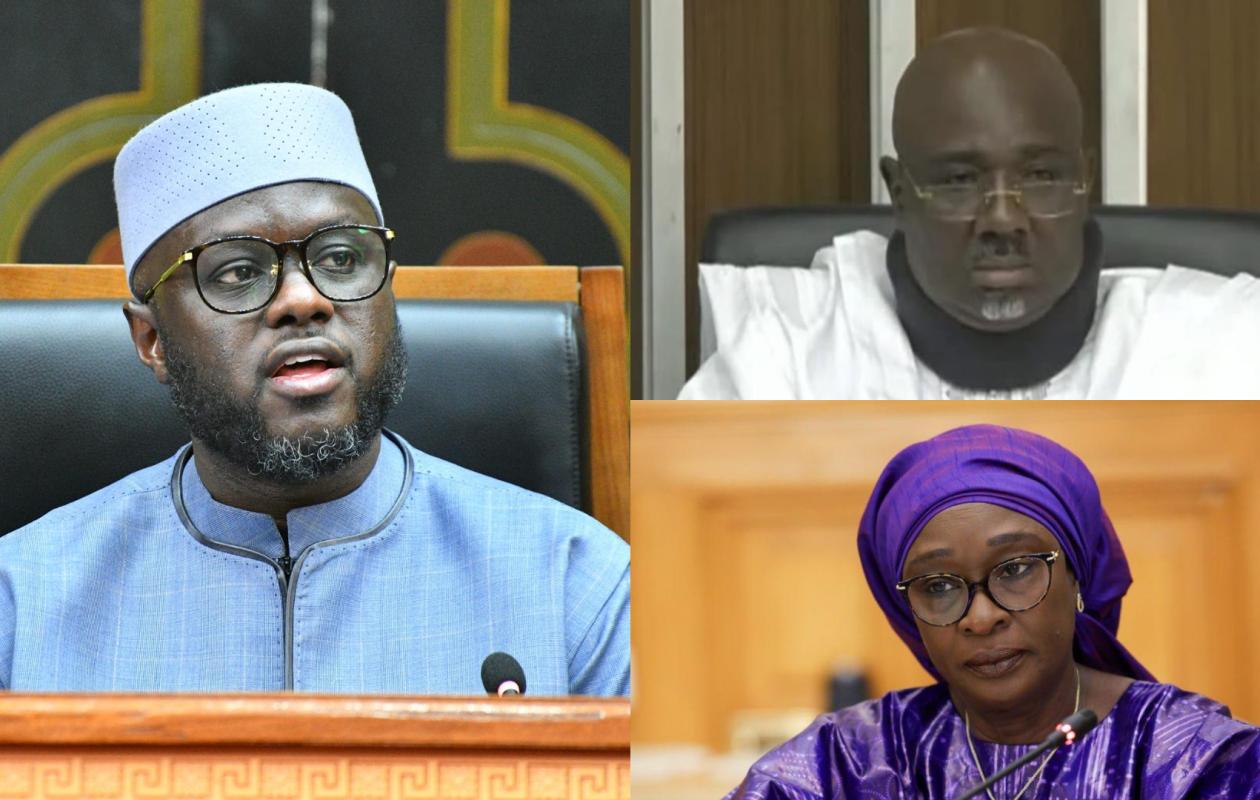
![[EXCLUSIF] Affaire Pape Cheikh Diallo : Enseignant, traiteur, vigile... la liste des arrestations s'allonge](https://image.seneweb.com/content/news/2026-16-15//thumb_1260x800_69dfbc6b83024_8exwDmFZNa.jpg)








Commentaires (1)
La diplomatie sénégalaise traverse aujourd’hui une phase préoccupante. Longtemps reconnue pour sa stabilité, son sens du dialogue et son influence régionale, elle semble désormais en manque d’idées nouvelles et d’actions fortes. À l’heure où les équilibres géopolitiques se recomposent rapidement, le Sénégal donne l’image d’une diplomatie enlisée dans l’immobilisme.
Ce malaise tient avant tout à l’absence d’une doctrine diplomatique claire. Aucune vision stratégique lisible ne semble guider l’action extérieure de l’État, ni à court ni à long terme. La politique étrangère apparaît davantage réactive que proactive, s’ajustant aux événements plutôt que les anticipant. Cette posture affaiblit la capacité du pays à défendre ses intérêts, à peser dans les instances régionales et internationales et à se positionner face aux nouveaux enjeux sécuritaires, économiques et climatiques.
Les récentes nominations au sein de l’appareil diplomatique s’inscrivent dans ce climat d’incertitude stratégique. Elles donnent le sentiment de décisions parfois automatisées, prises sans évaluation rigoureuse des compétences réelles au regard des exigences du poste et des objectifs assignés. L’absence apparente de critères transparents, fondés sur des fiches de poste clairement définies, alimente le doute quant à la capacité de ces choix à renforcer l’efficacité et la crédibilité de la diplomatie sénégalaise.
Or, dans un environnement international de plus en plus complexe et concurrentiel, la diplomatie ne peut se réduire à une gestion administrative des carrières. Elle exige une sélection exigeante des profils, une maîtrise fine des dossiers, une capacité d’anticipation et une vision stratégique cohérente, portée par des acteurs légitimes et compétents.
Plus que des ajustements ponctuels, c’est d’un véritable sursaut que la diplomatie sénégalaise a besoin. Cela implique une réflexion de fond sur les priorités nationales, une clarification des intérêts stratégiques du pays et la mise en place d’une doctrine diplomatique assumée, articulée autour d’objectifs précis et mesurables.
Sans vision, sans doctrine et sans exigence de compétence, la diplomatie risque de perdre ce qui a longtemps fait sa force : sa crédibilité, son influence et sa capacité d’initiative. Le moment est venu de rompre avec l’immobilisme et de redonner à l’action extérieure du Sénégal une ambition à la hauteur des défis contemporains.
Ambassadeur
Participer à la Discussion
Règles de la communauté :
💡 Astuce : Utilisez des emojis depuis votre téléphone ou le module emoji ci-dessous. Cliquez sur GIF pour ajouter un GIF animé. Collez un lien X/Twitter, TikTok ou Instagram pour l'afficher automatiquement.