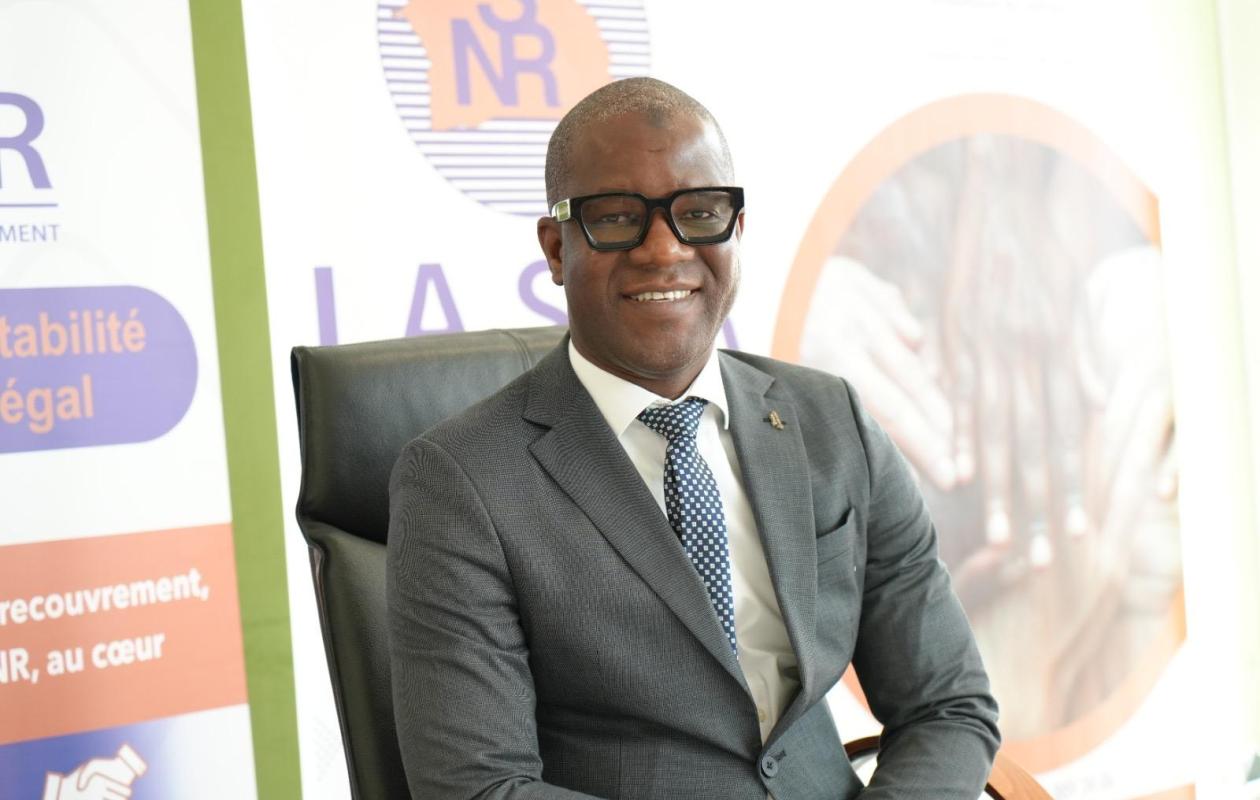
Propositions pour un modèle de développement endogène en Afrique (Par Me Babacar Ndiaye)
Introduction
Africa is often described as a paradoxical continent. On the one hand, it has abundant natural resources and considerable demographic potential; on the other, it remains one of the regions of the world where economic and social development indicators remain the weakest.
This situation raises a fundamental question: how can we explain that the continent richest in natural resources is also the one where poverty remains most widespread?
Indeed, Africa possesses approximately 40% of the world's gold reserves, 50% of global diamond production, 70% of cobalt production, and nearly 90% of global platinum reserves. In addition to these mineral resources, the continent also boasts significant oil and gas reserves, as well as considerable agricultural potential. It is home to nearly 60% of the world's uncultivated arable land.
Despite these advantages, Africa has an average gross domestic product (GDP) per capita of between 2,900 and 3,000 USD, while it is around 35,000 USD in Europe and 21,000 USD on the American continent.
Region
Average GDP per capita (2024)
Africa
2,900 – 3,000 USD
Europe
USD 35,000
America
21,000 USD
This contrast highlights a worrying reality: the continent's natural resources do not sufficiently benefit African populations.
Therefore, a twofold question arises:
• Why is Africa failing to transform its natural resources into sustainable economic prosperity?
• What economic model could allow the continent to fully benefit from its resources?
To answer these questions, it is necessary to analyze, on the one hand, the structural causes of Africa's economic backwardness and, on the other hand, the prospects for a sovereign model of natural resource development.
I. The structural causes of the African economic paradox
1. Historical legacies and structural imbalances
The analysis of Africa's economic backwardness cannot ignore certain major historical factors.
The transatlantic slave trade, which took place between the 16th and 19th centuries, caused a veritable human hemorrhage by depriving the continent of a large part of its working population. Millions of Africans were deported to the Americas and the Middle East as part of the triangular trade.
This tragedy has profoundly disrupted African societies and weakened existing political and economic structures.
This period was followed by colonization, during which foreign powers restructured African economies around one main objective: the export of raw materials to colonial metropolises.
This extroverted economic organization has permanently anchored the continent in a role as a supplier of raw materials, without any real local industrial transformation.
2. The limitations of development models applied in Africa
After independence, several development strategies were tested in African states, often driven by international financial institutions.
Despite the financial resources mobilized, these policies have not succeeded in structurally transforming African economies.
One of the main weaknesses lies in the absence of an economic model capable of ensuring the local transformation of natural resources.
Thus, in many African countries, raw materials continue to be exported in their raw state, while processed products are imported at much higher costs.
This situation perpetuates a structural trade imbalance and severely limits the creation of industrial jobs on the continent.
II. The conditions for autonomous economic development
1. The central role of human capital
The economic development of a state depends largely on the quality of its human resources.
However, Africa faces a significant shortage of skilled labor in the industrial and technological sectors.
This situation can be explained in particular by:
• the inadequacy of technical and vocational training systems;
• the brain drain to developed countries.
According to some World Bank estimates, nearly 70,000 skilled African professionals leave the continent each year to work abroad.
Strengthening human capital is therefore an essential prerequisite for any sustainable development strategy.
2. The issue of development financing
The second major obstacle lies in the insufficient capital available to finance industrial investments.
The exploitation and transformation of mineral and energy resources require considerable investments that many African states are unable to undertake alone.
Therefore, the central question becomes that of mobilizing external financing while preserving the economic sovereignty of states.
III. Towards a sovereign model for the valorization of natural resources
1. Local processing of raw materials.
A sustainable development strategy for Africa must necessarily be based on the local transformation of natural resources.
This approach would allow:
• to create industrial jobs;
• to promote technology transfer;
• to develop local technical skills;
• to increase the added value produced on the continent.
Furthermore, local processing would help strengthen African industrialization, which remains insufficiently developed.
2. A strategic partnership with international investors.
The implementation of this strategy could be based on a balanced partnership model between African states and international investors.
In this context, foreign companies would contribute:
• financial capital;
• technological know-how;
• industrial expertise.
In return, they could benefit from a temporary right to exploit resources, within the framework of clearly defined agreements.
These agreements could include provisions such as:
• the construction of local industrial units;
• the training of African engineers and technicians;
• State participation in the company's capital.
This type of partnership would both attract foreign investment and gradually strengthen local industrial capabilities.
IV. The strategic role of the African diaspora.
Another important lever for financing the continent's development lies in mobilizing the financial resources of the African diaspora.
Remittances sent annually by diasporas represent considerable sums, often exceeding official development assistance.
A public policy aimed at directing a portion of these financial flows towards investment funds dedicated to industrial and mining projects could contribute to financing the exploitation of African natural resources.
Furthermore, the diaspora also has human capital and professional expertise that could be mobilized within the framework of structuring development projects.
Conclusion
Africa has considerable natural resources that could be a powerful lever for economic and social development.
However, the development of these resources requires a profound transformation of the economic models currently in place.
Local processing of raw materials, combined with balanced partnerships with international investors and strategic mobilization of the diaspora, could enable the continent to strengthen its industrialization and create sustainable jobs.
However, the success of such a model depends on several conditions:
• a strong political will;
• transparent governance;
• a harmonisation of legislation at the regional level;
• and a firm commitment to human resource development.
Under these conditions, Africa could transform its immense natural potential into genuine engines of growth, prosperity and economic sovereignty.
Mr. Babacar NDIAYE
DG National Debt Collection Company

















Commentaires (10)
Participer à la Discussion
Règles de la communauté :
💡 Astuce : Utilisez des emojis depuis votre téléphone ou le module emoji ci-dessous. Cliquez sur GIF pour ajouter un GIF animé. Collez un lien X/Twitter, TikTok ou Instagram pour l'afficher automatiquement.