
Remettre l’économie au centre : une vision renouvelée pour la CEDEAO (par Abdoulaye Ndiaye)
The Economic Community of West African States (ECOWAS) is going through a period of both pressing and legitimate expectations. Pressing, because our citizens experience daily rising prices, job insecurity, and difficulty accessing larger markets. Legitimate, because our region possesses considerable assets in terms of demographics, entrepreneurship, resources, and innovation capacity, which above all require improved conditions for movement, production, and investment.
With Senegal at the head of the ECOWAS Commission, a special responsibility opens up for our country: to hold together the security, political cohesion and economic dynamism of the region.
Current situation and challenges
We must first acknowledge, with caution and clarity, the challenges facing West Africa. Security issues remain serious, and the political trajectories of several states have created tensions that affect mutual trust and the ability to act together. The relationship with certain partners in the region, including the states united within the Alliance of Sahel States (AES), requires a respectful, open, and patient approach. Stability and supranational unity cannot be decreed; they must be built.
But it would be a mistake to believe that these challenges relegate the economy to the background. On the contrary: in daily life, the primary test of regional integration remains economic. It's the price of rice and fuel, the cost of transportation, the ability to sell beyond one's city or country, access to decent employment, and hope for young people. In this sense, trade serves both domestic and foreign policy. When a border slows down, the average household pays the price; when a road deteriorates, entrepreneurs refrain from investing.
Why, then, put economic integration back at the center? Because it offers a pragmatic solution and relies on instruments that ECOWAS has already implemented, albeit imperfectly. The ECOWAS Trade Liberalization Scheme (ETLS), for example, established a clear principle: the free movement of products originating within the community. The challenge today is to make this a simpler and more accessible reality for economic operators, especially smaller ones.
Putting the economy back at the center means first and foremost reducing the cost of living: smoother regional supply chains limit stockouts and decrease transport and storage costs. Secondly, it means creating jobs and encouraging formalization: a more accessible regional market helps local businesses grow, expands opportunities, and incentivizes investment in quality. Finally, it means strengthening investment attractiveness: the actual size of the market matters. Integration, like the convergence effort around the ECOWAS Common External Tariff, reduces uncertainty and makes projects profitable that would not be so in a single national market.
Border friction is well known: lengthy procedures, multiple checks, opacity, and variability from one border post to another. A realistic priority is to standardize simple practices, building on existing EU structures: making the mechanisms of the Trade Liberalization Scheme more operational, clarifying rules of origin, and reducing grey areas that allow for divergent interpretations. The goal is not to "deregulate," but to make the rules predictable. In concrete terms, this means more transparent procedures, gradual digitalization, and rapid appeal mechanisms for operators, so that smooth operations no longer depend on location, time, or the person involved.
Competitiveness hinges on roads, ports, transit points, and transport organization. To avoid fragmentation, a priority corridor approach is essential, with operational coordination on maintenance, security, rest areas, last-mile delivery, and transparent toll collection. In this context, the Abidjan–Lagos corridor, the first phase of the Dakar–Lagos coastal corridor, exemplifies the type of structuring project the region identifies as a driver of integration, provided its implementation, governance, and impact on supply chains are properly managed.
Harmonizing trade rules in phases is possible. This involves selecting sectors with strong regional potential, such as agri-food, materials, healthcare, and digital financial services (fintech), and progressively aligning quality requirements, customs documentation, and rules of origin. Here too, ECOWAS has instruments that need strengthening: the Common External Tariff, beyond its tariff dimension, has encouraged administrations to converge on a common nomenclature and categories, thus promoting consistency in practices. The challenge is to allow West African products to circulate as products "from the same market," while protecting consumers and public health.
Most companies capable of exporting within the region are SMEs; they often lack appropriate financing, market information, and logistical solutions. Here, integration must provide tangible support to SMEs. This requires regional support mechanisms (training, certification, business intelligence) and risk-sharing instruments that encourage banks to finance the export cycle. In this regard, mechanisms already in place at the community level demonstrate that a regional solution can simplify the lives of operators: the ECOWAS Brown Card insurance scheme, for example, was designed to secure cross-border vehicle travel by guaranteeing coverage and compensation in the countries visited. Building on this, it is essential to develop more practical tools that reduce transaction costs.
Strengthening professional mobility can also be achieved in stages. We have an interest in building, at the West African level, a system similar to Erasmus: a framework that encourages mobility for education, learning, and vocational training, directly linked to labor market needs. In the same vein, a more common recognition of qualifications can be implemented, starting with professions where regulations are strictest, such as those based on professional licenses (lawyer, architect, engineer, healthcare professionals, etc.). Harmonizing standards, establishing professional registers, and defining mutual recognition procedures, coupled with quality guarantees, would secure mobility and make the region more attractive to talent, including that of its large diaspora.
An ECOWAS that protects and delivers
Our region must continue to take security seriously, preserve the sovereignty of states, and maintain channels of dialogue, including with the ESA countries. But, with the door opening for Senegal within ECOWAS, we have an opportunity to put the economy back at the center, through intergenerational responsibility.
A peaceful ECOWAS, yes. But above all, an ECOWAS that reduces friction, opens markets, supports businesses, and facilitates the mobility of skills. This is how our integration becomes a lived reality for citizens.
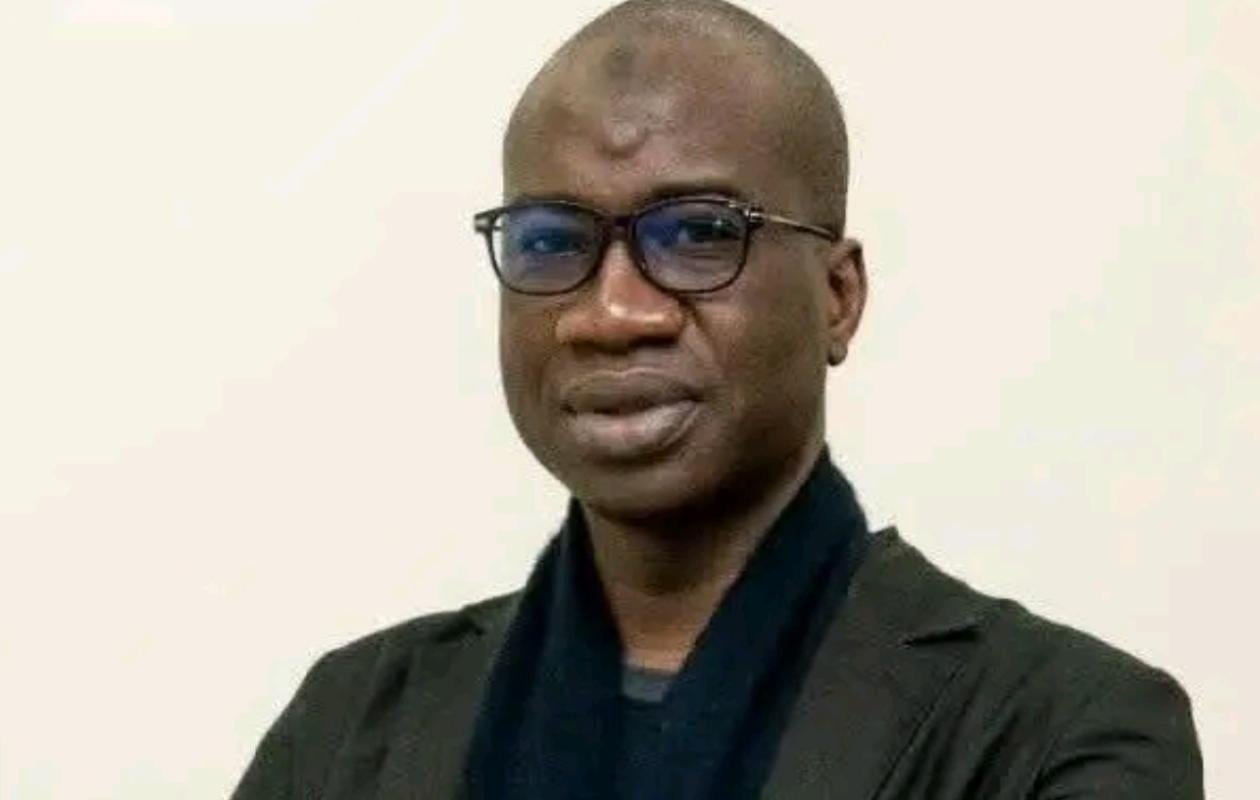
Abdoulaye Ndiaye, professor of economics at New York University Stern School of Business



![[EXCLUSIF] Actes contre nature : L'homme politique Ndiaga Seck arrêté par la DIC](https://image.seneweb.com/content/news/2026-20-15//thumb_1260x800_6a0726d812df9_nxDd5CNBzl.jpg)










Commentaires (1)
Participer à la Discussion
Règles de la communauté :
💡 Astuce : Utilisez des emojis depuis votre téléphone ou le module emoji ci-dessous. Cliquez sur GIF pour ajouter un GIF animé. Collez un lien X/Twitter, TikTok ou Instagram pour l'afficher automatiquement.