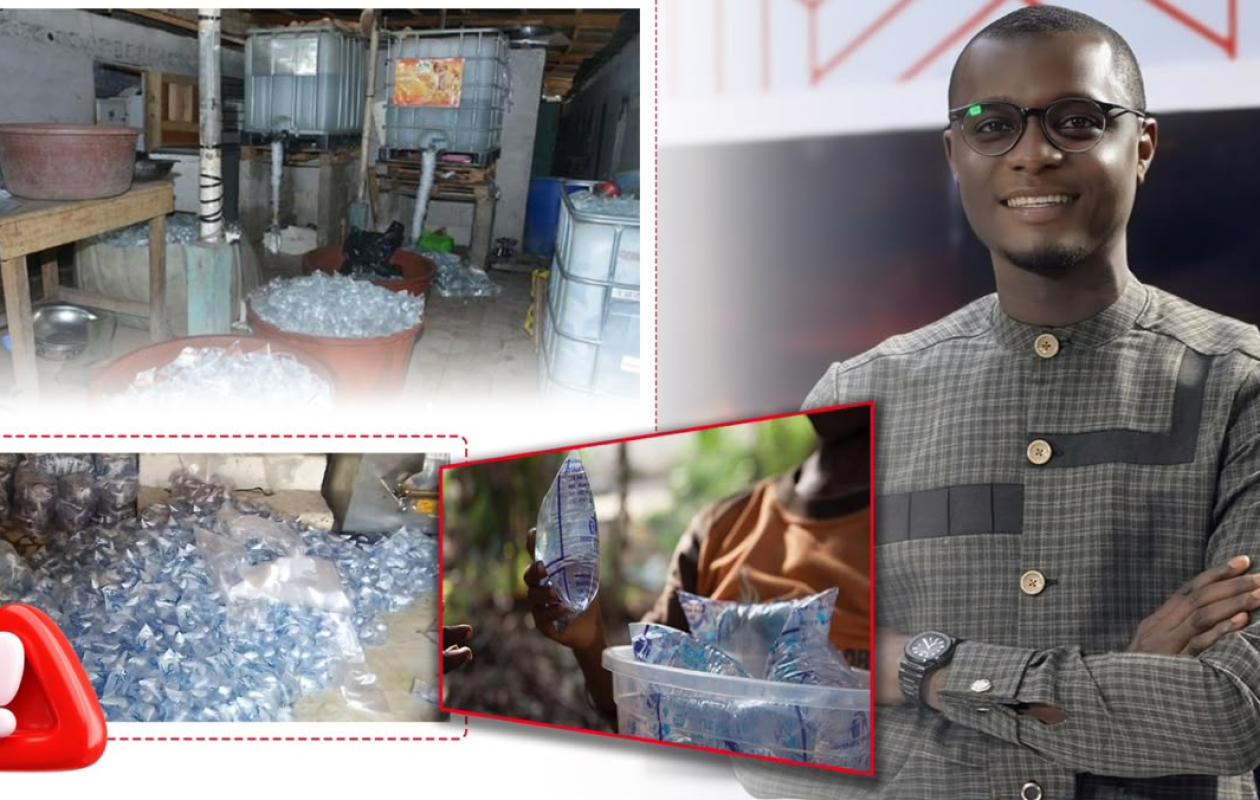
Sachets d’eau : Le grand laisser-aller qui nous coûte cher (par Babacar Kébé)
In Senegal, the sachet of water has become a symbol of everyday life. It can be found on every street corner, in buses, markets, schools, hospitals, and at ceremonies. Its affordable price and constant availability make it an essential product for thousands of citizens. But behind this apparent ordinariness lies a much more worrying reality: a health risk that we seem to have come to take for granted.
In our quest for the cheapest option, we sometimes forget the essential: our health is priceless. This focus on immediate cost leads us to turn a blind eye to the origin of the water we consume, the conditions under which it is produced, and the health guarantees it should offer.
For several months now, the defense and security forces have been increasing their operations to dismantle clandestine sachet water production units. From April to July, several sites were discovered in various locations, notably in Keur Massar, Yeumbeul, Thiaroye, Pikine, their surrounding areas, and even as far away as Thiès. The images released after these operations are revealing: unsanitary equipment, a complete lack of hygiene standards, storage in deplorable conditions, and manufacturing processes incompatible with health requirements. Today, several regions of Senegal are home to similar production units, sometimes distributing the same brands of sachet water deemed unfit for consumption. While the dismantling operations carried out in Dakar and Thiès are commendable, they must not remain isolated. This fight must be extended to the entire national territory, without exception.
The most worrying aspect is that these findings are no longer merely suspicions. They are now supported by scientific data. According to a study conducted between July and September 2025 by researchers at UCAD, reported by Le Soleil, 50 brands of water sachets were analyzed using 100 samples collected from several cities in Senegal. The results are alarming: 80% of the samples showed high levels of FAMT contamination at 37°C, 84% at 22°C, and, most significantly, 82% of the samples were deemed unfit for consumption.
These figures should be a wake-up call. They serve as a stark reminder that behind a simple sachet sold for a few dozen francs can lie a real danger to public health. This responsibility does not rest solely on clandestine producers. It also calls upon the State. The Ministries of Health and Commerce, the Public Hygiene services, local authorities, and regulatory bodies must strengthen their presence on the ground. Occasional raids are necessary, but they are no longer sufficient. Permanent controls must be established, traceability of production facilities must be ensured, non-compliant products must be systematically withdrawn from the market, and deterrent sanctions must be applied to offenders.
Citizens also bear a share of responsibility. The reflex to buy the cheapest product without worrying about its origin must change. Health is a collective responsibility. Every consumer must learn to recognize compliant products and report suspicious practices. The challenge is also cultural. For too long, we have sometimes tolerated certain abuses in the name of solidarity, community spirit, or social cohesion. But no amount of solidarity can justify an activity that jeopardizes the health of an entire population. Access to quality drinking water is a fundamental right. Protecting it requires strong decisions, rigorous controls, and constant citizen vigilance. Because a nation that allows unsafe water to circulate silently endangers its own health.
Water sachets should no longer be just a cheap product. Above all, they must be a safe product. Only then will we protect the health of the Senegalese people.




















Commentaires (10)
Participer à la Discussion
Règles de la communauté
💡 Astuce : Utilisez des emojis depuis votre téléphone ou le module emoji ci-dessous. Cliquez sur GIF pour ajouter un GIF animé. Collez un lien X/Twitter, TikTok ou Instagram pour l'afficher automatiquement.
Se connecter
Commentez avec votre profil, votre photo, et soyez averti des réponses.