
Sénégal : ce commun vouloir de vie commune (par Ndèye Fatou Kane)
Senegal has been the scene for the past few weeks of an unprecedented outburst of homophobia, following a sex scandal involving people from various backgrounds, including prominent figures in public life such as television presenter Pape Cheikh Diallo and traditional Mandinka singer Djiby Dramé.
The initial shock of discovering the arrested individuals gave way to hysteria fueled by panic, which gripped the public following the publication of the interrogation transcripts in the press. Beyond the " unnatural acts " and/or those contrary to morality, it is the morbid practice of transmitting HIV between adults, but also to innocent young people, that is causing outrage among the Senegalese people. The risks of a large-scale health crisis are real, with potentially devastating consequences for families and society at large.
Among the plethora of items seized during the police raid were sex toys, bottles of lubricant, and condoms. Since it broke, this case has fueled all sorts of debates. Whether through social media, live streaming platforms, or the front pages of the print media, the only topic of conversation is the "goordjiguen" affair. [1]
Whereas in 1930s Senegal, the figure of the "goordjiguen" was "rather characterized by a gender inversion, that is to say, the adoption of social attributes of the gender opposite to that which corresponds to the person's biological sex." They were rather seen as what are called in the West "the crazy ones." Recognized and accepted as such in society, they are characterized by an excessive feminization not only of the body and behaviors, but also of clothing styles that border on cross-dressing. [2]
These socio-anthropological elements allow us to grasp the transformation that has occurred in the figure of the "goordjiguen", which has gone from the tolerated and accepted asexual jester, animator of family ceremonies, to one who assumes a sexuality that deviates from heterosexual norms.
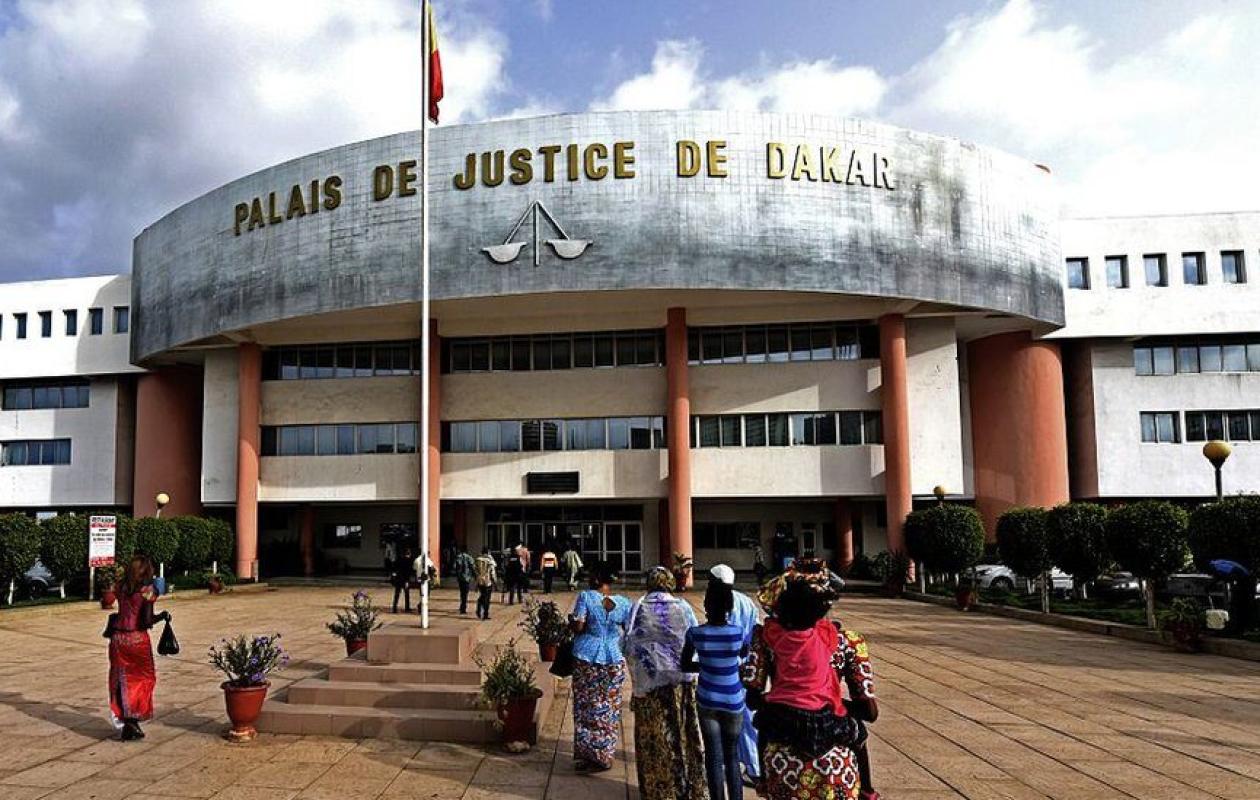
Following the outcry sparked by the "goordjiguen" affair , the Senegalese government reacted swiftly by implementing a repressive legal framework. The draft law amending Law No. 65-60 of July 21, 1965, was revised. It now defines acts against nature, increases penalties, and includes the glorification and financing of such acts among the sanctions. The text stipulates fines ranging from 2 to 10 million CFA francs. Accusations without evidence are also included and will be punishable by a prison sentence of 3 months to 2 years.
Therefore, several questions must be asked: what kind of society do we want to establish in Senegal? How does this rampant homophobia undermine all the efforts made by the National AIDS Control Council, in particular? How do anti-rights movements such as And Samm Jikko Yi and Jamra exploit this situation? Finally, what about women and their demands? Will the public responses, under the pressure of current emotions, be adequate to address the challenges of individual freedoms in a Senegalese society with its moral and religious requirements?
With its swift reaction, the Senegalese state seems to be sending a message: it is more concerned with combating "unnatural" practices than anything else. What is worrying in this affair is that homophobia will become increasingly entrenched within Senegalese society. Citizens will want to take the law into their own hands under the guise of denunciation. The press, with its sensationalist headlines, will aid them in this endeavor.
The virulence observed in these behaviors suggests that this homophobia stems from the perception that homosexual people have betrayed a male code of conduct by going against the grain of heterosexual masculinity, which is hegemonic and considered more legitimate. In most of the texts and videos protesting this resurgence of the debate surrounding homosexuality, the use of feminine terms to insult men is noteworthy.
What seems to outrage the detractors of homosexuality is that the homo senegalensis, provider and guarantor of the family unit, can only be seen as heterosexual. This subordination of homosexual masculinity, viewed as deviant, cannot therefore be accepted. The other factor that adds to an already entrenched psychosis remains the confusion between serological status and homosexuality.
In the collective psyche of Senegal, people living with HIV are automatically considered homosexual. It is true that among the charges against Pape Cheikh Diallo, Djiby Dramé, and their companions, the (in)voluntary transmission of HIV is one of the alleged offenses, which is in itself highly reprehensible. However, this conflation by the population between AIDS and homosexuality significantly undermines the advocacy campaigns carried out for years by organizations such as the National AIDS Control Council and UNAIDS.
According to the latest 2024 report from the National AIDS Control Council [3] , the number of women aged 15 and over living with HIV is 25,242, compared to 20,266 men. Furthermore, heterosexual contact remains the most common mode of HIV transmission. 49% of new HIV infections are detected in stable couples (married or cohabiting) [4] . This data contradicts the entire communication strategy that has prevailed in Senegal for the past few weeks. It is not uncommon to see people posting their HIV status on social media. It is urgent that the Ministry of Health and Social Action implement a controlled communication strategy, and that, for the rest, the justice system continue to do its job…
The prevailing socio-political situation in Senegal opens the door to other concerns. The rise of the Pastef party coincided with the growing influence of ultra-conservative, anti-rights movements that, under the guise of upholding Senegalese values, exploit already fragile rights. Two of these movements, the most publicized, such as And Samm Jikko Yi and Ndeyi ASkan Wii, use videos and press releases to rail against anything that contradicts their ideology. While their content might be educational, it is anything but. Their agenda aims to discredit all the work done by organizations defending women against violence and inequality. Gender, feminism, and campaigns for fair and equitable reproductive health appear to be their rallying cries.
At the international level, Senegal is a signatory to the Convention on the Elimination of All Forms of Discrimination against Women (CEDAW) and its Optional Protocol. At the African level, Senegal is among the States signatory to the Protocol to the African Charter on Human and Peoples' Rights on the Rights of Women in Africa, better known as the Maputo Protocol. Article 14 of this Protocol is an important legal document, as it guarantees "women's reproductive rights by authorizing medical abortion in cases of sexual assault, rape, incest, and when continuing the pregnancy jeopardizes the mental and physical health of the mother or the fetus." [5] Faced with this situation, feminist civil society continues to sound the alarm for the full implementation of this Protocol. By setting aside women's and feminist demands despite frequent reminders, decision-making bodies in Senegal are once again demonstrating where their priorities lie.
Senegal's motto, "One People - One Goal - One Faith," implies that the Senegalese people believe in a shared desire to live together. But how can this desire be translated into reality in a society that hunts down individuals in their most intimate and sacred spaces?
[1] Homosexuals. Wolof translation
[2] Christophe Broqua, “ Góor-jigéen : the negative resignification of a category between gender and sexuality (Senegal)”, Socio [Online], 9 | 2017, published online on 20 December 2017, accessed on 24 February 2026. URL: http://journals.openedition.org/socio/3063; DOI: https://doi.org/10.4000/socio.3063
[3] National Council for the Fight against AIDS - 2024 Annual Report: https://cnls-senegal.org/wp-content/uploads/2025/10/Cnls_rapport-dactivite%CC%81_BD_2024.pdf
[4] HIV/AIDS in mid-sized cities in Senegal: From individual to place-based vulnerability: https://www.sciencedirect.com/science/article/abs/pii/S0277953614007709
[5] Article 14 of the Maputo Protocol: https://www.prb.org/resources/lapplication-du-protocole-de-maputo-peut-reduire-le-nombre-davortements-dangereux/





















Commentaires (33)
Participer à la Discussion
Règles de la communauté
💡 Astuce : Utilisez des emojis depuis votre téléphone ou le module emoji ci-dessous. Cliquez sur GIF pour ajouter un GIF animé. Collez un lien X/Twitter, TikTok ou Instagram pour l'afficher automatiquement.
Se connecter
Commentez avec votre profil, votre photo, et soyez averti des réponses.