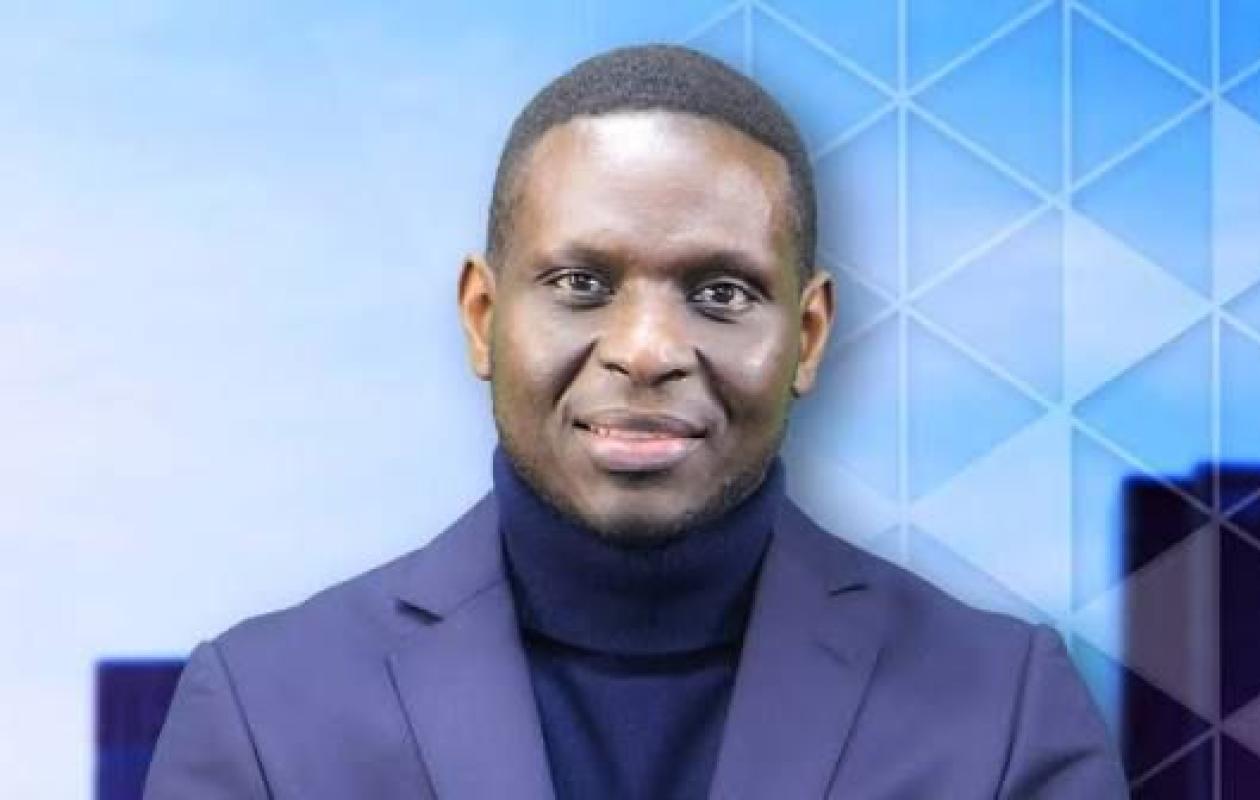
Le Sénégal a besoin d’une gouvernance, pas d’un vainqueur (Par Ibrahima Fall)
Senegal is probably going through one of the first major institutional challenges of the 2024 transition.
For several weeks now, the public debate has been gradually shifting from the concerns of Senegalese citizens to the relationships between those who embodied this change of power. Comments are multiplying. Positions are hardening. Everyone is trying to determine who is right, who is wrong, who has remained faithful to the project, and who has strayed from it.
This question is legitimate, but it is probably not the most important.
The real question is this: how to prevent a disagreement between two legitimate claims from turning into a lasting crisis for the Nation?
In management science, this situation is well known. It arises when an organization sees several centers of legitimacy emerge without having sufficiently organized their coexistence. This phenomenon is not limited to states. Family businesses, universities, government agencies, and associations regularly encounter it.
The problem, therefore, is not the existence of multiple legitimacies. The problem begins when they cease to complement each other and enter into lasting competition.
The Greeks had already given a face to this danger with the myth of Eteocles and Polynices. Two heirs of the same city, each convinced they were acting for its own good, ended up transforming the city itself into the object of their rivalry.
Senegal is obviously not doomed to such a tragedy, but it can learn a crucial lesson: a democracy does not become fragile because its leaders disagree. It becomes fragile when its institutions can no longer manage those disagreements.
That is why the real question is not who will win the power struggle.
The question is how Senegal can continue to move forward despite this power imbalance.
The first risk of a governance crisis is that it shifts the focus of the debate. People talk about the leaders and less about the Senegalese people.
However, the expectations are known: youth employment, the cost of living, agriculture, debt, education, health, justice, energy, economic sovereignty.
In organizations, when an internal crisis arises, the best leaders always bring the group back to its mission. The State should proceed in the same way.
A simple method would be to identify a few indisputable national priorities and regularly publish a shared progress report. The public debate would then gradually shift away from individuals and back towards the results.
The real work of the state would thus become the true subject again.
Disagreement is normal; it is even essential to a democracy. What becomes dangerous is when it finds no other outlet than the media, social networks, or public statements.
The strongest organizations do not eliminate disagreements. They organize them. Senegal would benefit from strengthening permanent spaces for dialogue between the main institutions on strategic issues: not to artificially manufacture a consensus, but to prevent every disagreement from turning into a political crisis.
A mature democracy does not erase disagreements, it provides a framework for them.
Governance crises rarely thrive in organizations where everyone knows precisely what their role is.
They thrive on ambiguities. Isn't it said that the devil is in the details? When several authorities seem to be pushing for the same decision, administrations hesitate, initiatives slow down, and economic players wait.
The answer is therefore primarily institutional. Each institution must fully exercise the powers conferred upon it by the Constitution and the laws, without seeking to exercise those of others.
Clarity of responsibilities is not just a legal requirement. It is a condition for trust and efficiency.
Power dynamics will never disappear; they are an inherent part of any human organization. The goal, therefore, is not to eliminate them, but to prevent them from becoming more important than the mission of the state.
For this, only one arbiter is credible: reality.
Is employment progressing?
Are public finances in good order?
Are investments picking up again?
Are schools functioning better?
Is the justice system becoming more efficient?
When results become the primary criterion for evaluation, rivalries naturally lose some of their intensity. Citizens don't expect their leaders to always agree; they expect them to produce results.
A historic change of power does not simply produce a new majority.
It creates hope. Such hope constitutes democratic capital. A prolonged governance crisis can gradually erode it.
The cost is no longer merely economic; it becomes symbolic. Citizens doubt, investors wait, partners become more cautious, and governments lose confidence. Yet trust has a unique characteristic: it is built slowly but can be lost very quickly.
Management science teaches us that an organization doesn't endure because it avoids conflict; it endures because it possesses mechanisms that allow it to transform conflict into decisions. This is probably the main lesson that the current crisis invites us to learn.
But this crisis perhaps reveals something deeper. Institutions alone are never sufficient. A constitution distributes powers. It defines responsibilities. It organizes procedures. However, it does not automatically create the behaviors it presupposes. Respect for institutions, restraint in the exercise of power, acceptance of compromises, and the ability to prioritize the general interest over short-term interests are all part of a political culture that is built over time.
All democracies experience a moment when their institutions are tested by their practices. Constitutional texts can outpace behavior. Rules can precede political habits. It is precisely in the first major crises that institutions cease to be merely constitutional provisions and become living practices.
The current crisis may, in essence, be the first major moment of institutional learning for Senegal following the 2024 change of power.
She poses a question that transcends individuals: are we capable of keeping the spirit of our institutions alive when interests diverge?
Senegal does not need a winner, it needs governance because elections allow one to seize power but only institutions imbued with a culture of responsibility allow one to sustainably maintain the trust of a people.
Ultimately, history may not remember which of the leaders was right.
What will be remembered most is whether this generation of political leaders has been able to transform a governance crisis into a step in democratic learning.
Otherwise, the cost will not only be political or economic, it will be institutional, symbolic and generational because a reform can be corrected, a decision can be reviewed, but when a democracy allows trust in its institutions to erode, it sometimes takes an entire generation to rebuild it.
If Senegal learns from this ordeal, this crisis will not remain a clash between two legitimate claims. It may well be the moment when Senegalese democracy demonstrates that its greatest strength lies not in the absence of conflict, but in its capacity to transform it into institutional progress.
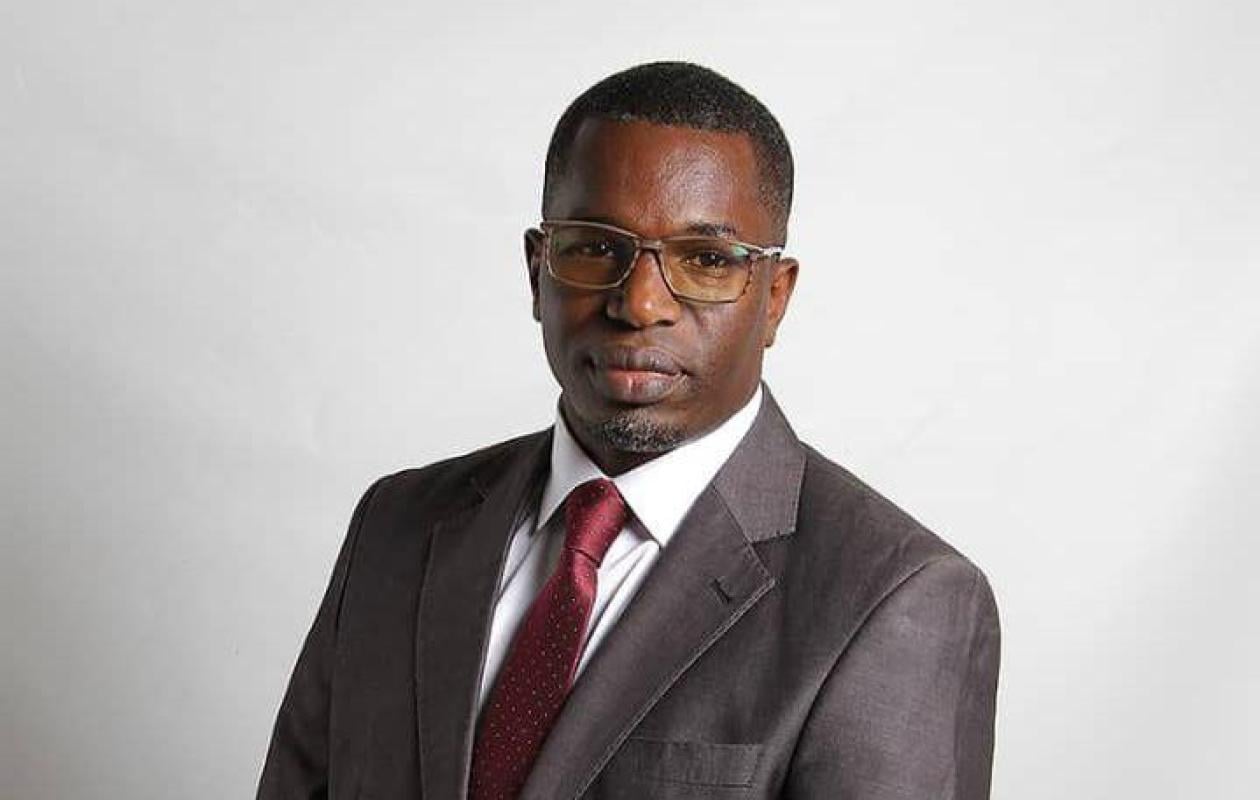
Ibrahima Fall holds a doctorate in management science from the École des Mines de Paris (Mines Paris – PSL), and is the founding president of the management research and expertise firm Hommes & Décisions.
He is the author of *The Company Against Knowledge of Real Work: Humans First or the Syndrome of the Sacrificed First* (Éditions L'Harmattan). He also co-edited, in 2026, the reference work *Command Never Sleeps: Transform or Perish* , published by Éditions de l'Aube under the patronage of the Centre for Advanced Military Studies (CHEM).











Commentaires (0)
Participer à la Discussion
Règles de la communauté
💡 Astuce : Utilisez des emojis depuis votre téléphone ou le module emoji ci-dessous. Cliquez sur GIF pour ajouter un GIF animé. Collez un lien X/Twitter, TikTok ou Instagram pour l'afficher automatiquement.
Se connecter
Commentez avec votre profil, votre photo, et soyez averti des réponses.