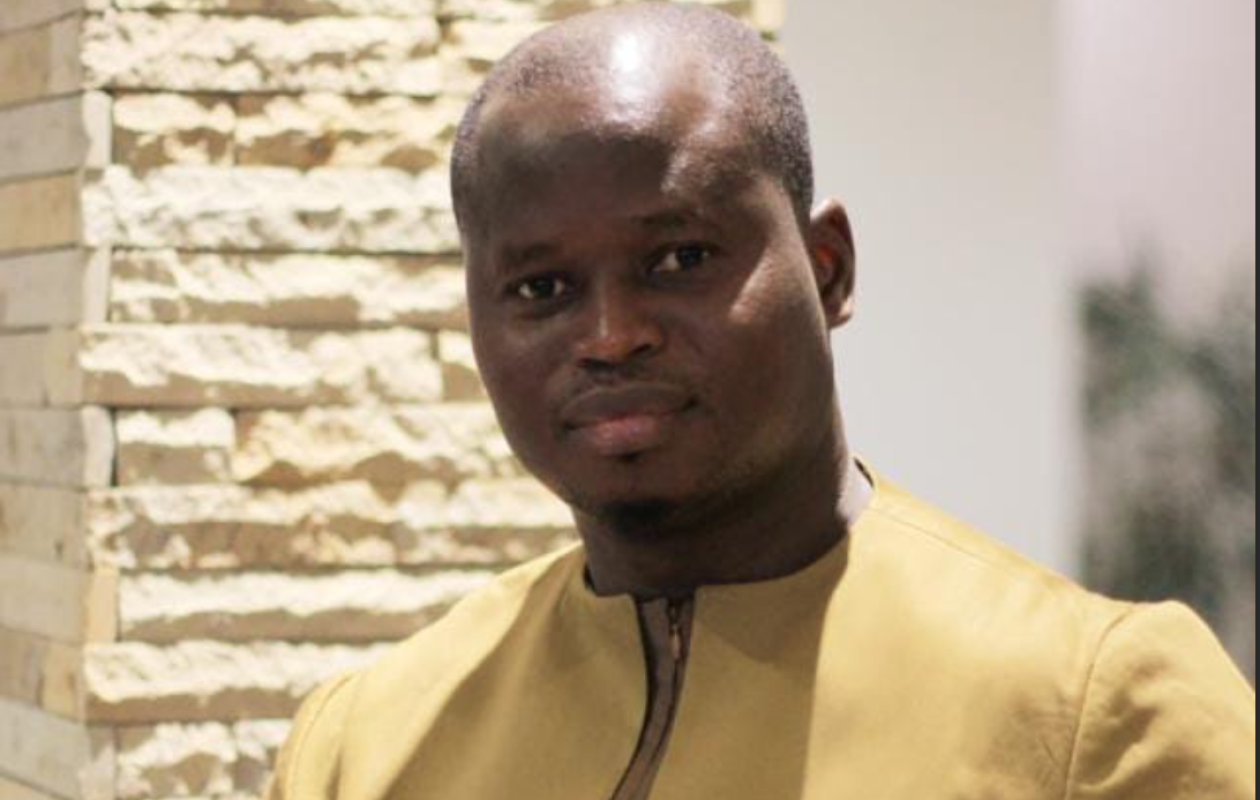
« SIMOL » : ETHNOGRAPHIE D'UNE VIOLENCE URBAINE CODIFIÉE À DAKAR (Par SOSSOLI)
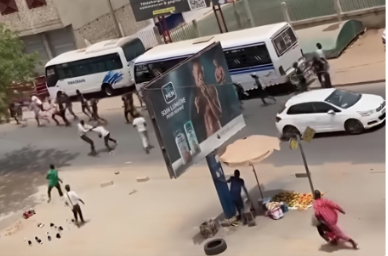
Simol represents a form of organized and collective youth violence that emerges primarily during popular Senegalese wrestling competitions, such as lamb (traditional wrestling with striking). This phenomenon, acutely observed in the suburbs of Dakar, is characterized by coordinated attacks perpetrated by groups of adolescents and young adults who occupy public spaces before and after sporting events. The ethnographic study conducted by the SOSSOLI association offers an immersion into this complex world where economic insecurity, the search for identity, and the cultural codification of violence intertwine, in order to understand why institutional and community responses struggle to stem this scourge.
Methodologically, this qualitative research employed a comprehensive approach that included semi-structured interviews with forty-four stakeholders (authors of Simol, supporters, wrestlers, victims, traditional communicators, and institutional and community actors), participant observation at sporting events, participatory mapping of at-risk areas, analysis of digital dynamics on social media, and collaborative workshops with adolescents and young adults. This approach allows us to understand Simol not as mere delinquency, but as a total social phenomenon that reveals the identity, economic, and cultural tensions affecting contemporary Senegalese youth.
Simol is rooted primarily in the profound structural marginalization of Dakar's youth. Data from the National Agency for Statistics and Demography reveals a surge in youth unemployment, rising from 10.1% in 2011 to 22.9% in 2022, with marked disparities between genders (32% for women, 10% for men). This economic insecurity is accompanied by massive school dropout rates, fueled by household poverty, repeated grade repetition, and conflicts with the educational system. The perpetrators of Simol come predominantly from low-income families, for whom collective violence becomes a threefold survival mechanism: a source of income through theft and extortion, a means of social recognition inaccessible through legitimate channels, and a way to construct identity within a context of exclusion. As one of them confides in the study, "Simol is my only means of subsistence," revealing the existential and pragmatic dimension of this practice, which is far from being merely impulsive.
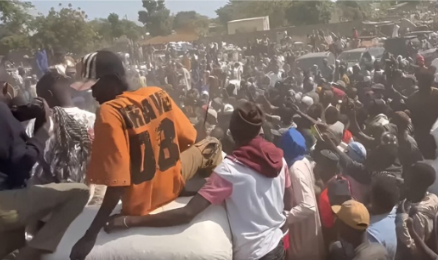
However, reducing Simol to its socio-economic determinants would be incomplete. The phenomenon is embedded in a complex symbolic and cultural legitimation, fueled by the entertainment industry and the transformation of traditional practices. Historically, the bakou, a ritual dance of wrestlers, constituted a space for affirming values of courage, discipline, and bravery. Today, this ritual has given way to mediated collective performances where young people seek notoriety through increasingly provocative and aggressive gestures. The media and broadcasters play an ambivalent role by frequently valorizing the perpetrators of Simol and their coded language, contributing to the normalization of violence in the public sphere. Refrains like "Goulou goulou goulou," "Di mboli mboli," or "Day daw amoul arret" circulate on social media, transforming aggression into spectacle and brutality into a marker of virility.
This cultural dimension finds its fulfillment in the specific sociolect of Simol, a coded language combining local languages, French, and English that functions both as a marker of belonging and an operational tool. This code makes it possible to designate precise criminal practices, hierarchize roles within groups, and communicate strategies without being understood by law enforcement or the general public. Thus, "Mbap rek wosa reus" organizes chain robbery by defining the roles of perpetrator and receiver; "Boy bi diam la mbapo wala mbeutheu" signals the presence of weapons and the dangerousness of the situation; "Ndandité youy diap karaw, do frisé, coup carré" distinguishes goods according to their value and emphasizes strategic ingenuity; while "Soumala djapé damalay blak jippo," "Fay la aller-retour," or "Rakhas len talibi" codify the speed, recurrence, and intensity of actions. This language demonstrates a structured rationality where violence is neither anarchic nor impulsive, but planned, codified and sanctioned within the group.
Faced with this phenomenon, local communities are developing hybrid responses that oscillate between peaceful mediation and violent self-defense. Some initiatives prioritize awareness campaigns, dialogue forums, and the creation of sports associations to integrate teenagers and young people and instill civic values. Others, confronted with the ineffectiveness of law enforcement, organize armed self-defense groups practicing "gatsa-gatsa" (an eye for an eye, a tooth for a tooth). These community self-defense groups patrol neighborhoods, using sticks and bladed weapons to deter aggressors. While they sometimes manage to protect their area, they create significant risks of mob justice, torture, and extrajudicial killings, which can escalate into widespread violence, explicitly condemned by the Senegalese penal code.
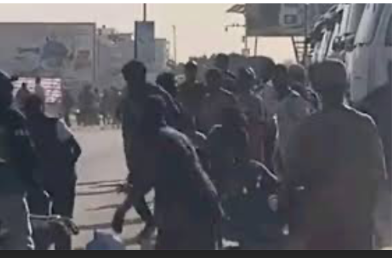
The state, for its part, is deploying a multi-faceted approach combining repression, regulation, and consultation, but with mixed results. State authorities have proclaimed a zero-tolerance policy, translated into targeted arrests and exemplary criminal sanctions, such as the detention order issued against wrestler Abdou Lô Sène. On the regulatory front, temporary suspensions of competitions are sometimes imposed, while the National Police temporarily suspended its coverage of wrestling matches after serious incidents in February 2025. Measures to secure routes, strategic checkpoints, and capacity limits have been implemented. However, these sanctions are often lifted quickly after negotiations, limiting their deterrent effect, and, more importantly, they do not address the structural causes of the phenomenon.
The analysis reveals eight key findings. First, Simol transcends purely material factors, becoming rooted in symbolic mechanisms of social recognition. Second, it constitutes a codified and organized form of violence, revealing a structured internal rationality. Third, rituals, songs, and dances serve as vehicles for transmitting these violent codes. Fourth, traditions like the bakou are distorted into media spectacles where provocation takes precedence over historical values. Fifth, violence becomes a tool for social distinction and legitimation within the group. Sixth, the media and social networks significantly amplify the phenomenon through the virality of content. Seventh, a worrying recent development has emerged with the "remates," a form of unpredictable and widespread violence that establishes a climate of permanent terror in neighborhoods. Eighth, understanding Simol requires a methodical learning of its vocabulary and codes, invisible to the outside observer.
To combat this phenomenon sustainably, the study proposes an integrated strategy structured around seven key areas. These include strengthening human intelligence and collaboration between security forces and communities; prioritizing educational and civic sanctions over the systematic incarceration of vulnerable youth; addressing criminogenic factors such as drugs while developing social housing, education, and vocational training policies; empowering those involved in the fight against violence by regulating violent rhetoric and promoting fair play; regulating cultural content and supporting artists who convey messages of peace; rehabilitating traditional practices such as bakou by restoring their positive symbolic value; and finally, holding media outlets, broadcasters, and fan club presidents accountable by making public subsidies conditional on promoting peace.
Ultimately, the Simol movement represents far more than a series of isolated clashes: it is a symptom of a profound social crisis, revealing the economic, educational, and identity-related fractures of a generation seeking recognition. Repression alone, whether sporadic or coercive, proves insufficient in the face of a phenomenon rooted in cultural representations and survival strategies. Only a comprehensive, contextualized, and participatory approach, mobilizing the state, local communities, families, media, cultural, and sporting actors, as well as the young people themselves, will make it possible to transform this worrying phenomenon into an opportunity to strengthen social cohesion and rebuild the bonds between youth and Senegalese society.
Contacts
Telephone: +221784736451
Email: contact@sossoli.org
Website: https://www.sossoli.org/








Commentaires (6)
Participer à la Discussion
Règles de la communauté
💡 Astuce : Utilisez des emojis depuis votre téléphone ou le module emoji ci-dessous. Cliquez sur GIF pour ajouter un GIF animé. Collez un lien X/Twitter, TikTok ou Instagram pour l'afficher automatiquement.
Se connecter
Commentez avec votre profil, votre photo, et soyez averti des réponses.