
Affaire Softcare : d’un dossier sanitaire à une lutte politique aux lourdes conséquences humaines et économiques (Par Jean Jacques LO)
The case involving Softcare should never have gone beyond a standard health inspection. Yet, within a few weeks, it transformed into an internal political conflict, revealing a deep-seated problem in administrative governance: the difficulty of calmly balancing expertise, decision-making, and communication when power struggles arise.
It is important to state this clearly from the outset: this text is not intended to defend any particular company, but rather to question its adherence to state regulations, the protection of the public interest, and the credibility of public action. When institutional dysfunction occurs, it is always the citizens who ultimately pay the price.
This gradual shift from the technical to the political has produced a paradoxical situation: a Senegalese industrial company, historically committed to local production and employment, now finds itself a collateral victim of power struggles that are beyond its control.
When a technical file becomes a political tool
Originally, the procedure was clear: inspection, technical report, corrective measures, then communication. It must be stated unequivocally: health inspections are legitimate and essential. They protect citizens and guarantee the quality of products placed on the market.
The problem in the Softcare case is therefore not the control, but its politicization.
The normal sequence was reversed. Communication occurred before the facts had fully stabilized, creating lasting confusion and paving the way for a political interpretation of the case.
In a context of intense media scrutiny, speaking quickly often gives one an advantage. The first to communicate sets the tone, sometimes even before the expert analysis is complete. This is how the Softcare case gradually shifted from the realm of public health to that of administrative power struggles.
The State/Inspectors Divide: When Expertise Refuses to Be Instrumentalized
The public statement by the pharmacist inspectors marks a turning point. By challenging an official statement that they consider inconsistent with the reality of their mission, they have highlighted a serious disconnect between technical expertise and administrative communication.
This gesture is not insignificant. It reflects the feeling that their work would have been used to serve a pre-established narrative, even though the official report was neither finalized nor validated.
From this point on, the matter changes in nature: it is no longer just a health debate, but a disagreement on the very exercise of administrative power.
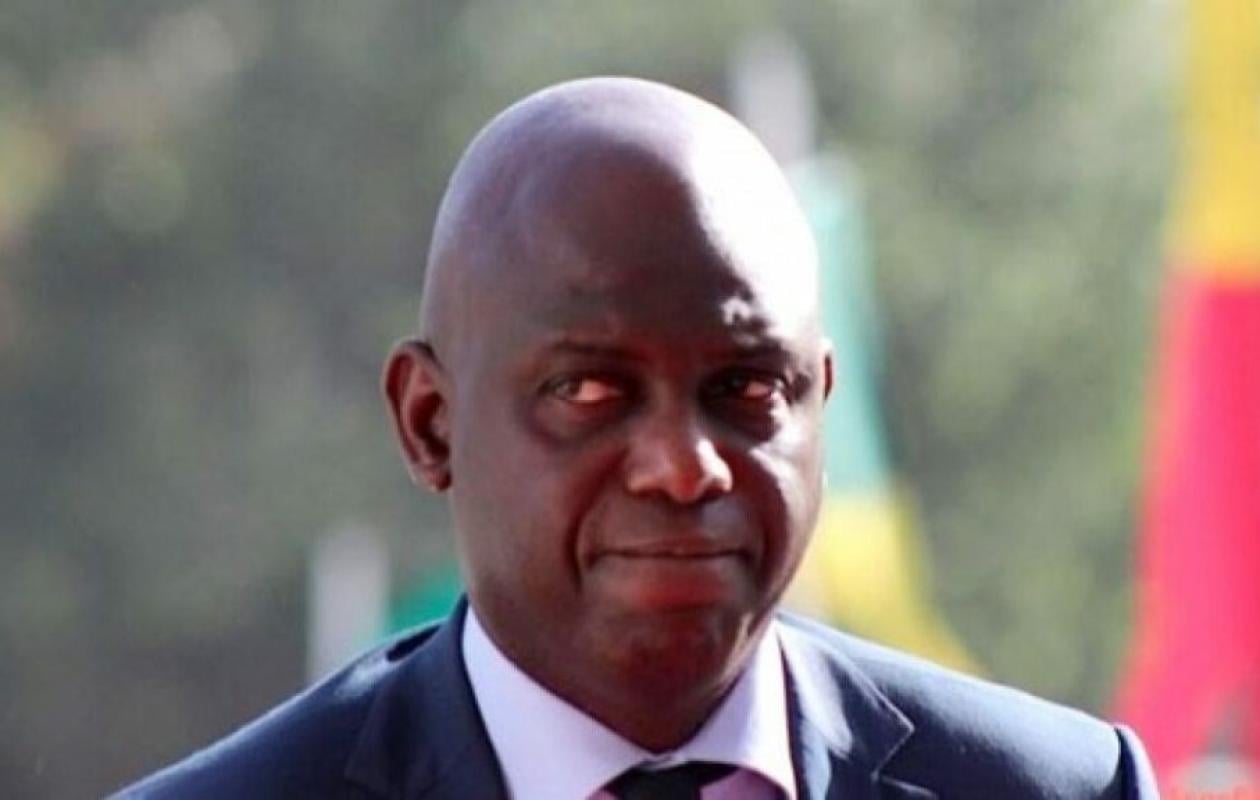
The Mr. Diallo case: when a health incident becomes a lever of political power
By speaking before the inspection reports were validated, Mr. Diallo set a pace, transforming a technical matter into an act of political authority.
This strategy allows for:
- a strengthening of personal authority,
- increased visibility in public spaces,
- putting pressure on expertise,
- a redefinition of the hierarchical relationship within the administration.
This personalization of the case was further accentuated when Mr. Diallo publicly declared in the press that the outcome of this affair should result in a radical break: "either I am the one who has to jump, or it is the Director General of the ARP."
Mr. Diallo has spoken to several media outlets in an attempt to portray himself as a national hero and promote the cult of his personality.
By publicly endorsing these remarks, Mr. Diallo is claiming the stance of a lone whistleblower, ready to accept sanctions in the name of protecting public health.
However, this sequence raises a major institutional question: when an administrative official issues a public ultimatum to his institution, when communication precedes procedures, and when media exposure becomes the main arena of the conflict, do we not leave the field of regulation to enter fully into that of political power dynamics?
The political and institutional benefits derived from the crisis
The crisis offers Mr. Diallo several concrete advantages:
- a strengthening of his hierarchical authority,
- increased public visibility,
- putting pressure on collective expertise,
- a redefinition of the relationship between expertise and power.
This individual strengthening, however, comes at the expense of administrative collegiality, procedural rigor and, ultimately, the general interest.
Softcare: a battleground rather than a subject of debate
In this power struggle, Softcare is neither the arbiter nor the beneficiary. The company has become the vehicle for a demonstration of authority, even though its industrial and social role is central to Senegal.
It is worth recalling a structural fact often absent from public debate: the Softcare factory located in Senegal, specializing in the manufacture of hygiene products, constitutes a major industrial installation in West Africa.
The strategic choice of Senegal as the location for its industrial operations allows Softcare to establish a lasting presence in a country where nearly 50% of the population is under 19 and approximately 75% is under 35, with women making up the majority of the population. This demographic reality makes the affordability of hygiene products crucial.
Through a pricing policy adapted to local purchasing power, Softcare contributes to reducing menstrual poverty, while concretely illustrating its contribution to the industrialization of Senegal.
Established since 2020, this unit ensures strategic local production, promoting value creation, the development of industrial skills and the strengthening of the country's productive sovereignty.
Over the years, Softcare has remained deeply rooted in the Senegalese community through the creation of local jobs, contribution to tax revenues and social and charitable initiatives.
To put oneself in the place of the silent victims
Over approximately two weeks of crisis, economic losses can reasonably be estimated at between 500 million and 1.5 billion FCFA, resulting in between 100 and 300 million FCFA in direct tax losses for the State.
Conclusion
The Softcare case goes far beyond the case of a single company. It raises a central question for the Senegalese state: can we accept that thousands of workers, distributors, consumers – and the state itself – pay the price for internal power struggles?
The answer lies in returning to the essentials: strict adherence to procedures, primacy of expertise, responsibility in communication and fidelity to the principles of Jub, Jubal, Jubanti.






















Commentaires (16)
La protection de l enterprise est evidente.
La partie prise est claire!!!
On se rend compte avec cette nouvelle tendance qu'on se retrouve avec des personnalités pathologiques et toxiques à certaines sphère de décisions qui rament à contre courant des intérêts nationaux pour la culte de leur propre personnalité.
Une entreprise à faot une faite en mettant la santé des populations en danger. Une enquête l'inculpant à se fait par des experts et l'Etat à travers l'agence et les ministères Sante et Commerce veulent sauber la peau de softcare, mais maladroitement!! Un enquêteur se rebiife! Point!
À l'époque, Guy Marius Sagna, sous le régime précédent, avait déjà interpellé les autorités sur les infections, plaies dont certains consommateurs portaient Softcare pour responsable.
Depuis, le régime a changé, le dirigeant de l'ARP aussi. Malgré ces évolutions, les plaintes de consommateurs et de Guy Marius Sagna persistent.
Les vraies questions qu'on devrait se poser sont les suivantes :
- la santé des sénégalais doit-elle être sacrifiée sur l'autel du profit économique et de la préservation d'emplois ?
- est-ce que les accusations du responsable en chef de l'inspection sur l'état des matières premières devant servir à la fabrication de produits pour femmes et bébés sont vraies ?
- les accusations de corruption mises sur la place publique par ce même haut responsable de l'ARP vont-elles faire l'objet d'une procédure judiciaire sérieuse ?
Je tiens à féliciter le Dr M. Diallo pour son courage et sa probité concernant l'affaire Softcare, par contre le DG de ARP a fait preuve de légèreté et doit démissionner de son poste.
Merci,
Pour toi les effets secondaires sanitaires liés à l'usage des serviettes hygiéniques qui n'ont rien d'hygiéniques passent par perte et profit ?
La santé des sénégalais n'est pas à marchander contre une supposée perte.
Participer à la Discussion
Règles de la communauté :
💡 Astuce : Utilisez des emojis depuis votre téléphone ou le module emoji ci-dessous. Cliquez sur GIF pour ajouter un GIF animé. Collez un lien X/Twitter ou TikTok pour l'afficher automatiquement.