POUR UN NOUVEAU PACTE INSTITUTIONNEL SÉNÉGALAIS (Par Abdou Fall)
Senegal is experiencing one of its rendezvous with its history.
Since gaining international sovereignty, our country has patiently built a republican tradition that commands respect.
This stability is not due to the absence of crises, but to the ability of our leaders, in decisive moments, to make the higher interest of the Nation prevail over partisan interests, dialogue over confrontation and institutions over personal ambitions.
The change of power in 2024 represents a major milestone in our democratic history.
It inaugurated a new institutional configuration, characterized by the existence of a dual political legitimacy stemming from the same project.
Such a situation called, from the outset, for a clarification of responsibilities and, if necessary, a thoughtful adaptation of our institutional architecture.
This clarification unfortunately never came.
Governing is a demanding exercise that requires both competence and humility. Because power inevitably creates tension between claims to legitimacy and ambitions, institutions are specifically designed to organize this balance, ensure the continuity of the state, and prevent crises before they erupt.
Many voices had, however, called for this discussion to be opened up very early on.
They were not heard.
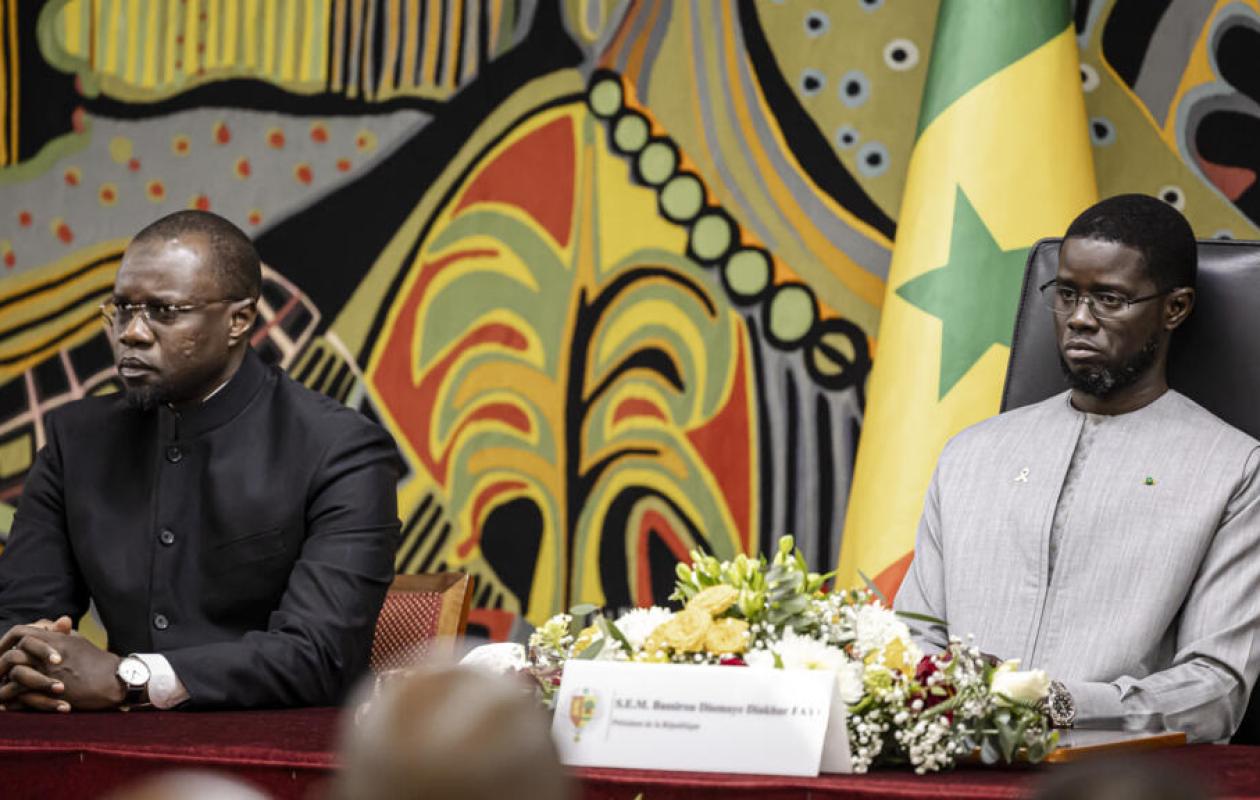
The initial ambiguities gradually transformed into tensions, then rivalries, ultimately leading to the establishment of several competing centers of authority at the highest levels of government. Under the influence of power struggles within the majority and the breakdown of their close working relationship, relations between the President of the Republic and his former Prime Minister have deteriorated significantly.
The initial political duality has thus given way to a new reality.
A former Prime Minister, backed by a parliamentary majority largely in his favor, has taken the presidency of the National Assembly.
From this institutional position, he now appears as the head of a power that competes with that of the President of the Republic.
It is in this context that a constitutional reform is undertaken whose barely concealed objective is the progressive transfer of the center of gravity of power from the Executive to the Legislative.
Senegal is thus experiencing a unique political crisis.
It does not result from a parliamentary change of government during the presidential term, but from an internal crisis within the majority, marked by the transfer of loyalty from a majority of deputies to a former Prime Minister who is now at odds with the President of the Republic.
It is within this context that the question of rewriting the rules of the constitutional game is being raised.
The issue is therefore not which Constitution Senegal should adopt for the 21st century, but whether the Constitution can be reshaped according to the interests of actors engaged in a competition for power.
But a Constitution is never written to settle disputes between people. It is designed to protect a people, to organize public powers in a lasting way, and to guarantee the stability of the Nation.
It is therefore time to suspend confrontational approaches and open a genuine, inclusive national dialogue. This dialogue should bring together the institutions of the Republic, political forces, social partners, the private sector, academics, constitutional experts, civil society, religious and traditional authorities, youth organizations, women, and all the vital forces of the Nation.
The goal is not to force a compromise of convenience, much less to choose between a parliamentary system dominated by a one-party state and excessive presidentialism.
The challenge is to build a lasting consensus on the institutions that Senegal will need for the decades to come.
This reflection should also lead to a calm reassessment of certain previous reforms.
In this regard, I remain far from convinced of the wisdom of abolishing the Economic, Social and Environmental Council and the High Council of Territorial Authorities. The institutional construction of a nation is a long-term undertaking. In a country where the process of national integration continues to solidify, every reform demands great caution, a long-term vision, and a strong sense of state responsibility.
This reflection is also part of a particularly worrying African context.
Our sub-region is facing unprecedented security threats that are creating a veritable belt of instability around Senegal.
At the same time, our country remains one of the most respected democracies on the continent. This status also exposes it, like the oldest democracies, to the questions that are currently facing the model of liberal representative democracy.
There is no basis for us to believe a priori that Africans must remain hostages of a model of democracy characterized by divisions, tensions and systematic confrontations between political families of different persuasions.
Why not opt for democratic models that are both pluralistic and based on compromise, like the peaceful democracies of certain regions of the world?
Especially since new demands are being expressed everywhere, particularly in our still fragile countries, and with virulence: more social justice, more ethical governance, more effective public action, strengthened citizen participation and better economic fairness.
Our collective responsibility is to put these aspirations into perspective with our own realities, in order to build, in full sovereignty, an institutional and democratic model faithful to the Senegalese genius and to our ambition of a strong, stable and prosperous Nation.
In the face of these historical challenges, disputes over precedence and power rivalries become trivial.
Senegal, which has achieved three democratic transitions in a quarter of a century, possesses the historical, moral and intellectual resources to conduct an exemplary debate on the future of its institutions.
People are not judged on the crises they go through, but on the responses they are able to provide.
In this regard, the President of the Republic is personally called upon. History now confers upon him a particular responsibility. It is incumbent upon him to take the initiative in this major national debate, to create the conditions for a calm dialogue and, when the time comes, to submit to the Senegalese people, through a carefully prepared referendum, a new institutional pact.
A pact based on consensus, the balance of powers, the stability of institutions, the rule of law and popular sovereignty; a pact designed not for today's leaders, but for the generations of tomorrow.
Because great constitutions are not those that guarantee the victory of one side.
These are the ones that sustainably guarantee the freedom of citizens, democracy, the strength of the State, the balance of powers, as well as the unity and cohesion of the Nation.
It is to this work of rebuilding that Senegal is called today. And it is before History, more than before the circumstances of the moment, that each will have to answer for their choices.
By Abdou Fall
Former Minister of State











Commentaires (5)
Participer à la Discussion
Règles de la communauté :
💡 Astuce : Utilisez des emojis depuis votre téléphone ou le module emoji ci-dessous. Cliquez sur GIF pour ajouter un GIF animé. Collez un lien X/Twitter, TikTok ou Instagram pour l'afficher automatiquement.