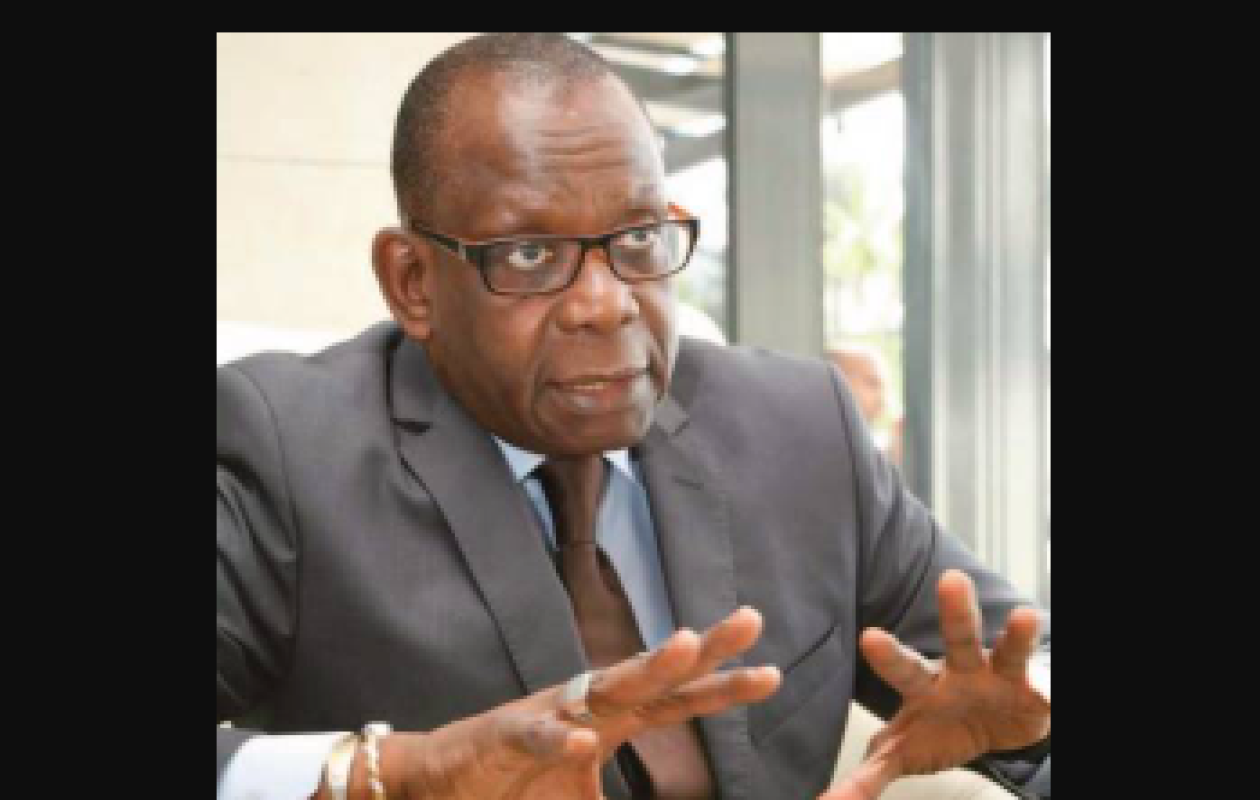
Wade et la révolution du possible,(Par Khadiyatoulah Fall )
Commemorations often present a paradox. They celebrate people while sometimes risking freezing them in time. They honor a memory, but can unintentionally close off what, in a work or a journey, still remains alive and fruitful.
Commemorations often present a paradox. They celebrate people while sometimes risking freezing them in time. They honor a memory, but can unintentionally close off what, in a work or a journey, still remains alive and fruitful.
The centenary of President Abdoulaye Wade is not immune to this risk. The tributes paid to him rightly recall the champion of democracy, the historical opponent, the architect of political change, the builder, and the man of great national and African ambitions.
However, as testimonies multiply, one question continues to haunt me: what is Wade's most profound contribution to the political and democratic history of Senegal? Two books recently devoted to the former President offer particularly interesting avenues for reflecting on this question.
The first, by Dr. Cheikh Omar Diallo, bears an ambitious title: Wade, the Man of the Century. The second, by Maître Ousmane Ngom, is entitled Abdoulaye Wade, Centenary of an Exceptional Man: A Handbook for the Democratic Conquest of Rights and Freedoms.
These two books take different paths but converge on the same question: how to understand the legacy of a man whose influence extends far beyond the exercise of power? With *Wade, the Man of the Century*, Cheikh Diallo invites us to read Wade within the context of an entire era. The title suggests that he is not merely an important political figure, but one who profoundly shaped the imagination of a generation and had a lasting influence on the political evolution of Senegal.
With Abdoulaye Wade: Centenary of an Exceptional Man – A Breviary for the Democratic Conquest of Rights and Freedoms, Master Ousmane Ngom opens another perspective. Of all the words in the title, the one that particularly caught my attention is the word "breviary."
The choice is far from insignificant.
In its primary sense, a breviary is a collection of prayers, psalms, and liturgical texts that religious consult daily. It is not a book meant to be read only once before being placed on a shelf. The breviary accompanies, nourishes, reminds, and maintains fidelity and continuity. By extension, the word has come to designate a work that gathers the essence of a thought, a doctrine, or an experience, and to which one regularly returns for inspiration, reflection, or action. A breviary is therefore not merely a book of memory. It is a book of transmission. It does not refer only to what has been. It also prepares for what may come to pass.
This idea of a breviary seemed to echo another thought I heard at the launch of Cheikh Diallo's book. On that occasion, Moustapha Mamba Guirassy, a former minister under President Wade, offered this particularly insightful statement: "Wade embodied the possibility of political change." The more I reflect on it, the more convinced I am that this sentence contains one of the most profound keys to understanding Wade's political legacy.
Because the change of power in 2000 was a political event. The possibility of such a change was a cultural revolution. The event belongs to history. The possibility belongs to the collective imagination.
And imagined narratives often outlive the events that gave rise to them. We've talked a lot about Wade the conqueror of power. We've talked less about Wade the transformer of possibility.
For more than a quarter of a century, he did not simply confront a regime or build an opposition. He gradually changed the way Senegalese people perceived power itself. Before Wade, Senegal already had a genuine democratic tradition. But for many citizens, political alternation remained more of an aspiration than a truly attainable prospect.
Wade will help shift this boundary. His contribution lies not only in the 2000 victory, but also in the long process of education that made this victory conceivable. Before being the man of political change, he was one of its principal educators. Through his consistency, his perseverance, his successive defeats, and his ability to constantly return to the political arena, he taught several generations of Senegalese that no power is eternal, no majority is irreversible, and no political situation is definitively fixed. He taught an entire society that history can be rewritten.
Me Ousmane Ngom and Dr Cheikh Diallo, the two authors, agree
We often talk about democratizing voting. We talk less about democratizing hope. Yet a democracy is not based solely on institutions, laws, or electoral procedures. It also rests on a profound conviction: that citizens can influence the collective destiny.
This conviction doesn't arise spontaneously. It is built. It is learned. It is passed on. And Wade contributed significantly to this transmission. That's why I believe his legacy extends far beyond the political sphere. It touches on something more fundamental: how a society envisions its future. This reading also helps us understand what particularly struck me in the final sentences of Cheikh Diallo's book. They don't create a narrative closure. They don't give the impression of a finished story, definitively filed away in the national archives. On the contrary. They open up a space for interpretation. They invite the reader to continue reflecting. What I've called a hermeneutic opening. They shift Wade from the realm of memory to that of meaning. The book doesn't simply ask us who Abdoulaye Wade was. It asks us what we are capable of doing with what he made possible.
It is here, it seems to me, that the two works converge. One through the historical depth it recognizes in Wade's trajectory. The other through the idea of transmission contained in the very notion of a breviary.
The man of democratic change
Both suggest that Wade should not be viewed simply as an object of commemoration. He remains a question for future generations. For infrastructure ages. Political programs evolve. Parties transform. But some ideas continue to resonate long after those who championed them.
Today, Senegalese people consider it natural that one power can be replaced by another. They consider it legitimate for an opposition to aspire to govern. They consider it possible for a citizen to contribute to changing the course of history. These truths now seem natural to us.
They weren't always so. They are also the product of a long democratic process, of which Abdoulaye Wade was one of the principal architects. This is why his centenary perhaps deserves to be interpreted differently. Not only as a celebration of what he accomplished, but as a reflection on what he made possible.
History will naturally remember him as the man of political change. For my part, I would also like him to be remembered as someone who helped broaden the scope of possibilities for Senegal. Because some victories change a government. Others permanently alter the way a people envisions its future. And perhaps it is there, beyond the assessments and the controversies, that Wade's most profound revolution lies.
By Khadiyatoulah Fall
Professor Emeritus, Quebec City, Canada












Commentaires (2)
Participer à la Discussion
Règles de la communauté :
💡 Astuce : Utilisez des emojis depuis votre téléphone ou le module emoji ci-dessous. Cliquez sur GIF pour ajouter un GIF animé. Collez un lien X/Twitter, TikTok ou Instagram pour l'afficher automatiquement.