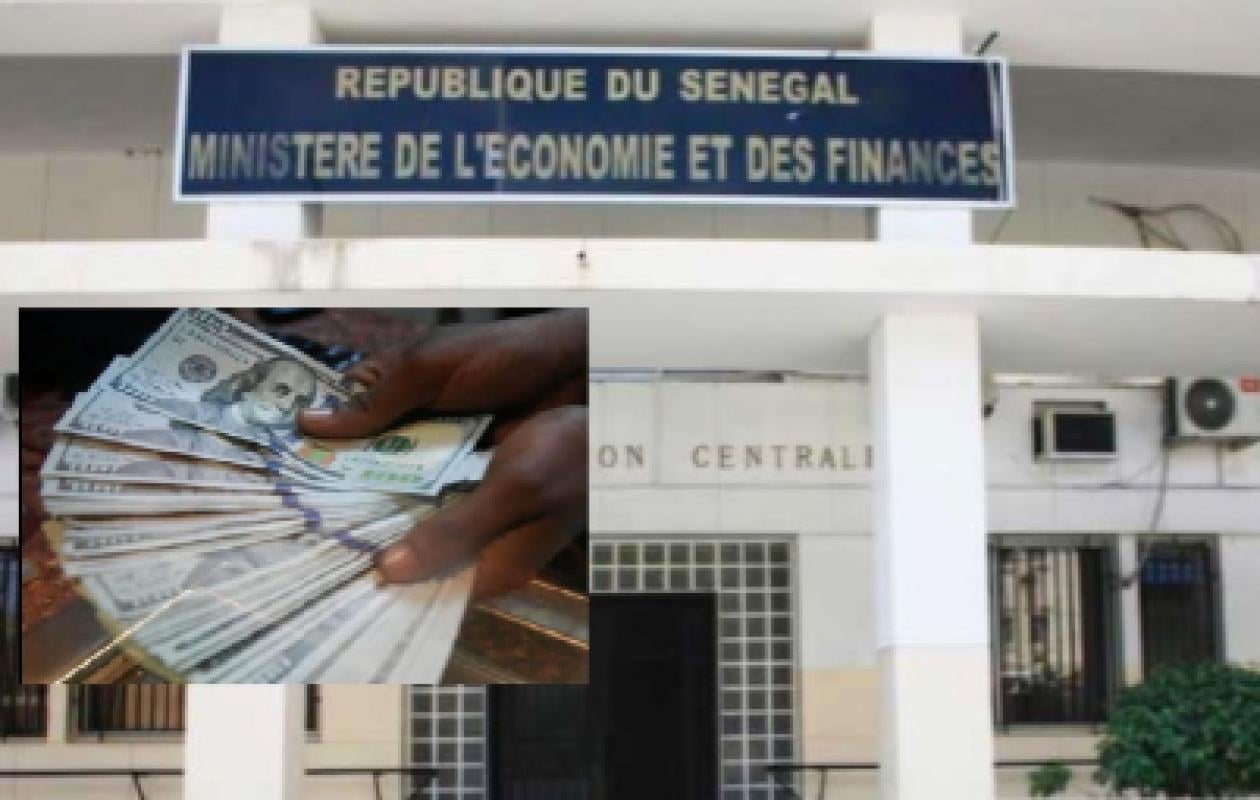
AN II de PASTEF AU POUVOIR : L’ECONOMIE SENEGALAISE S’EFFONDRE (Par Kadialy GASSAMA)
The poor economic policies of the PASTEF regime over two years have caused a severe contraction of the Senegalese economy, resulting from increased tax pressure (PRESS), coupled with a near-total absence of public investment and the non-payment of domestic debt to businesses. Increasing the tax burden without investment is tantamount to stifling economic activity. It is no coincidence that Senegal is currently experiencing a significant decline in economic growth of less than four percentage points, falling to an unprecedented level of 2.2%, except during the COVID-19 pandemic. The impact of this decline is reflected in the considerable rise in the unemployment rate, reaching alarming figures of 24% in urban areas and 30% in rural areas, while inflation is skyrocketing due to the new oil shock triggered by the war in the Middle East. From the above, the Senegalese company finds itself mired in multiple difficulties under the effect of heavier tax pressure and the non-payment of domestic debt, leading to the cessation of activities for many of them or the relocation of activities to other more favorable climes.
The dry financial crisis orchestrated by the populist approach of the PASTEF regime to debt, causing a loss of confidence among Senegal's economic and financial partners, is now compounded, after two years of procrastination, by a subsequent economic slump manifested by rising unemployment, declining economic growth and rising inflation.
This means that macroeconomic indicators, which were positive in 2023, suddenly declined in 2025, with a bleak outlook. This is because the PASTEF regime, more preoccupied with the stakes of the upcoming presidential election than with finding a way out of the crisis to stem the bleeding, is not considering any vigorous action to resolve it. The damage is becoming considerable, and collapse is almost imminent, to the point that Senegal is ranked among only three African countries on the verge of defaulting in the near future, alongside Botswana and Malawi.
Worse still, the loss of confidence of multilateral and bilateral financial partners has led to the use of mortgage funds secured against our resources (TRS) to finance operations in addition.
The PASTEF regime's approach, which considers debt in an open economy as a means of financing investment beyond national savings, as a non-sovereign approach, constitutes the fundamental strategic error at the root of the economic and financial difficulties Senegal is experiencing today. Debt has never been a problem, regardless of the amount, if the funds are used for productive investment and domestic capital accumulation. The real problem lies in the lack of investment. Yet, since coming to power, the PASTEF regime has not undertaken any tangible, structural investments that could foster growth.
Taxation is a levy on household and business savings. This levy leads to a decrease in investment, because savings finance both investment and consumption. The higher the tax burden, the less the supply of goods and services increases, and consequently, the less consumer demand (Laffer curve).
The PASTEF regime's approach often remains abstract, deviating from economic realism in favor of idealistic economic policy choices, as if they were under the illusion of a self-sufficient country (sovereignty). The goal is not to finance development through their own, and admittedly insufficient, means, but rather to have the capacity to do so autonomously. However, the reality is that our sub-Saharan countries still have limited capital, justifying our relative dependence on foreign capital, despite the relatively recent emergence of oil and gas production in Senegal, which is still insufficient to allow us to become self-reliant. This major situational constraint must primarily dictate Senegal's economic policy, which remains vulnerable to fluctuations in the global dollar exchange rate and the prices of goods and services, as well as to the emergence of climate and health crises and conflicts between nations.
Therefore, the only viable alternative for our economies in this situation remains a proactive policy to attract foreign capital for direct investment, coupled with a willingness to undertake substantial, structural public investments, particularly in infrastructure and the high-potential primary sector. The only way to achieve this dual objective is to have an economic policy based not on a model of strictly increasing state revenue through taxation, but rather on widening the budget deficit to sustainable levels to ensure a viable debt burden. Because it is investment that boosts growth, and excessive taxation hinders investment capacity and slows growth.
The old regime's approach to fiscal policy and debt was one of increasing the deficit to finance investment and, in so doing, stimulate overall economic activity; the key was to avoid over-indebtedness, and over-indebtedness is far from being reached in Senegal with the updating of GDP taking into account the integration of new oil and gas resources into its formation. The neo-sovereigntists, for their part, want to achieve a balanced budget, the absence of a budget deficit, or at the very least, a reduced budget deficit. This approach, given the limited domestic capital and savings in our countries, will slow investment and therefore economic growth, and foster unemployment and inflation—phenomena we are witnessing today, even though Senegal was in a phase of strong domestic capital accumulation that has now experienced a marked slowdown. The objective of the previous regime was to find ways to stimulate strong growth to recover from the impact of the health crisis (Covid in 2020), the climate crisis (floods of 2021 and 2022), and the security crisis (jihadists at our doorstep) on the economy. Borrowing to invest following exogenous shocks is a way to develop a recovery plan to boost economic activity and growth in order to get back on track. We can say that throughout the period 2019-2022, Senegal was hit by exogenous shocks to such an extent that it was necessary to develop proactive policies to attract foreign capital in order to stimulate growth. Without robust economic growth, there is no hope for recovery.
Furthermore, the Senegalese economy has an integrated structure within a larger market. Our interest lies in developing economies of scale to reduce costs and enhance competitiveness in a competitive sub-regional, regional, and even continental market. In this regard, the convergence criteria set by community and international institutions regarding budget deficits are outdated and must be revised upwards, especially for countries with significant natural resources.
If we could secure debt restructuring or at least a minimal reprofiling of the debt today, in order to significantly reduce its servicing costs, along with substantial cash flow from the international community through the Paris and London Clubs—something well within our capabilities—we would have everything we need for a strong recovery of public finances and the Senegalese economy. These arrangements, which are within our reach because we have achieved them several times with donors, are entirely within our grasp. However, this presupposes the restoration of trust with international partners and the national private sector. Trust is the only major non-random variable in any model, meaning that the primary concern of any government should be to foster a favorable business environment to stimulate growth.
Kadialy GASSAMA, Economist
Faidherbe Street X Pierre Verger
Rufisque.













Commentaires (2)
Participer à la Discussion
Règles de la communauté :
💡 Astuce : Utilisez des emojis depuis votre téléphone ou le module emoji ci-dessous. Cliquez sur GIF pour ajouter un GIF animé. Collez un lien X/Twitter, TikTok ou Instagram pour l'afficher automatiquement.