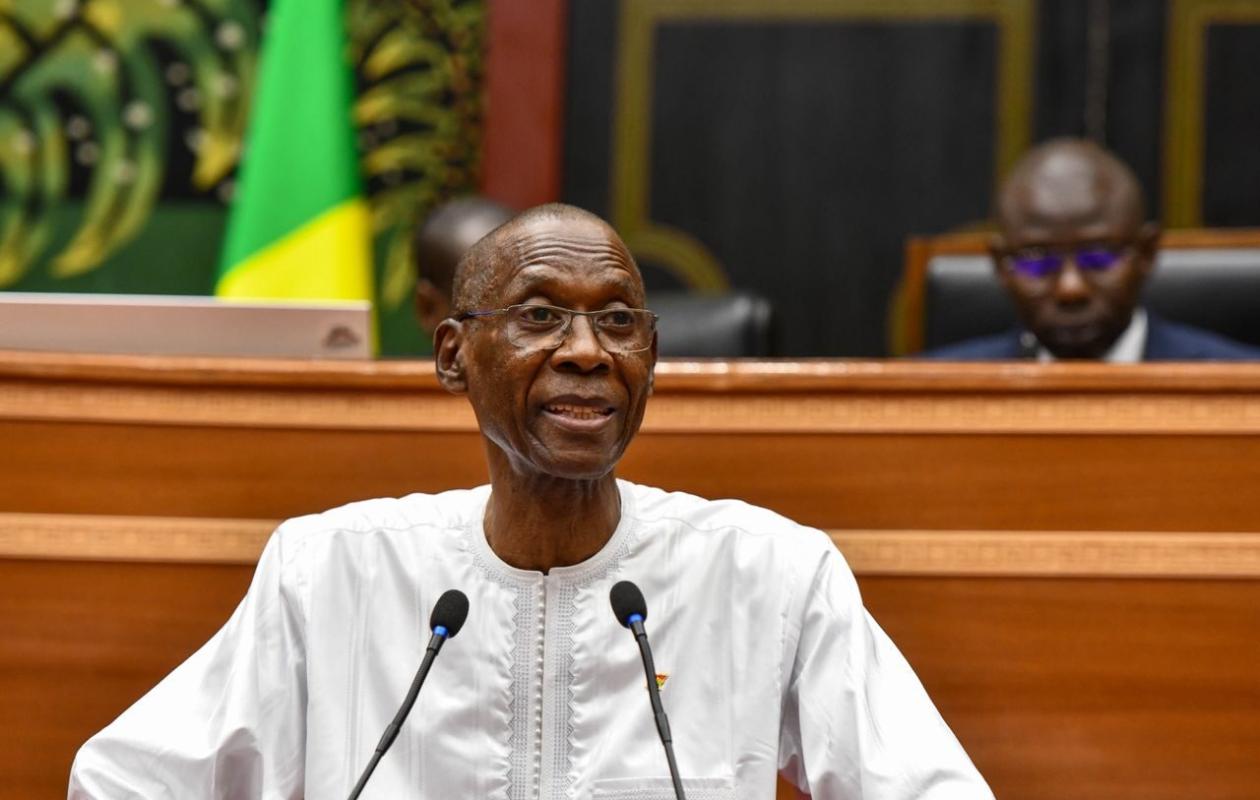
Coopération sécuritaire et accords d’extradition : « le Sénégal veut se renforcer face aux défis régionaux », (ministre)
Before the National Assembly of Senegal, Foreign Minister Cheikh Niang defended two major bills aimed at strengthening regional cooperation in security and justice. These bills concern agreements concluded with Guinea and The Gambia, in a context marked by the intensification of security threats in the Sahel-Saharan region. Faced with evolving forms of terrorism, cross-border crime, and illicit trafficking that are destabilizing the region, the Senegalese government intends to consolidate its cooperation with its neighbors. According to the Minister, these agreements are part of a proactive and adaptive approach to "a security situation that is becoming increasingly complex in the southern Sahel and the central Sahel."
For Cheikh Niang, the signing of these agreements addresses a strategic necessity: enabling Senegal to equip itself with the legal and operational tools necessary to confront new forms of crime and transnational threats. One of the draft agreements concerns military and technical cooperation with Guinea, while the second deals with judicial extradition with The Gambia. In his address to parliament, the Senegalese Foreign Minister sought to clarify the principle of extradition, a frequent source of public concern. He explained that it is a procedure by which one state hands over to another a person prosecuted or convicted of a criminal offense. "When a person accused or convicted of a crime in one country is on the territory of another state, the latter may agree to formally hand them over to be tried or to serve their sentence," he stated.
The minister, however, emphasized that extradition is never automatic. It is subject to rigorous judicial review designed to guarantee respect for the fundamental rights of the individuals concerned. The authorities of the requesting country must, in particular, verify the legality of the request, the validity of the charges, and the existence of a fair trial in the requesting country. Cheikh Niang reiterated that any request can be refused if the person sought risks being subjected to torture, inhuman treatment, or the death penalty.
The role of Parliament in monitoring agreements
The agreement reached with The Gambia is unique in that it reflects the differences between the two countries' legal systems. Senegal's legal system is based on Francophone civil law. The minister emphasized that the negotiations successfully reconciled these two approaches through the collaborative work of judges and legal experts from both states. He stated that the agreement guarantees equivalence of offenses and harmonization of procedures, while respecting the specific legal frameworks of each country.
During the debates, the issue of parliamentary oversight of the implementation of international conventions was also raised. Cheikh Niang noted that agreements generally include provisions to address new or unforeseen situations. He nevertheless acknowledged Parliament's legitimacy to propose additional monitoring and oversight mechanisms, considering such adjustments to fall within the purview of legislative sovereignty. "If the Assembly deems it necessary to introduce provisions strengthening its oversight of the implementation of these agreements, it has full discretion to do so," he stated.




















Commentaires (1)
Participer à la Discussion
Règles de la communauté :
💡 Astuce : Utilisez des emojis depuis votre téléphone ou le module emoji ci-dessous. Cliquez sur GIF pour ajouter un GIF animé. Collez un lien X/Twitter, TikTok ou Instagram pour l'afficher automatiquement.