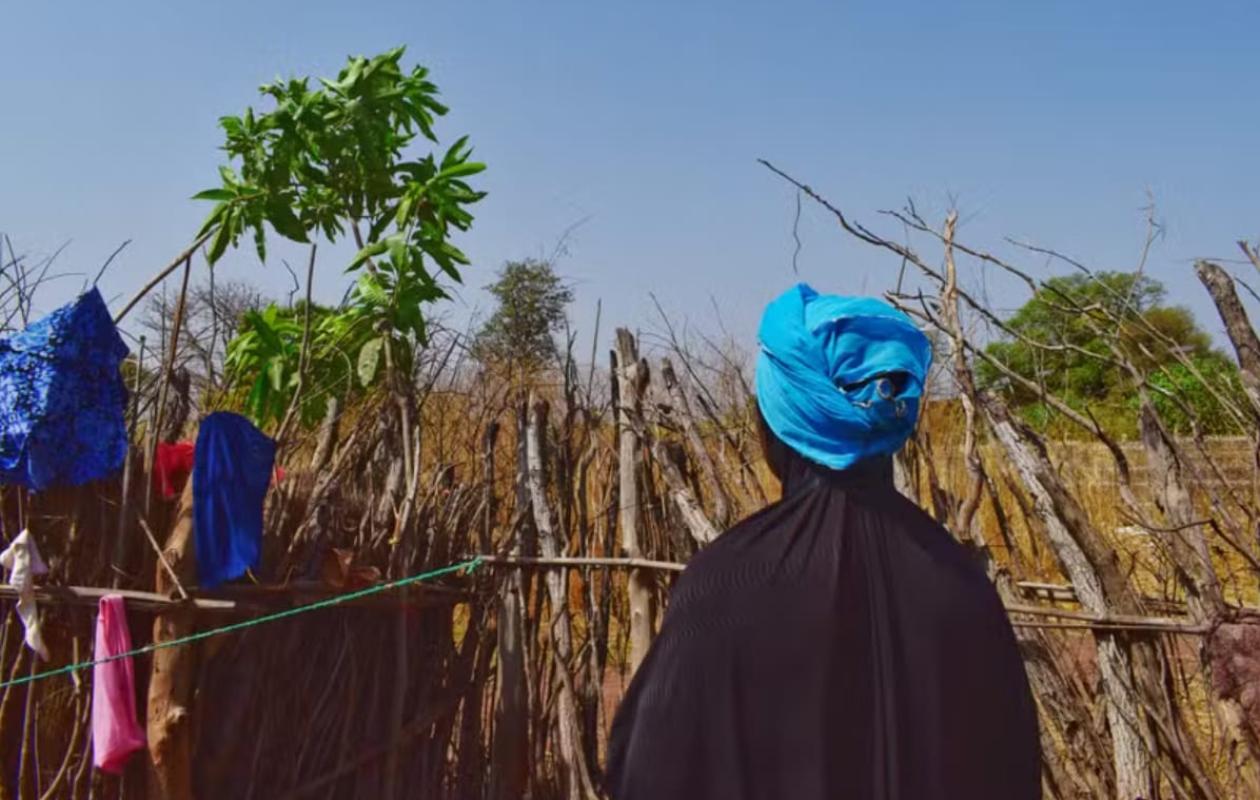
Excision : Celles qui ont subi, celles qui ont pratiqué, et leur pacte pour la fin d'un fléau (2/3)
On the occasion of the International Day of Zero Tolerance for Female Genital Mutilation, celebrated this February 6th, we give a voice to those who have lived through the unspeakable. From the trauma of a victim turned activist to the courageous journey of a former practitioner, these life stories illuminate the complexity of an age-old practice confronted by modernity and the law. Two intertwined destinies, from the silence of suffering to the power of public advocacy, testify to the urgent need to heal bodies and liberate minds in order to definitively eradicate female genital mutilation.
They all deeply regret it. One is a survivor of female genital mutilation, the other participated in it herself in the past. Confronted today, through community advocacy, with the heavy consequences of this practice, but also with their own past experiences, they now carry remorse as a permanent burden.
This sense of guilt, fueled by the suffering endured or inflicted, led them to resolutely commit to the fight for the definitive abandonment of female genital mutilation. Through their poignant and deeply moving testimonies, they seek to raise awareness, to prevent, and undoubtedly also to free themselves from the burden of the past. These are chilling accounts that powerfully remind us of the lasting devastation caused by this practice and the urgent need for its eradication.
Fatimata Ndiaye, a survivor of female genital mutilation: "I am living proof that this practice destroys lives."
Fatimata Ndiaye is 44 years old. She is a health mobilization worker in Matam. Divorced, with no children. Before being a committed activist in the fight against female genital mutilation (FGM), she is first and foremost a survivor. If she agrees to tell her story today, it is neither for exhibitionism nor out of resentment. It is, she says, to prevent other girls from experiencing what she went through. Her testimony is addressed primarily to parents, communities, women themselves, but also to young girls who do not yet dare to speak out.
A childhood marked by an imposed norm
Fatimata comes from the Toucouleur community. She underwent female genital mutilation (FGM) at the age of six, like her sisters and cousins, in a family where the practice was considered a social and cultural obligation. "At the time, nothing was explained to us. It was normal, that's just how it was," she recalls. As a child, she didn't understand the meaning of this act, much less its consequences. The practice was carried out openly, without question, driven by the weight of tradition and community conformity. Today, she explains, things have changed. FGM is no longer practiced openly in her community. But it hasn't disappeared entirely: it has become clandestine.
A suffering that spans an entire life
Fatimata has no clear memory of the act itself. She was too young. But her body has never forgotten. "I still suffer today, and I can't even begin to grasp the extent of this pain," she confides. The suffering is physical, constant, but also psychological. It accompanied her throughout her youth and then her life as a married woman. She describes intense, daily pain, even in the most ordinary biological acts. "Even seeing my period was very painful. All the more so, experiencing intimacy with a man." An intimate suffering, but also a social one, silent, often misunderstood.
A broken marriage, an impossible motherhood
His experiences profoundly impacted his married life.
Her marriage couldn't withstand the pain, the hardship, and the absence of children. "I suffered constantly in my marriage. And I didn't have children. All of this stems from the female genital mutilation I underwent at a very young age," she states bluntly. She harbors no anger toward her parents. "They certainly didn't have the opportunity to encounter awareness organizations," she says with clear-sightedness. For her, the responsibility is collective, historical, rooted in ignorance of the true consequences of the practice.
The turning point: understanding in order to act
It was through contact with organizations like Tostan that Fatimata began to put words to her suffering. She then understood that what she had experienced was neither inevitable, nor a religious or cultural obligation, but a violation of her fundamental rights. Trained, empowered, and equipped, she decided to transform her pain into activism. Today, she travels through villages, participates in women's gatherings, speaks in schools, and talks to families. "I don't hesitate to denounce these practices, even when they involve relatives," she affirms. In her area, several villages have officially abandoned female genital mutilation.
Breaking the silence to save lives
Faced with the persistence of these clandestine practices, Fatimata is adamant: "Those who continue don't yet understand the consequences." Her own story has become a tool for raising awareness. "I am a perfect example to discourage the practice. I don't think a parent to whom I recount my situation would wish such suffering, such a fate, upon their children." She speaks with strength, without hatred, but with a conviction forged by experience.
Fatimata now knows that medical repair is possible. She has even expressed a desire to undergo reconstructive surgery, if she ever has the means. But for now, her priority lies elsewhere: preventing further victims. "Today, only one fight matters to me: that no girl is ever circumcised again, anywhere in the world." For future generations, Fatimata has a simple yet powerful wish: that girls can grow up without fear, without imposed pain, without traditions that shatter bodies and destinies. Her final word is a plea: speak out, listen, raise awareness, protect. Because silence, she says, is as damaging as the blade.









![[EXCLUSIF] Expulsion de la famille Srour : L'accusée Khady Diagne se prononce, documents à l'appui](https://image.seneweb.com/content/news/2026-20-14//thumb_1260x800_6a05cc2715573_a9nMMiStMC.jpg)










Commentaires (1)
Participer à la Discussion
Règles de la communauté :
💡 Astuce : Utilisez des emojis depuis votre téléphone ou le module emoji ci-dessous. Cliquez sur GIF pour ajouter un GIF animé. Collez un lien X/Twitter, TikTok ou Instagram pour l'afficher automatiquement.