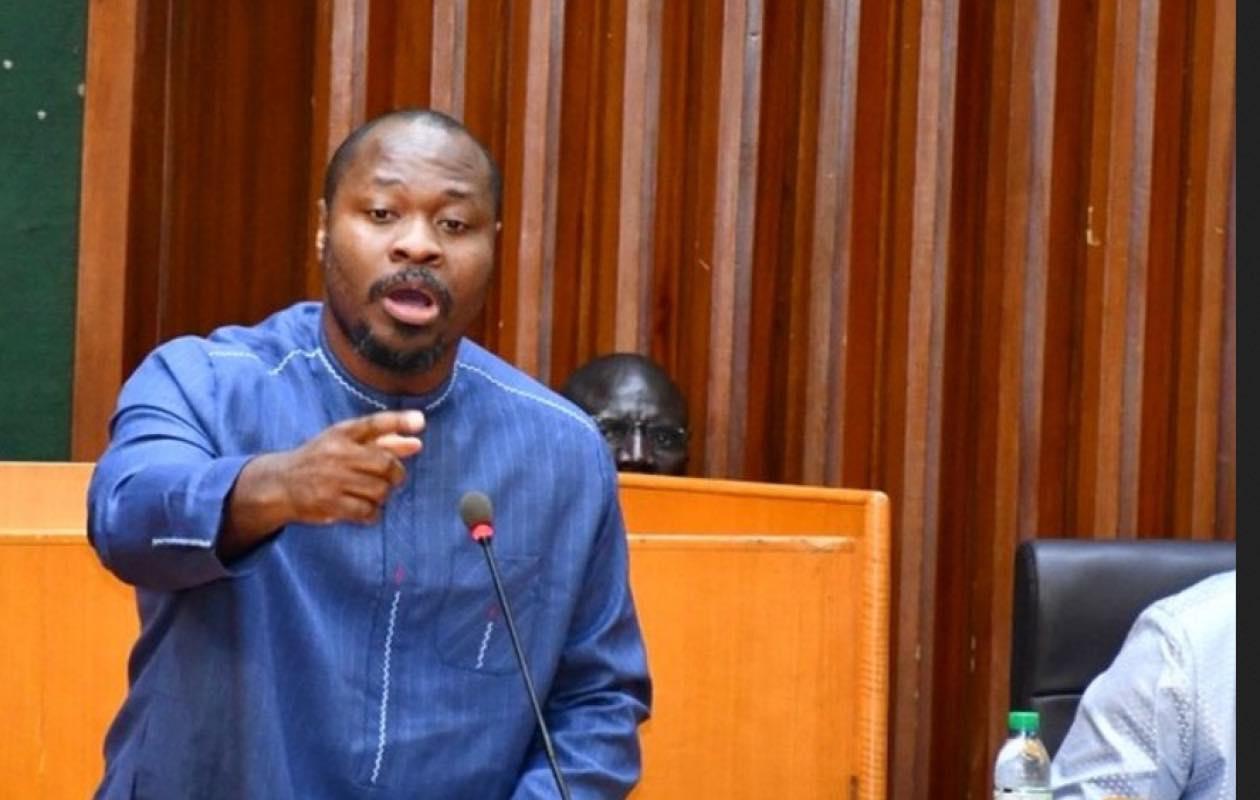
Primes des Lions, étude économique [3/3] : comment Sadio Mané, Kalidou Koulibaly, Iliman Ndiaye et Cie auraient pu créer 2500 emplois
FAVORABLE CONTEXT
“Directing land allocation towards community agricultural estates rather than residential plots on the Petite Côte is an idea perfectly aligned with the strategic challenges of food sovereignty that Senegal faces. This approach deserves a structured analysis that reveals its full economic and social relevance in the current Senegalese agricultural context. Senegal currently imports 70% of its rice, or nearly 800,000 tons per year according to ANSD [National Agency for Statistics and Demography] data from December 2025, thus creating a worrying food dependence on international markets and vulnerability to external shocks, which have multiplied since the 2022 Ukrainian crisis. The agricultural trade deficit reached 220 billion CFA francs in 2025, steadily increasing since 2022, representing a considerable drain on foreign currency for the national economy in a context of pressure on foreign exchange reserves.” Paradoxically, 3.8 million hectares of arable land, representing 60% of the national agricultural potential identified during the 2023-2024 rural land survey, remain uncultivated or underutilized. This situation reveals both a major deficit and a considerable opportunity for innovative public policy within the framework of the Horizon 2030 Rice Self-Sufficiency Program launched by the government in 2024.
AGRICULTURAL VALORIZATION MODEL
"The agricultural value-added model that I advocate" This can take two complementary forms, depending on the profiles and aspirations of the beneficiaries, drawing inspiration from pilot projects conducted in the Senegal River Valley. The first option would involve allocating fully developed agricultural concessions, ranging from 10 to 20 hectares per champion, located in high-potential areas such as the Senegal River Valley, Kalidou Koulibaly's home region, where controlled irrigation has developed considerably, or Casamance, Sadio Mané's region, whose agricultural potential remains largely untapped despite the return of peace and stability. The State would assume responsibility for the complete development: modern irrigation using drip or sprinkler systems that meet technical standards, solar electrification to power processing equipment as part of the national energy transition, and road access guaranteeing market access. The development cost, estimated at between 3 and 5 million CFA francs per hectare according to the updated estimates of SAED [ National Society for the Development and Exploitation of Lands in the Senegal River Delta and the Valleys of the Senegal and Falémé Rivers ] in 2025, would represent a total public investment of 30 million to 100 million CFA francs per beneficiary, an amount comparable to the value of residential land currently allocated on the Petite Côte at market prices, but with an incomparably higher potential for economic and social return. The second option, more financially sophisticated but potentially more economically efficient according to the pilot models tested, would consist of participation in modern agropoles designed as fully integrated agricultural enterprises, modeled on the corporate farms that developed between 2022 and 2025. The concept would involve the creation of five 'Agropoles of Champions,' one for each major agro-ecological zone of Senegal identified in the 2024-2040 National Territorial Development Plan, allowing for the development of the specific soil and climate characteristics of each region. Each champion would receive 5% of the capital of an agropole, representing an initial investment of between 50 million and 80 million CFA francs. Operations would be delegated to certified local professional cooperatives, guaranteeing optimal technical management while creating significant local employment. The estimated revenues for each champion, after the 3-year ramp-up period, would reach between 8 and 15 million CFA francs per year, based on the returns observed in the pilot projects, thus constituting a sustainable and growing income until 2040 and beyond.
"The multidimensional benefits of creating five 'Agropoles of Champions' [in which the Lions would be shareholders] go far beyond simply remunerating champions to address the structural challenges of national development by 2035."
FOOD SAFETY
The multidimensional benefits of this approach extend far beyond simply rewarding champions, addressing the structural challenges of national development, Horizon 2035. In terms of national food security, a priority for the government, the potential production generated by 30 champions, each cultivating 15 hectares, would reach between 5,000 and 8,000 tons of rice per year, contributing to a reduction of 0.6% to 1% in national imports, which cost 160 billion CFA francs in foreign currency in 2025. While this contribution may seem modest in relative terms, it sends a strong signal and serves as a demonstration that could inspire other similar initiatives within the framework of the National Agricultural Investment Program, thus creating a virtuous cycle that would mobilize other public figures and private investors. In terms of rural development, the impact would be considerable and multifaceted. These farms would create approximately 2,500 direct jobs, not counting indirect ones, in areas often marked by rural exodus and youth unemployment, which reaches 42% in rural areas according to the National Employment Survey. Developing currently neglected areas would contribute to a much-needed territorial rebalancing in a country where economic concentration around Dakar has reached alarming levels, with the capital accounting for 55% of the national GDP. The demonstration effect on rural youth would be significant: seeing national heroes invest in agriculture and reap substantial incomes would help to revitalize this sector, too often considered unattractive by young people, particularly in a context where social media and the press primarily promote urban careers and migration to Europe.
"TRANSGENERATIONAL PERSPECTIVE"
“The long-term preservation of assets is another considerable advantage of this approach from a transgenerational perspective. Unlike residential land on the Petite Côte, whose value depends primarily on land and real estate speculation and which experienced volatile cycles between 2022 and 2025, a productive agricultural asset generates recurring income while gradually appreciating in value. In developed areas with access to irrigation, agricultural land appreciated by 8 to 12% annually between 2022 and 2025, driven by land scarcity and increased food demand linked to population growth, which remains strong at 2.5% per year. This asset could be easily passed on to future generations according to the mechanisms clarified by the revised 2024 Agricultural, Forestry, and Pastoral Orientation Law, thus creating a lasting family legacy.” Diversifying the portfolios of champions also represents a significant advantage in a modern wealth management approach: instead of concentrating their wealth on a single residential property whose value is correlated with the coastal real estate market, they would possess a productive asset uncorrelated with real estate cycles and offering natural protection against food inflation, which averaged 6% between 2023 and 2025. The major symbolic impact of this approach should not be underestimated in the cultural and media context. The concept of "From Glory to Granary" vividly illustrates the transformation of sporting heroes into food-producing heroes, demonstrating that excellence in a field can and should translate into a contribution to collective food security. This powerful option, amplified by social media and traditional media, would help to revalue agriculture among connected youth, showing that it is not merely a subsistence activity but a truly modern, technological, and profitable economic sector. Consistency with Senegal's development objectives, which make agriculture and agro-industry a strategic priority, would be total, giving substance and visibility to orientations that too often remain abstract in public policy documents.
“Unlike residential land on the Petite Côte, whose value depends primarily on land and real estate speculation that experienced volatile cycles between 2022 and 2025, a productive agricultural asset generates recurring income while gradually increasing in value.”
PUBLIC-PRIVATE PARTNERSHIP
“The financial structure I recommend to make this project viable would be based on a balanced and realistic Public-Private Partnership (PPP), in accordance with the PPP legal framework adopted in 2022. The State would provide the land, drawn from the public agricultural domain, the inventory of which was finalized in 2024, as well as the initial development of the plots, financed by cooperation programs with the AfDB (African Development Bank) and the World Bank, representing approximately 40% of the total project cost. The champions themselves would make a symbolic personal contribution of 5% from their bonus, guaranteeing their psychological commitment to the project without representing an excessive burden, amounting to approximately 4 million CFA francs. Development banks, such as the Agricultural Bank or the BNDE (National Bank for Economic Development) , would provide the equipment loans necessary for the purchase of modern agricultural equipment at subsidized rates of 3 to 4%, representing approximately 35% of the total financing.” Finally, private investors, potentially agribusinesses like SONACOS (National Oilseed Marketing Company of Senegal) , CSS (Senegal Sugar Company) , or emerging groups interested in securing their supplies, would provide the operating capital representing 20% of the total. A concrete example for a leading project by 2026 illustrates the project's economics: 15 hectares of land in the public domain of the Senegal River Valley or Casamance region would be made available at a near-zero opportunity cost, as it is currently uncultivated, according to the 2024 land registry. The development carried out by the State with co-financing from donors would represent an investment of 60 million CFA francs. The equipment, to be provided by the champion and financed 95% by a subsidized loan repayable over 10 years, would amount to 25 million CFA francs for the purchase of tractors, irrigation equipment, and storage infrastructure. The value created by 2036, taking into account the land appreciation projected between 2022 and 2025 over 10 years, the depreciation of the equipment, and the capitalization of annual revenues of 8 to 15 million CFA francs, would reach between 250 and 400 million CFA francs, representing an exceptional return on investment for all stakeholders and substantial assets for the champion.
MAIN RISKS
“The risks inherent in any agricultural project must be clearly identified in light of experience and robust mitigation strategies , and implemented from the outset. The risk of disinterest from champions, which could result from their lack of knowledge of the agricultural sector or their geographical mobility between European clubs, has a moderate probability but can be effectively mitigated by the requirement to delegate management to professionals accredited by ANCAR [ National Agency for Agricultural and Rural Advisory Services ] and by prior three-month training in specialized institutes such as the National Higher School of Agriculture in Thiès. Climatic hazards, inherent to all agricultural activity and with a high probability in the Sahel region, as demonstrated by the rainfall deficits of 2023 and 2024, would be covered by an index-based agricultural insurance policy linked to rainfall data, developed by CNAAS [National Agricultural Insurance Company of Senegal] , coupled with crop diversification to distribute risks between rice, market gardening, and arboriculture.” The risk of insufficient profitability during the 2026-2029 start-up phase, which could discourage participants, would be minimized by guaranteed purchase contracts signed with the State under the Food Security Program, the World Food Programme, or with large processing units such as SODEFITEX [ Société de développement et des fibres textiles ], ensuring outlets and stable prices indexed to international markets during the first five critical years. Finally, the risk of land speculation, which would distort the project's productive objective and which has been observed in some previous programs, would be neutralized by a 15-year inalienability clause running until 2041, included in the concession title, and by the obligation to maintain effective productive use verified annually by SAED or the regional agricultural services, under penalty of concession revocation according to the mechanisms provided for by the land reform. (END)
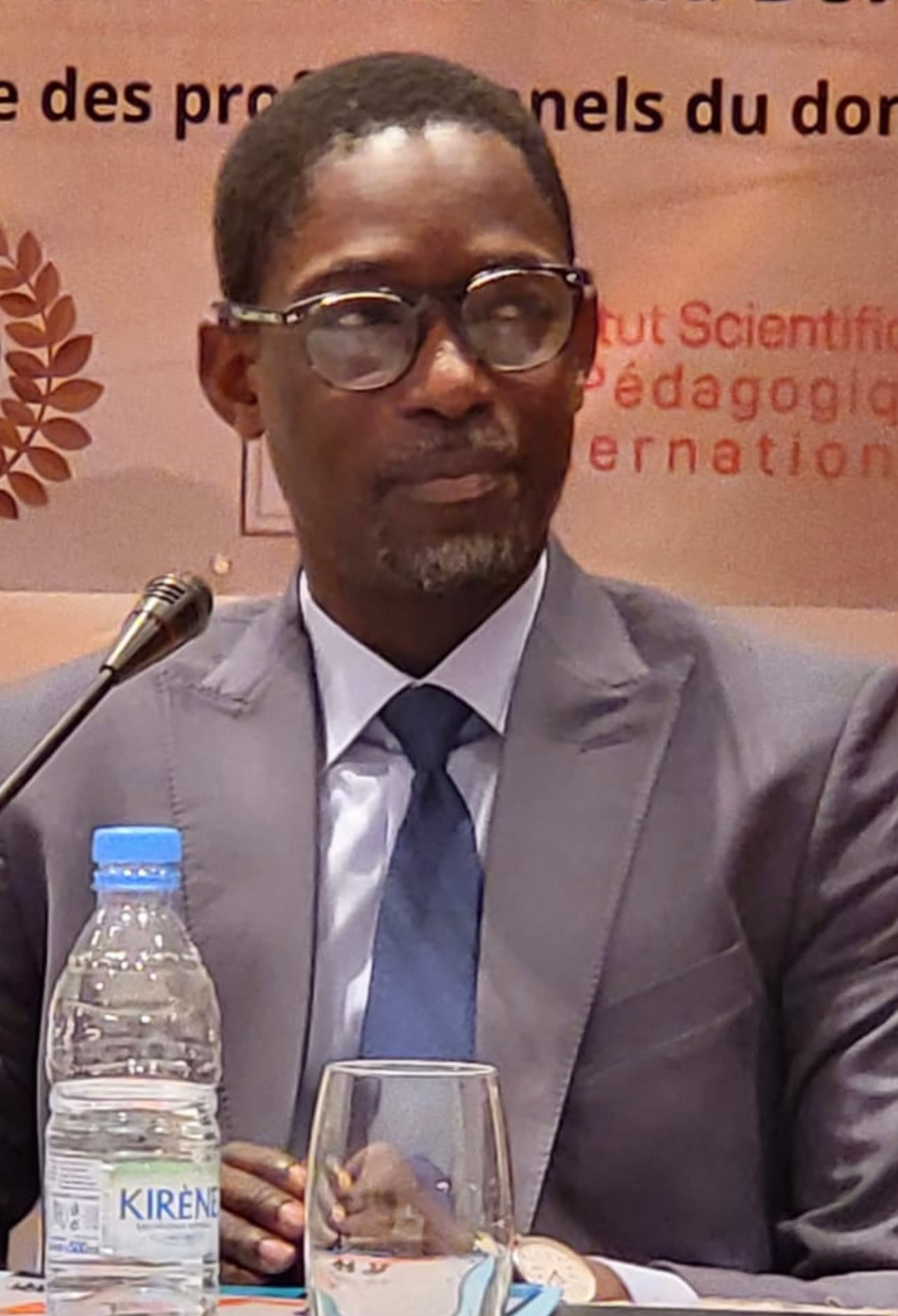
PR THIERNO THIOUNE
A graduate of the French university system, he was a tenured lecturer with CAMES ( African and Malagasy Council for Higher Education ) and earned a doctorate in Economics. The Council for the Development of Social Science Research in Africa (CODESRIA) also awarded his doctoral research as part of its doctoral grant program. Professor Thioune recently completed a postdoctoral research fellowship at Sciences Po Paris. He served as Director of the Center for Applied Economic Research (CREA) from 2022 to 2024, after having been Director of Studies at the Center for Research and Training for Economic and Social Development (CREFDES) from 2017 to 2021. He teaches at several public and private higher education institutions, including the Institute for Public Procurement Regulation (IRCOP) , the National School of Statistics and Economic Analysis (ENSAE), and the School of Law at BEM School of Management. His research areas encompass the economics of public policy, network economics, industrial economics, energy economics, natural resource economics, and institutional economics.
READ OR RE-READ Lions bonuses, economic study (1/3): what the rewards paid by Diomaye Faye reveal
READ OR RE-READ Lions bonuses, economic study [2/3]: a missed golden opportunity…
Find the full study by Professor Thierno Thioune on models for valuing sports awards.






![[EXCLUSIF] Réseau de voleurs démantelé à Colobane : 500 téléphones, 33 tablettes et des ordinateurs saisis par la SR et le GIGN, 23 arrestations](https://image.seneweb.com/content/news/2026-22-30//thumb_1260x800_6a1b6ac9bcdc7_zf1U3G3p2i.jpg)