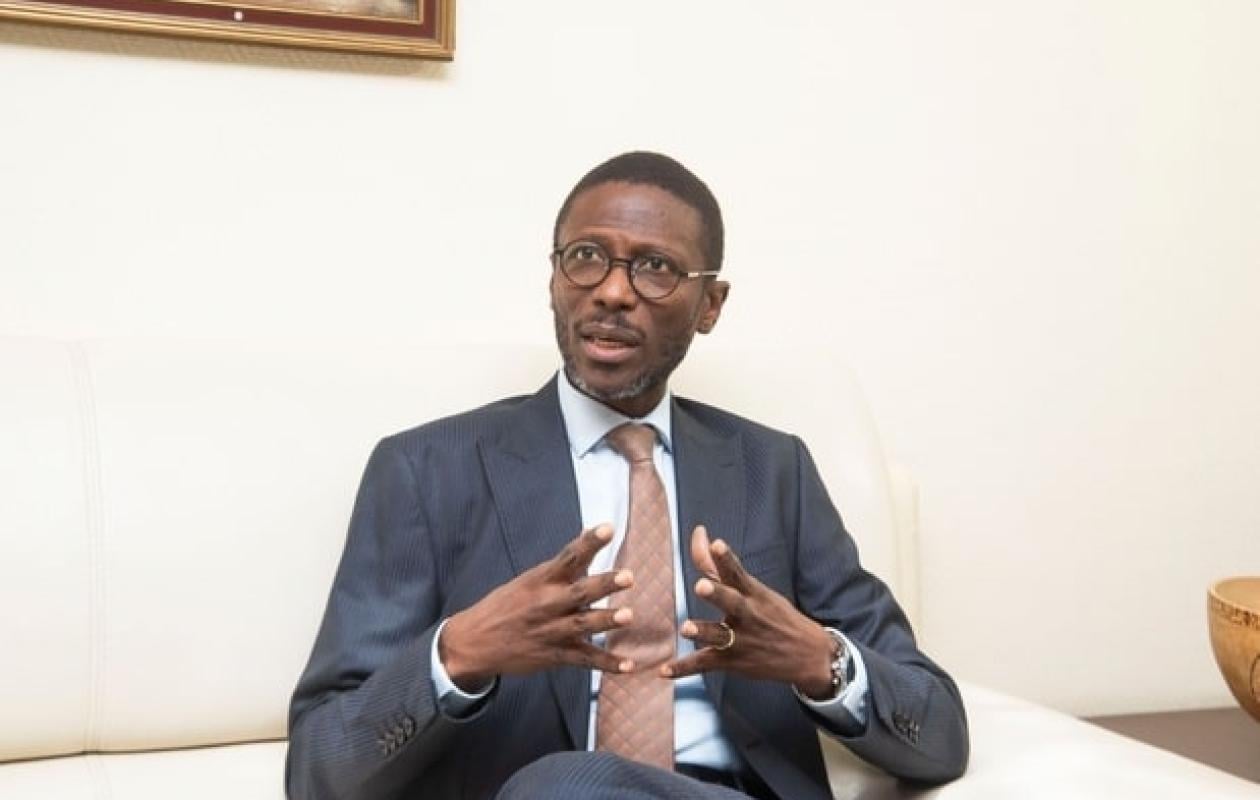
Banques/Qualité de service, coût du crédit,… : Les précisions de François SENE, Directeur National de la BCEAO
In an interview given to Lejecos and published on January 12, 2026 on the website of the economic newspaper, François SENE, National Director of the Central Bank of West African States (BCEAO) provides details on the quality of banking service in Senegal, the cost of credit considered too high as well as the low rate of banking penetration.
“Regarding the low banking rate, considerable progress has been noted on all indicators, including the strict banking rate which stood at 24.15% in 2024 compared to a level of 18.93% in 2021. In addition, the latest statistics on financial inclusion from the BCEAO show an expanded banking rate (TBE) in Senegal which increased from 59.7% in 2022 to 62.42% in 2024, representing an increase of 2.7 percentage points.
It should be emphasized that significant developments in financial inclusion have been noted thanks to the regulated growth of electronic money offered by banks but more so by electronic money institutions, with the help of Fintechs.
Regarding the quality of banking services, it has improved significantly in recent years, thanks to digitalization, although further efforts are still needed in this area. This point is the subject of regular discussions during the quarterly meetings, which I chair, between the BCEAO and the Professional Association of Banks and Financial Institutions (APBEFS) of Senegal. In this regard, I must commend the commitment of the CEOs of credit institutions who have implemented a system for listening to and processing customer complaints.
Furthermore, I would like to remind you that the General Secretariat of the WAEMU Banking Commission, the WAEMU banking sector supervisory authority, ensures, through its documentary and on-site audits, that regulated institutions comply with the provisions relating to depositor protection. These audits cover, among other things, bank fees (annual percentage rate, usury rate, services to be offered free of charge, etc.), customer data confidentiality, complaint handling, and the right to a bank account.
Furthermore, the Supervisory Authority issued Circular No. 002-2020/CB/C of September 18, 2020, concerning the handling of complaints from customers of institutions under its supervision. Customer complaints against their banks can therefore be addressed to the Banking Commission, either directly or via the BCEAO Main Agency in Dakar, which will investigate them diligently in conjunction with the institutions concerned.
The resolution rate in favor of claimants is significant, averaging over 65% in 2023 and 2024, but reflects shortcomings in the internal system for handling customer complaints by financial institutions.
I would also like to highlight the significant contribution of the awareness-raising and mediation actions carried out by the Observatory for the Quality of Financial Services (OQSF) in recent years, which aims in particular at a continuous improvement of the quality of the supply of financial products and services and a reduction of misunderstanding and mistrust in the relationship between financial institutions and their clients.
Regarding the cost of credit, it is worth noting that lending rates in Senegal are among the lowest in the WAEMU (West African Economic and Monetary Union). Indeed, in 2025, the average lending rate was 5.86% in the second quarter, after 5.93% in the first quarter, compared to regional averages of 6.80% and 6.73%, respectively. Customer perception does not support the aforementioned statistic because it is a weighted average based on the purpose of the loan and the type of borrower.
Thus, for example, interest rates applied to households are higher than those granted to businesses. It should be noted that interest rate dynamics are governed by several factors, the most fundamental of which are the cost of funding, customer deposits, and the cost of risk, or more simply, the risk of default by the borrower.
Regarding the cost of resources, it should be noted that the Monetary Policy Committee (MPC) of the BCEAO decided, at its meeting held on June 4, 2025, to lower the main policy rate at which the Central Bank lends its resources to banks by 0.25 basis points, from 3.50% to 3.25%, and the interest rate on the marginal lending facility from 5.5% to 5.25%. This measured reduction in policy rates aims to ease financing conditions for economic activity, particularly for the private sector.





















Commentaires (8)
Lane leu diangue di jeriñ?
Le taux élevé de couverture national de la monnaie electronique et des mobile phone (portable) montre a suffisance le potentiel qu’il y a dans la population.
Reflechissez messieurs. S’il y a autant de portables dans le pays jusqu’a même dans les coins les plus réculés les mamans, ménageres, vendeuses du coin ont chacune un portable et un compte Wave cela montre le potentiel pour les banques et si la BCEAO et les banques pensaient a revoir leurs modes de fonctionnement et arreter de penser a “c’est pas possible“ et “make it possible“, chacun y trouverait son compte.
La qualité de service est très nulle dans certaines banques on rencontre de plus en plus un personnel très nul très mal formé et qui est à la limite même agressif quelques fois
C’est nul nul
Y’a des banques à éviter comme la SUNU Bank
C’est du n’importe quoi
Participer à la Discussion
Règles de la communauté :
💡 Astuce : Utilisez des emojis depuis votre téléphone ou le module emoji ci-dessous. Cliquez sur GIF pour ajouter un GIF animé. Collez un lien X/Twitter, TikTok ou Instagram pour l'afficher automatiquement.