
Budget 2026 adopté: L' analyse de l’économiste-statisticien Aliou Diouck
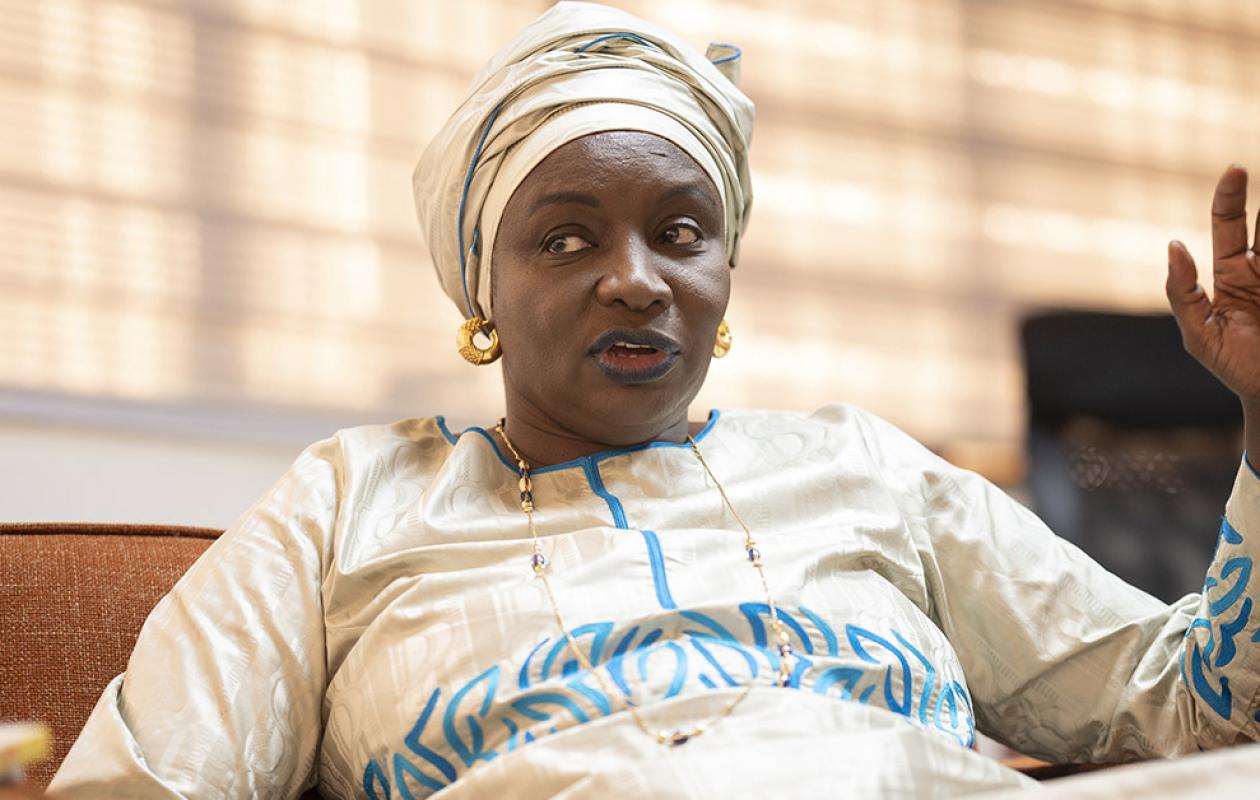
The budget marathon concluded on December 13th. A total budget of over 700 billion CFA francs was allocated among the various ministries. Economist and statistician Aliou Diouck offered his analysis of the commitments and ambitions in light of the 2050 vision. Here is his full analysis.
"The National Assembly recently concluded the parliamentary cycle dedicated to examining the finance law. Both in committee and plenary sessions, several sectoral budgets elicited contrasting assessments, some being deemed insufficiently funded in light of the stated ambitions. At the end of this budgetary marathon, the finance law was adopted, establishing a balanced state budget for the 2026 fiscal year, with revenues and expenditures totaling 7,177,223,463,000 FCFA, corresponding to the payment appropriations available for the fiscal year."
In parallel, the State is authorized, during the year 2026, to commit up to 10,162,400,103,632 FCFA in expenditures, representing a volume of commitments exceeding payment appropriations by nearly 3 trillion FCFA. These commitment authorizations, structurally higher than payment appropriations, constitute a central instrument of multi-year budget management. They allow the State to plan, secure, and contract medium- and long-term projects, while smoothing the cash flow burden over time, in accordance with the principles of budgetary sustainability and predictability of public action.
On the other hand, the reduction of the budget deficit, the increase in investments financed from internal resources as well as the rationalization of certain operating expenses constitute, at first glance, positive indicators of progressive improvement in public finances.
However, beyond these short-term signals, the analysis of the 2026 budget benefits from being further examined in light of the Senegal 2050 Vision, which postulates a systemic transformation of the national development model.
Therefore, a central question requires us to ask whether the State budget for the 2026 financial year constitutes a true budgetary translation of the National Transformation Agenda supported by the Vision Senegal 2050, which aims to build a sovereign, inclusive and resilient economy by 2050?
More specifically, does this budget actually commit to a systemic transformation articulated around three pillars, namely the transformation of the financing system, the production system and the distribution system, in line with the long-term strategic orientations of Senegal 2050 and their short- and medium-term implementation through the National Development Strategy (SND), the Priority Action Plan (PAP) and the Economic and Social Recovery Plan (PRES)?
The transformation of the financing system is directly aligned with the Senegal 2050 Vision's focus on budgetary sovereignty. The 2026 budget resolutely prioritizes increased mobilization of domestic resources, with the aim of reducing dependence on external financing and strengthening the State's decision-making autonomy. This approach is materialized through the broadening of the tax base, the modernization of the tax and customs administration, the progressive integration of the digital economy into the tax system, and the rationalization of public spending. In parallel, public debt management is being redirected towards a sustainability trajectory compatible with macroeconomic stability, in accordance with the requirements of budgetary discipline, financial credibility, and intertemporal sustainability advocated by the Senegal 2050 Vision.
The transformation of the production system addresses the fundamental objective of building a productive, competitive economy that intensively generates local added value. The 2026 budget allocates substantial resources to the development of strategic productive sectors, including modern agriculture, industrialization based on the local processing of raw materials, economic infrastructure, digital technology, and innovation. Emphasis is placed on strengthening national value chains, progressively substituting for imports, promoting local content, and investing in human capital through education, vocational training, and youth employability. This approach aims to sustainably anchor economic growth in domestic production and reduce the structural vulnerabilities of the Senegalese economy.
The transformation of the distribution system embodies the social and territorial dimension of the Senegal 2050 Vision, founded on the principle of inclusive, equitable, and territorially balanced growth. The 2026 budget strategically reallocates public resources to priority social sectors such as education, health, and social protection to strengthen equal opportunities, social cohesion, and household resilience. It also pays close attention to territorial equity through the financing of infrastructure and public services across the entire country, thereby contributing to the reduction of regional disparities. This redistributive approach aims to ensure that the benefits of growth effectively reach all segments of the population, particularly the most vulnerable. On this point, I advocate for the payment of family security and student grants.
In response to these three questions, it can be said overall that the State budget for the 2026 fiscal year is presented as an instrument for the progressive implementation of the Senegal 2050 Vision, initiating the transition from an economic model historically based on debt and consumption to one based on self-financing, the creation of national wealth, and a more equitable distribution of income and opportunities. Through this threefold financial, productive, and redistributive transformation, the State is laying the foundations for sovereign and inclusive development, consistent with the long-term ambitions of the Senegalese economy.











Commentaires (4)
Participer à la Discussion
Règles de la communauté :
💡 Astuce : Utilisez des emojis depuis votre téléphone ou le module emoji ci-dessous. Cliquez sur GIF pour ajouter un GIF animé. Collez un lien X/Twitter, TikTok ou Instagram pour l'afficher automatiquement.