
Dette publique et agences de notation : Le pouvoir invisible qui peut ruiner ou enrichir un État
When a government announces a budget, launches an infrastructure program, or prepares a bond issue, investors' decisions are not solely based on the country's economic situation. Before lending hundreds of millions or billions of dollars to a state, markets seek to assess the risk involved. It is precisely in this assessment area that rating agencies operate—often little known to the general public, but whose analyses can directly influence the cost at which states borrow.
Three companies currently dominate this global market: Moody's, S&P Global Ratings, and Fitch Ratings. Their ratings are monitored daily by investors, banks, pension funds, insurance companies, and international financial institutions. A decision made in the offices of New York, London, or Paris can therefore have immediate repercussions on the cost of financing for an African, Asian, or Latin American country.
The principle is relatively simple. Agencies assign a rating intended to reflect a borrower's ability to repay its debt. The higher the rating, the lower the perceived risk of default. Conversely, a downgrade reflects a more cautious assessment of the country's financial situation.
In practice, this assessment is based on a multitude of criteria. Analysts examine, in particular, the level of debt, economic growth, tax revenues, foreign exchange reserves, political stability, the quality of public institutions, and the medium-term budget outlook. A sovereign rating is therefore not simply a snapshot of public finances at a given moment. It also represents a judgment on the country's future trajectory.
The influence of these ratings is particularly evident when a country seeks to borrow on international markets. Investors often use ratings as a benchmark before making decisions. An upgrade can broaden the pool of investors willing to buy a country's bonds. Conversely, a downgrade can reduce this pool of potential buyers and push markets to demand higher yields.
This mechanism can produce rapid effects. In 2024, several African countries that had undertaken fiscal reforms or reached agreements with the IMF saw their credit rating prospects improve, which helped boost investor confidence. Conversely, when concerns arise about a country's fiscal trajectory or its ability to repay its debt, the returns demanded by the markets can increase within days.
The example of Ghana remains particularly revealing. Before its debt restructuring began in 2022, successive downgrades by credit rating agencies had accompanied a sharp increase in the country's borrowing costs. Investors demanded increasingly higher returns to compensate for the perceived risk, until access to international markets became virtually impossible.
Credit ratings also influence actors who do not lend directly to governments. Some investment funds, pension funds, and insurance companies are subject to internal rules that prevent them from buying securities with ratings deemed too low. When a country loses a certain rating category, it may therefore see some investors withdraw automatically, regardless of their personal assessment of the economic situation.
This reality explains why governments closely monitor the decisions of the rating agencies. An improvement of just a few notches can save tens, or even hundreds, of millions of dollars in interest over the life of a loan. Conversely, a downgrade can permanently increase the cost of public debt.
For African countries, the issue is particularly sensitive. According to data from the African Development Bank, the continent represents less than 3% of the global sovereign ratings market, but bears financing costs often far higher than those observed in advanced economies. Several African officials believe that rating agencies sometimes tend to apply an excessively conservative risk assessment when evaluating certain economies on the continent.
This criticism is not new. For several years, the African Development Bank, the African Union, and several governments have been advocating for greater consideration of African economic realities in sovereign risk assessment models. Some studies commissioned by the AfDB have even estimated that perception biases could cost African states several billion dollars more through higher risk premiums.
However, rating agencies reject the idea of systematic negative treatment. They point out that their analyses are based on standardized methodologies applied to all countries and emphasize that several African economies have benefited from rating improvements when their fiscal or macroeconomic indicators have strengthened.
The debate actually goes beyond the mere question of the fairness of ratings. It touches on how financial markets function. Investors need tools that allow them to quickly assess the risk of hundreds of borrowers spread across the globe. Rating agencies fulfill this aggregation function, which gives them considerable influence.
This influence becomes all the more important as states' financing needs continue to grow. According to the IMF, several sub-Saharan African countries must simultaneously finance their population growth, infrastructure development, energy transition, and debt servicing. In such a context, a few additional percentage points on the cost of borrowing can represent considerable sums for public finances.
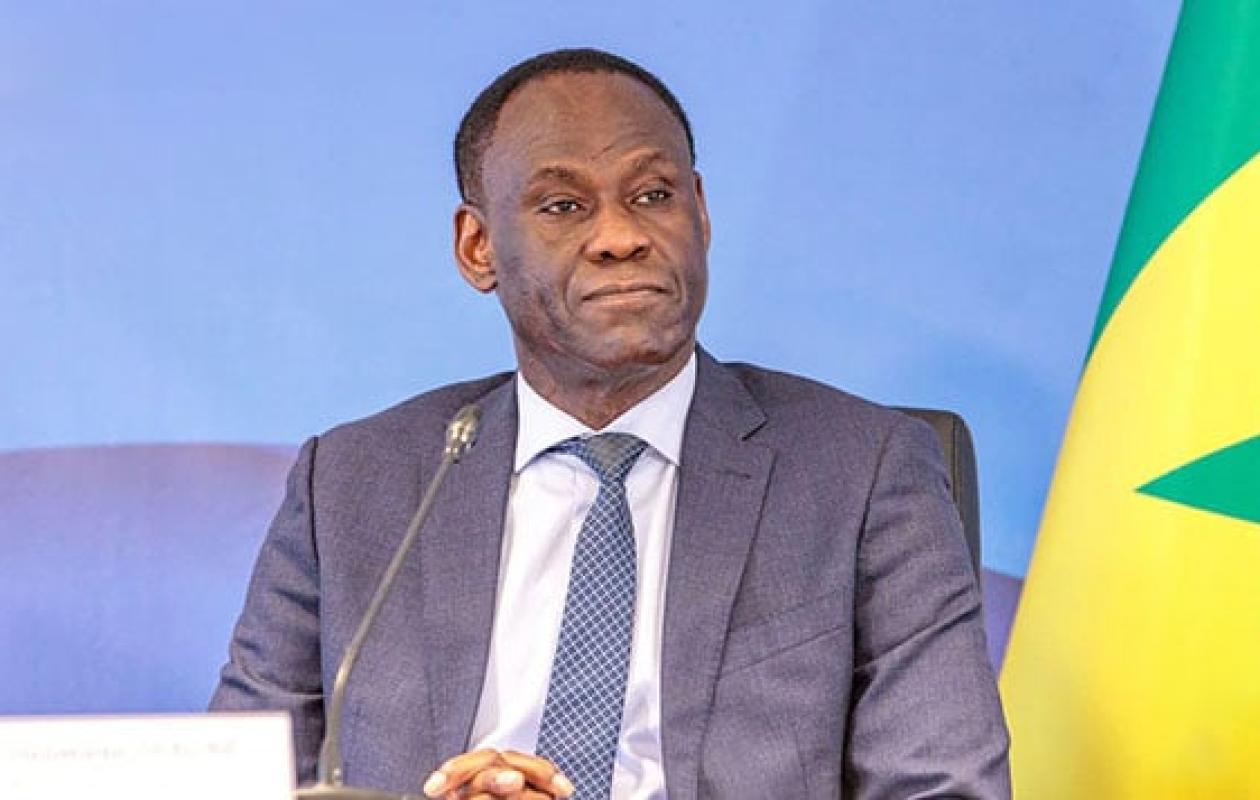
The case of Senegal clearly illustrates this sensitivity. Recent debates surrounding public finances, budget audits, and discussions with the IMF have been closely followed by rating agencies, precisely because their assessments influence the perceptions of international investors. Behind announcements of reforms or debt management strategies lies a battle for financial credibility, of which ratings are one of the main indicators.
Ultimately, rating agencies don't directly determine the interest rate at which a country borrows. Investors set the final price on the markets. But ratings help shape the perception of risk that guides these decisions. This explains how a private institution can, without voting on a budget or granting a loan, have a lasting influence on a country's financial trajectory and the leeway its government has to finance its economic priorities.
























Commentaires (5)
Participer à la Discussion
Règles de la communauté
💡 Astuce : Utilisez des emojis depuis votre téléphone ou le module emoji ci-dessous. Cliquez sur GIF pour ajouter un GIF animé. Collez un lien X/Twitter, TikTok ou Instagram pour l'afficher automatiquement.
Se connecter
Commentez avec votre profil, votre photo, et soyez averti des réponses.