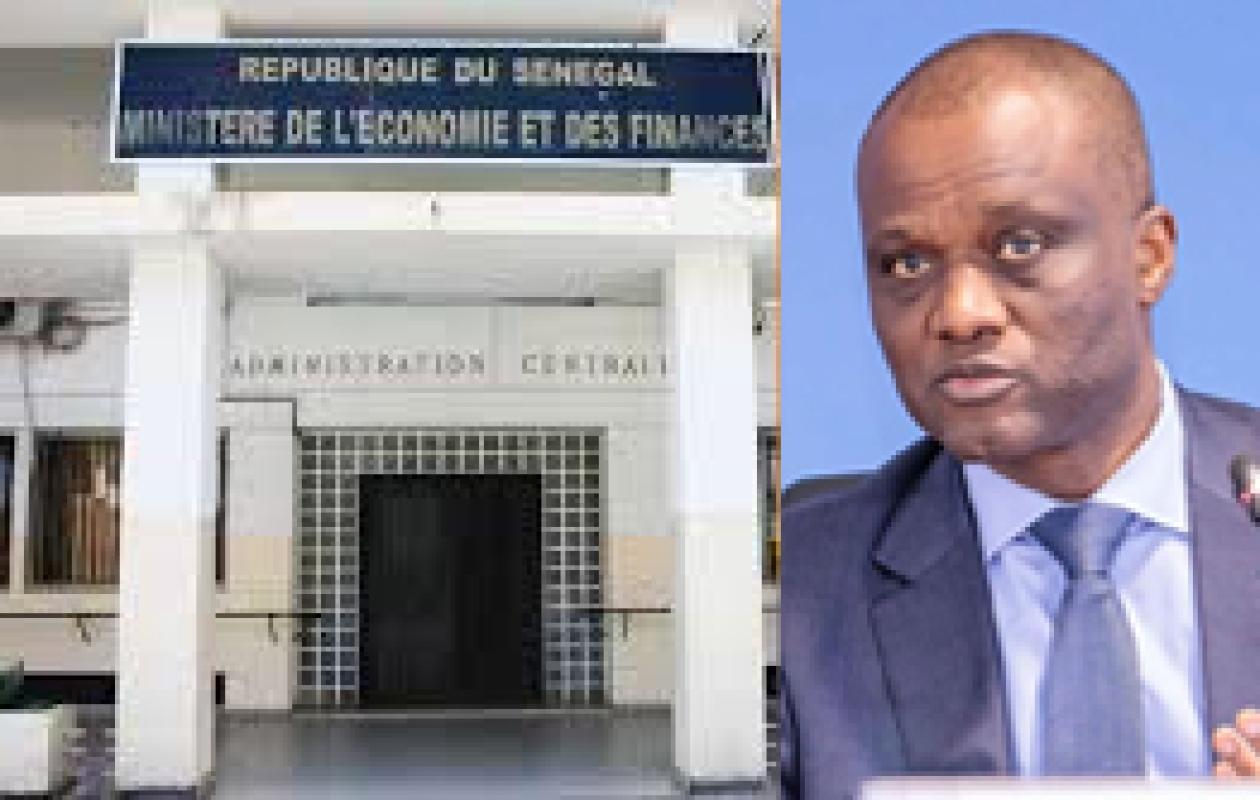
Dette publique : Un niveau élevé qui impose une gestion rigoureuse et sélective
During the review of the Ministry of Economy, Planning and Cooperation's (MEPC) 2026 draft budget, the Government revealed the true level of Senegal's public debt, estimated at 119% of GDP at the end of 2024, and at 132% of GDP when certain additional unconsolidated commitments are included. This revelation comes in the context of improved budgetary governance, marked by the authorities' stated commitment to restoring transparency in public finances and rebuilding the State's credibility with technical and financial partners.
The Minister of Economy, Abdourahmane Sarr, explained that this level of debt is the result of combined findings from audits conducted by the General Inspectorate of Finance (IGF), the Court of Auditors, and the Forvis Mazars firm. These audits revealed erroneous data submitted in the past, delaying the opening of a formal dialogue with the International Monetary Fund (IMF).
According to the Minister, the central government's debt alone remains at 119% of GDP, while the additional 13-point difference corresponds to additional commitments, particularly those related to certain public entities and indirect financing mechanisms. The revelation of this true level of debt has had a direct impact on the downgrade of Senegal's sovereign rating. The Government attributes this development not to a sudden deterioration in economic fundamentals, but to a correction of the financial information now made public. This situation has led to an increase in the cost of financing on international markets and reinforced investor caution, in a context already marked by strains on public finances.
A consolidation path to restore credibility
Faced with this level of debt, the authorities have defined a fiscal consolidation trajectory aimed at gradually reducing the public deficit to sustainable levels: 7.8% of GDP in 2025, 5.4% in 2026 and 3% in 2027. This strategy is based on a controlled fiscal adjustment, increased revenue mobilization within the framework of the Economic and Social Recovery Plan (PRES), as well as a strengthened selectivity of public investments, favoring projects with high economic and social returns.
To cover financing needs estimated at nearly 6 trillion CFA francs, the State intends to leverage several mechanisms: concessional financing, regional and international financial markets, and public-private partnerships. However, the Government has ruled out, at this stage, the option of debt restructuring, believing that there is still room for maneuver.
Prioritizing concessional resources aims to limit the increase in debt service, while public-private partnerships (PPPs) will be subject to rigorous assessment of their fiscal sustainability. With public debt significantly exceeding the 70% of GDP threshold generally used in the West African Economic and Monetary Union (WAEMU), Senegal faces a delicate balancing act between economic recovery, macroeconomic stability, and social demands. In this context, the credibility of the fiscal trajectory, the quality of investments, and transparency in debt management appear essential conditions for restoring the confidence of partners, reviving private investment, and putting the economy back on a path of sustainable growth.

















Commentaires (5)
Participer à la Discussion
Règles de la communauté :
💡 Astuce : Utilisez des emojis depuis votre téléphone ou le module emoji ci-dessous. Cliquez sur GIF pour ajouter un GIF animé. Collez un lien X/Twitter, TikTok ou Instagram pour l'afficher automatiquement.