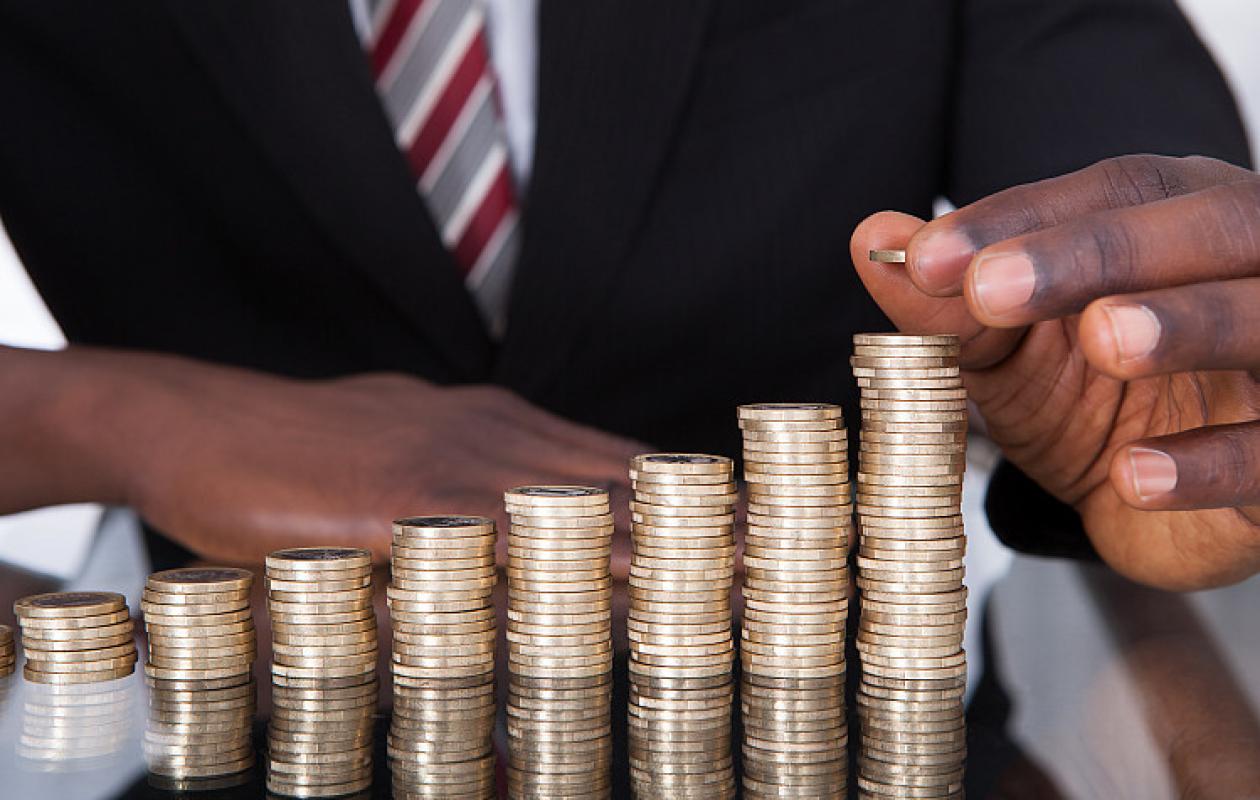
Économie sénégalaise : La “tâche noire” d’une croissance de 6.7%
In 2025, Senegal's GDP growth reached 6.7%, compared to 6.5% in 2024. This raw figure, released this week by the National Agency for Statistics and Demography (ANSD), might give the impression that the Senegalese economy is thriving. However, this rate masks the shortcomings of a multi-speed economy.
In reality, “excluding hydrocarbons, economic growth for 2025 is estimated at 2.2%,” reports the ANSD. Therefore, 4.5% of growth is generated by the exploitation and marketing of hydrocarbons. This could be a source of difficulties, given that oil companies typically repatriate their profits to their home countries, thus minimizing the wealth that remains locally.
Furthermore, the African Refining Company (SAR), which is supposed to process Sangomar crude to allow the country to capture more added value locally, is not yet fully utilizing Senegalese oil. Officially, it has only processed it once, and the operation was not commercially successful.
Also, the National Agency for Statistics and Demography (ANSD) reports, in its summary note on the national accounts of Senegal which it has just published, that apart from hydrocarbons and agriculture, growth falls to 1.6% for the year 2025.
These aspects have not escaped Professor Amath Ndiaye, who points out that this growth, which is not very inclusive, masks deep-seated weaknesses. “Growth is largely driven by hydrocarbons. Outside this sector, it falls to 2.2%, and even to 1.6% excluding hydrocarbons and agriculture. The real economy is therefore progressing weakly. This is isolated growth, creating few jobs,” the economist emphasizes in his opinion piece shared with Seneweb. Meanwhile, the ANSD (National Agency for Statistics and Demography) recently revealed an unemployment rate of 23.3% for the fourth quarter of 2025, its highest level since 2022.
The economist, a professor at the Faculty of Economics and Management (FASEG) at Cheikh Anta Diop University of Dakar (UCAD), emphasizes that the figures show our economy is operating at two speeds, with a dynamic extractive sector that creates few jobs, and a struggling domestic economy. “This gap between growth and development sums up the paradox of 2025,” he states.
A crisis of growth quality
According to Professor Ndiaye, Senegal is facing a “crisis in the quality of growth.” And as long as growth is not more inclusive and sustainable, “it will remain without any real impact on well-being.” He warns that if the war in the Middle East persists, the effects could be severe, with rising energy prices, inflation, and increased interest rates. “In this context, the country could face a real economic knockout,” the economist cautions.
In detail, the secondary sector experienced growth of 16.7% in 2025, thanks to the performance of extractive activities, oil refining, and coking (+26.4%). The primary sector grew by 7.0%. The tertiary sector, the dominant sector of the Senegalese economy, only strengthened by 2.5% in 2025. Its performance “was hampered by the decline in information and communication activities (-2.1%) and health and social services (-0.1%),” according to the ANSD.









Commentaires (6)
Participer à la Discussion
Règles de la communauté :
💡 Astuce : Utilisez des emojis depuis votre téléphone ou le module emoji ci-dessous. Cliquez sur GIF pour ajouter un GIF animé. Collez un lien X/Twitter, TikTok ou Instagram pour l'afficher automatiquement.