Économie : Ces goulots qui «asphyxient» la compétitivité du Sénégal
What is Senegal's current level of competitiveness? This is what the Center for Policy Studies for Development (Cepod) assessed. This Thursday, the organization, which reports to the Directorate General of Planning and Economic Policies (Dgppe), published the findings of its survey in its national report on Senegal's competitiveness (Rncs-2024).
The document highlights that the Senegalese economy has experienced dynamic growth since 2016, despite a significant slowdown caused by COVID-19, which brought the growth rate down to 1.3% in 2020. However, Cepod points out that the macroeconomic framework is characterized by increasing debt, exceeding the regional average. This is compounded by weak growth in per capita wealth, which rose from $1,282 in 2016 to $1,476 in 2023.
Only 3% of businesses are formally registered.
As for businesses, only 3% operate in the formal sector. The report indicates that these modern businesses saw their revenue increase by 78.8% between 2016 and 2022, reaching $20.135 billion. Their contribution to development grew, with 338,125 employees in the first quarter of 2024. However, "the UNIDO Industrial Competitiveness Index declined, placing the country 102nd in 2022."
On the social front, the poverty rate decreased slightly from 37.8% in 2019 to 37.5% in 2022. Income inequality declined from 35.1% to 33.4%. Nevertheless, the report emphasizes that gender inequality remains high. "The country is ranked 122nd in 2023 according to the Social Progress Index and in the low category according to the Human Development Index." On the other hand, the employment rate remained average at 48.79% in 2023, and the unemployment rate stood at 23.6% in 2021, the report notes.
Social coverage remained weak
Regarding the Sustainable Development Goals (SDGs), malnutrition decreased from 8.5% to 4.6%, access to water increased from 79.10% to 86.25%, and access to electricity rose from 64.6% to 67.9% during the period. However, "social coverage remains low (19.9% in 2022)," the report notes. Environmental performance, meanwhile, "deteriorated between 2016 and 2020." However, it shows a marked recovery, as the country has risen from 155th in 2020 to 100th in 2024 out of 180 countries.
Regarding the institutional framework and investment climate, Senegal maintains a relatively favorable position in terms of governance, the report indicates. It highlights that the country is ranked 11th in 2023 according to the Mo Ibrahim Index. The country's situation is considered favorable with respect to democracy and the rule of law.
Country risk classified as significant
Regarding the investment climate, "country risk is rated as significant by Standard & Poor's and Moody's." And despite an improvement in economic freedom (110th according to the Fraser Institute index in 2021), major challenges persist concerning the tax environment and the costs and delays of business procedures, the Rncs-2024 report emphasizes.
On the human capital front as well, challenges persist. "Human capital remains a crucial point of vigilance requiring significant efforts. International rankings are unfavorable: Senegal is ranked 138th out of 173 according to the World Bank index with a score of 0.42 in 2023 and 112th out of 134 (Global Talent Competitiveness Index, score 28.62)," warns Cepod in its report.
Public investment is falling
It also highlights that the public investment rate fell from 9.7% to 7.2% between 2016 and 2023. Conversely, private investment increased significantly, rising from 15.5% to 34.4% of GDP in 2023, far exceeding the WAEMU average. However, "the efficiency of this investment remains low, with an average ICOR of 8.88," the report emphasizes.
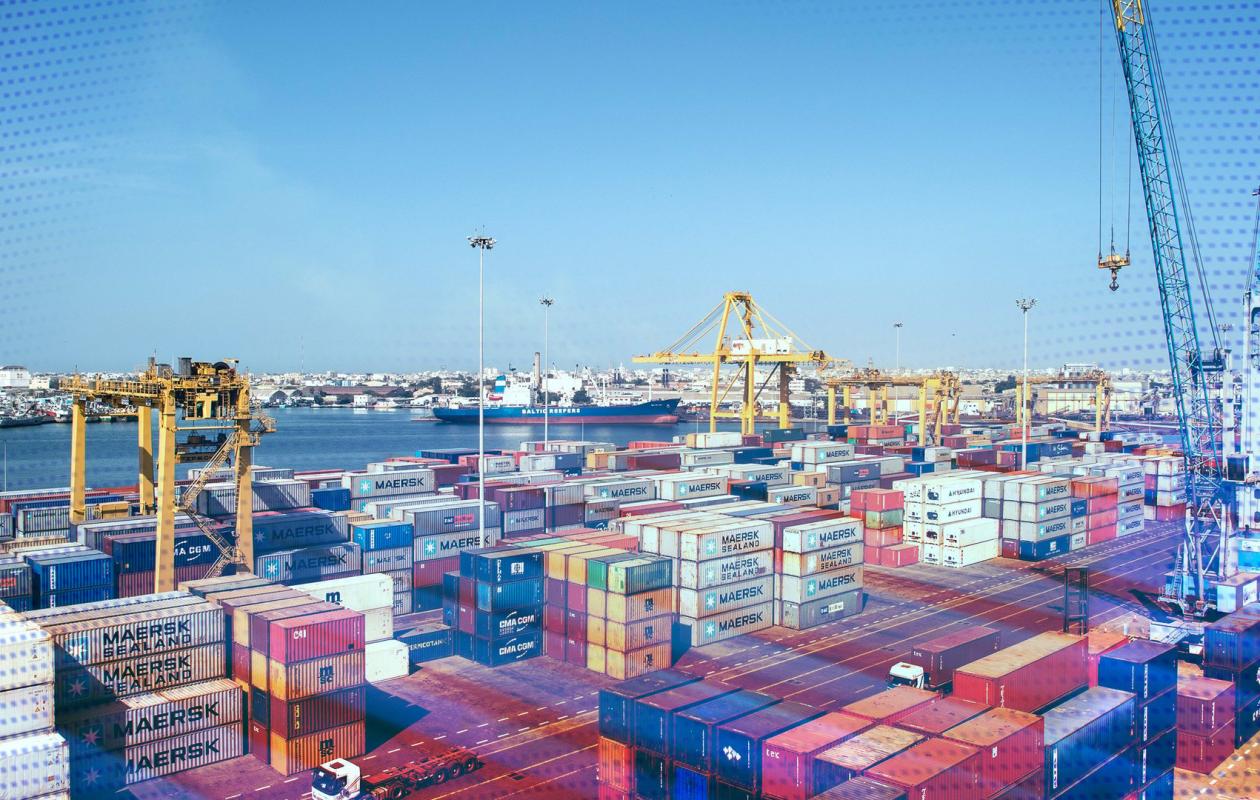
The overall quality of infrastructure has improved. In fact, 62% of the paved road network was in good condition in 2023. For airport infrastructure, Blaise Diagne International Airport (AIBD) was named the best airport in Africa in 2023 for the 2-5 million passenger category. For port infrastructure, the Autonomous Port of Dakar (PAD) was named the best port in sub-Saharan Africa in 2025.
On the energy side, the total capacity is 2816.7MW in 2022, with increasing production, rising from 4,457 GWh to 7,549 GWh between 2016 and 2022.
Bottlenecks in the financial sector
Senegal remains well-positioned in Africa in terms of innovation and digitalization. The country improved its ranking in the Global Innovation Index (GII), moving from 106th place in 2016 to 93rd place in 2023. "Digitalization is a strength of the country: Senegal is ranked 12th in Africa (ICT Development Index, score 69.3% in 2024), surpassing Côte d'Ivoire and Ghana," the report emphasizes. However, Senegal "is lagging behind in the e-government development index (143rd in 2022)."
On the financial front, the range of services is diversified, with 29 banks and numerous units of the decentralized financial system. However, the financial environment is characterized by private sector credit at around 31.1% of GDP, "lower than South Korea's 131% and the Least Developed Countries' 33.1%," the report points out. Worse still, the stock of non-performing loans is also significant. It increased by 62.6% to reach 333.6 billion FCFA in 2023.
Low entrepreneurial density
The report also discussed the intermediate competitiveness indicators that reflect Senegal's competitiveness on the international stage. Unfortunately for foreign trade, "Senegal is characterized by a structurally negative trade balance," the report notes. And this deficit has worsened considerably.
On the business front, the trend is positive for indicators of business openings and closures. "Since 2016, the number of openings has consistently exceeded the number of closures." However, the report emphasizes that entrepreneurial density remains low. With a ratio of 1.3 businesses per 1,000 workers, Senegal does surpass Côte d'Ivoire and Togo, but remains far behind the performance achieved by countries like Cabo Verde (18.5) or Norway (9.17).
Very little benefit has been derived from AGOA and APEs.
Regarding the territorial distribution of competitiveness, wealth creation in Senegal is highly concentrated and uneven across regions. Indeed, the report highlights that the Dakar region alone accounts for 39.46% of Senegalese businesses. Together with Thiès and Diourbel, they represent nearly 60% of all businesses, leaving the remaining 40% to be shared among the 11 other regions.
With regard to trade cooperation, Senegal has not been able to fully benefit from preferential mechanisms such as AGOA with the United States, EPAs with the European Union, or regional preferential regimes (UEMOA/ECOWAS).















Commentaires (15)
Sinon même l'environnement devait faire partie de leurs prerogatives
Please let's do something!!
Le deuxième c'est le manque de sensibilisation de l'état. Au lieu de passer des heures à parler des hommes politiques, l'état aurait pu orienter les médias sur des emissions où on parle de civisme, d'environnement, de salubrité et de respect des normes.
Le service national d'hygiène doit être érigée en agence et doté de moyens financiers conséquents. Il faut recruter des volontaires de l'hygiène et de la propreté. Des jeunes qui vont sillonner les quartiers, les villes et villages pour sensibiliser les populations. Nos villes sont devenues de gros villages et nos villages de grosses poubelles de plastique.
C'est l'ignorance qui engendre l'insouciance. Avec l'exode rural, l'ignorance gagné le terrain mêmes dans les niveaux insoupçonnés de la hiérarchie sociale.
Moins chère, plus Propre,plus sécurisant 👍 ( le ministère du tourisme...il fait quoi a part blablater).
Participer à la Discussion
Règles de la communauté :
💡 Astuce : Utilisez des emojis depuis votre téléphone ou le module emoji ci-dessous. Cliquez sur GIF pour ajouter un GIF animé. Collez un lien X/Twitter, TikTok ou Instagram pour l'afficher automatiquement.