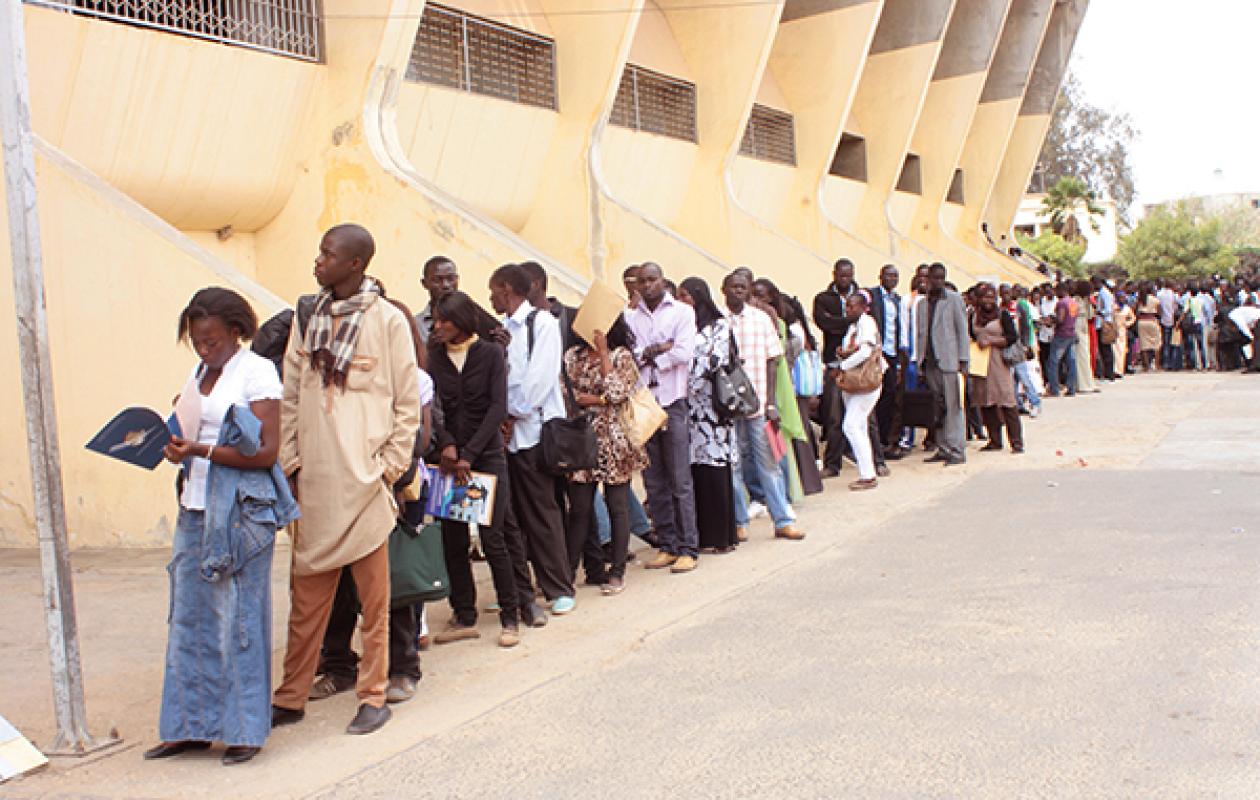
La croissance sans visages : l’emploi en suspens
In several African economies, recent macroeconomic performance reflects sustained growth rates without a corresponding dynamism in the labor market. Gross domestic product is increasing, sometimes by more than 5%, while formal employment is growing slowly or stagnating. This divergence fuels a sense of disconnect between economic rhetoric and the daily lives of the population. Growth then becomes a partial indicator, incapable on its own of reflecting collective well-being.
One explanation lies in the sectoral structure of economic expansion. The drivers of growth are often concentrated in capital-intensive activities, such as extractive industries, telecommunications, or certain large infrastructure projects. These sectors generate high added value but require relatively little labor over the long term. Their contribution to employment therefore remains limited, even when their share of GDP increases significantly.
Technological transformation is exacerbating this trend. The modernization of businesses, the automation of certain tasks, and the adoption of more productive processes improve efficiency but sometimes reduce the demand for low-skilled labor. In economies where population growth remains strong and where millions of young people enter the labor market each year, this gap creates increasing social pressure. The economy is growing without fully absorbing its available workforce.
The informal sector acts as both a buffer and a revealer of this jobless growth. A large portion of the working population finds livelihoods outside the formal system, in low-productivity activities with unstable incomes. These jobs help mitigate overt unemployment, but they limit the expansion of the tax base and social protection. The observed growth, therefore, does not translate into a proportional improvement in the quality of employment.
Public policies sometimes struggle to correct this disconnect. Development strategies prioritize attracting large investments and macroeconomic stability, without always explicitly incorporating job creation objectives. Training and professional integration programs remain insufficiently aligned with the actual needs of growth sectors. This mismatch between skills offered and skills demanded hinders the impact of growth on employment.
The territorial dimension further exacerbates these imbalances. Growth poles are often concentrated in a few urban areas or economic corridors, leaving vast regions on the margins of productive dynamics. This concentration limits the spatial distribution of employment opportunities and reinforces regional inequalities. Aggregate growth thus masks a fragmented labor market and contrasting economic trajectories.
In light of these findings, the debate is gradually shifting towards the quality of growth rather than simply its pace. The challenge lies in fostering more labor-intensive sectors, supporting small and medium-sized enterprises, and strengthening the links between investment, productivity, and social inclusion. Jobless growth is not inevitable, but it does require a rethinking of economic priorities so that expansion truly translates into job opportunities and a lasting reduction in poverty.

























Commentaires (2)
Dixit un prof.
Participer à la Discussion
Règles de la communauté
💡 Astuce : Utilisez des emojis depuis votre téléphone ou le module emoji ci-dessous. Cliquez sur GIF pour ajouter un GIF animé. Collez un lien X/Twitter, TikTok ou Instagram pour l'afficher automatiquement.
Se connecter
Commentez avec votre profil, votre photo, et soyez averti des réponses.