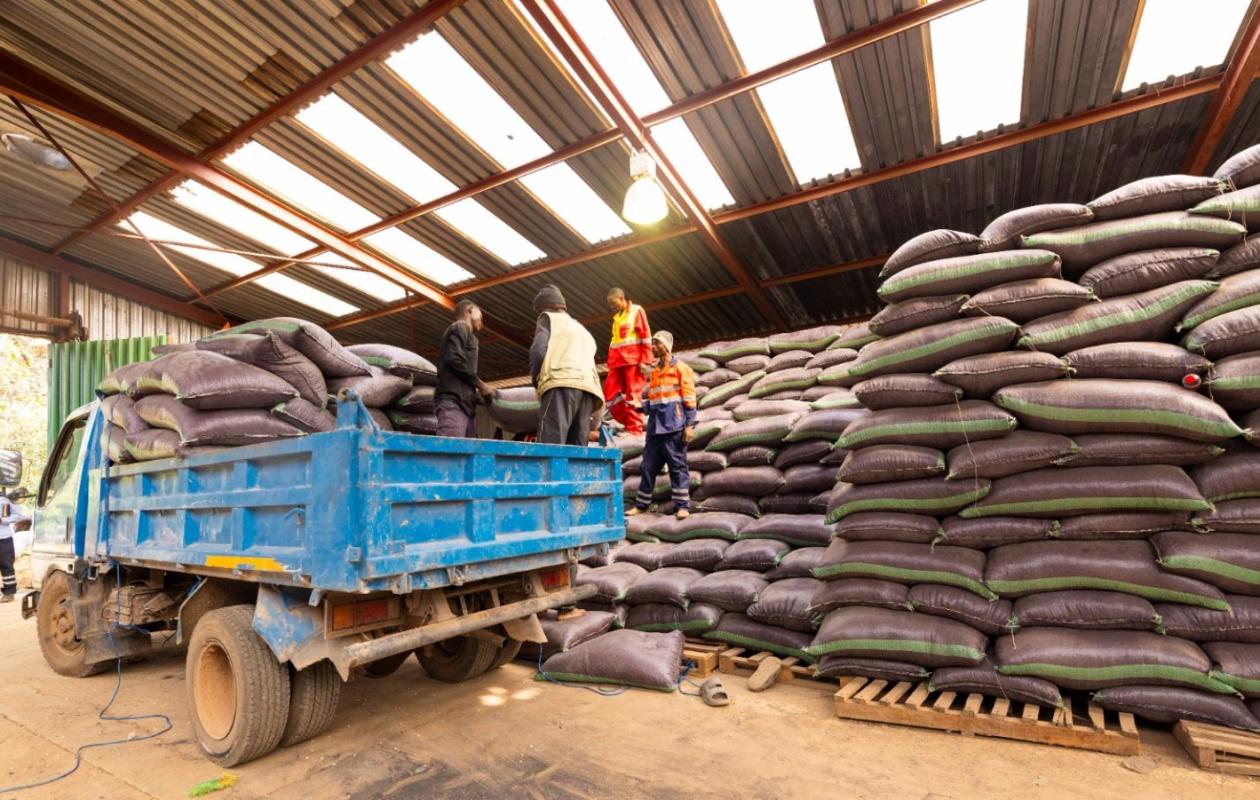
Signature d’accord : Les meuniers s’engagent à acheter 25 mille tonnes de maïs local pour booster la filière
Local maize production reached a historic record of 639,000 tonnes in November 2025. At the same time, Senegalese mills import nearly 400,000 tonnes of this small yellow cereal annually, notably for the production of animal and poultry feed.
A paradoxical trend that is on the verge of being reversed thanks to the commercial intermediation action of the Belgian agency for international cooperation (Enabel), the market regulation agency (ARM), the Ministry of Agriculture and other partners.
Thus, on Tuesday, December 2, 2025, representatives of the corn industry and processors signed a marketing agreement through which Senegalese millers, represented by Claude Demba Diop, president of the industrial millers of Senegal, committed to purchasing 25,000 tons of locally grown corn (at 225 CFA francs per kilogram) to boost a rapidly growing national production. This commitment is the result of a lengthy agreement process between industry stakeholders and processors.
“Today we are not simply signing an agreement. We are taking a foundational step that commits all sectors and propels our nation towards a more structured and ambitious agricultural model. This ceremony marks the mutual commitment between producers and processors around a significant volume of 25,000 tons of local maize for this 2025 campaign, with the ambition to exceed 100,000 tons in the very near future,” rejoiced the Minister of Agriculture, Food Sovereignty and Livestock, Dr. Mabouba Diagne.
A key player in this process, Enabel's country director in Senegal, Abou El Mahassine Fassi-Fihri, stated: "Public and private stakeholders have demonstrated that it is possible to build a viable commercial dynamic together around local maize. This memorandum of understanding brings together producers, processors, manufacturers, distributors and consumers around a fair supply chain that consists of producing and consuming good quality maize locally in sufficient quantities."
Today, the major challenge is to reverse the significant imbalance between local production (639,000 tons per year) and imports (400,000 tons per year). To achieve this, according to Mr. Fassi-Fihri, it will be necessary to "strengthen production and reduce imports to achieve genuine food sovereignty." This objective will be reached if this agreement continues.









![[Exclusif] Affaire Pape Cheikh Diallo : Nouveau coup de filet de la gendarmerie, 4 suspects arrêtés](https://image.seneweb.com/content/news/2026-10-03//thumb_1260x800_69a7405538b07_WquqgEAmOr.jpg)










Commentaires (5)
Le projet en marche INDEED !
Participer à la Discussion
Règles de la communauté :
💡 Astuce : Utilisez des emojis depuis votre téléphone ou le module emoji ci-dessous. Cliquez sur GIF pour ajouter un GIF animé. Collez un lien X/Twitter, TikTok ou Instagram pour l'afficher automatiquement.