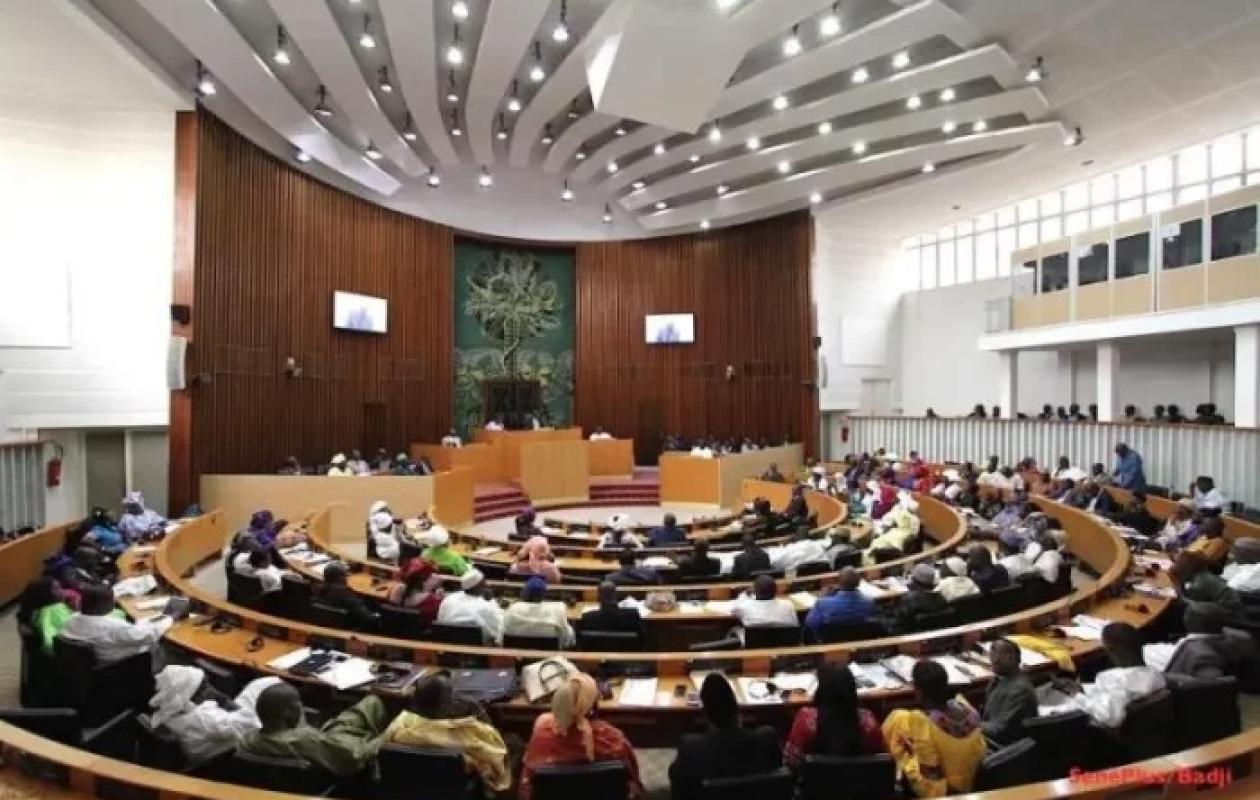
Soutenabilité budgétaire : L’Assemblée invitée à ne pas jouer les seconds rôles face à la dette
Faced with rising budgetary pressures and the increasingly sensitive issue of public debt sustainability in Senegal, "the role of Parliament can no longer be secondary." For Assiatou Diop, Director of Public Policy and International Research at the Budget Partnership (IBP), "parliamentary oversight is now an essential pillar of economic and democratic governance."
According to her, Senegalese MPs are called upon to play a strategic role in preserving the budgetary balance and the financial credibility of the State. "Parliament is not merely a rubber-stamping body for the budget. It must be a true guardian of the public interest in the face of the State's financial choices," she insists.
A debt that calls for greater democratic vigilance
Ms. Diop points out that debt, long considered a lever for development, has become a subject of democratic scrutiny. She emphasizes that Senegal's total public debt, including that of state-owned enterprises, is estimated at around 132% of GDP, while debt servicing is projected to absorb nearly 40% of tax revenues for 2026. "These figures are not neutral. They significantly reduce the state's room for maneuver and raise a central question: who truly controls budgetary choices and their impact on future generations?" she asks.
According to the head of the IBP, this situation requires a strengthening of the role of Parliament throughout the entire budget cycle, from planning to execution, including evaluation.
The Senegalese Constitution grants Parliament clear prerogatives: to vote on the finance law, to oversee budget execution, and to evaluate public policies. However, in practice, these responsibilities remain only partially fulfilled. "The budget vote is often the most visible moment of parliamentary work, but it's only one step," explains Assiatou Diop.
She believes that oversight of budget execution remains insufficient, particularly due to delays in submitting reports and a lack of monitoring during the fiscal year. As for the evaluation of public policies, introduced by the 2016 constitutional revision, it remains marginal. "Less than 30% of budget programs are subject to systematic parliamentary evaluation. This severely limits the ability of members of parliament to assess the true effectiveness of public spending, especially when it is financed by debt," she laments.
Strengthening the capacities of Parliament
For Ms. Diop, the issue is therefore not only political, but also technical. She argues for a structural strengthening of parliamentary capacities to allow for more informed oversight. "We cannot ask members of parliament to effectively monitor the budget without giving them the necessary tools," she asserts.
Among the recommendations put forward by the IBP are the institutionalization of parliamentary assistantships, the creation of budget analysis units within the National Assembly, and the implementation of continuing education programs tailored to the Senegalese context. It also emphasizes the importance of simplified guides to facilitate the understanding of complex budget documents, such as Annual Performance Plans or Annual Performance Reports. "Budgetary technicality must not be an obstacle to democratic oversight," it stresses.
Beyond the technical aspects, Assiatou Diop advocates for a more open vision of parliamentary oversight. According to her, Parliament must strengthen its connection with citizens and local communities. "Budgetary oversight cannot be confined to Dakar, to the chamber. It must incorporate the realities experienced by the people," she explains. In her view, citizen budgets, regional budget monitoring forums, and the integration of community data into public policy evaluations are essential levers for strengthening accountability.
For the Director of Public Policy and Research at the IBP, the message is clear: faced with the challenges of debt and increasing pressure on public finances, parliamentary oversight can no longer be merely symbolic. "Training, supporting, and institutionalizing parliamentary oversight, while opening it up to society, is an essential condition for democratic budgetary governance. This requirement, she believes, goes beyond the case of Senegal alone and concerns all African democracies facing the same challenges," concludes Assiatou Diop.


![[Édition Spéciale] Tout Sur la Composition du Nouveau Gouvernement](https://image.seneweb.com/content/news/2026-23-01//thumb_1260x800_6a1ddca812d4e_URisx1rdt4.jpg)









Commentaires (1)
Au final, ils ne servent à rien sur tout un tas de questions. Pire, beaucoup d'entre eux ne comprennent rien de la fonction de député. Certains d'entre eux se réclament du Président, d'autres de telle localité, etc.
Une totale absurdité.
Participer à la Discussion
Règles de la communauté :
💡 Astuce : Utilisez des emojis depuis votre téléphone ou le module emoji ci-dessous. Cliquez sur GIF pour ajouter un GIF animé. Collez un lien X/Twitter, TikTok ou Instagram pour l'afficher automatiquement.