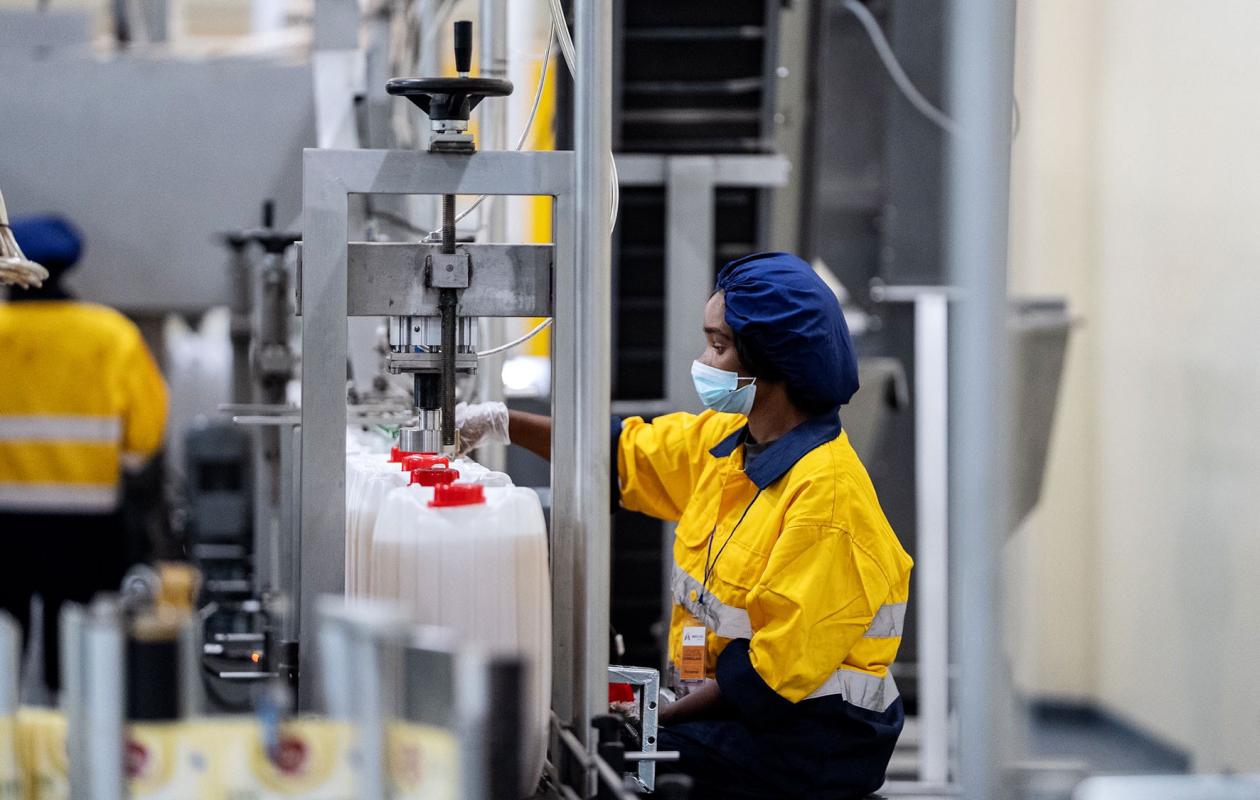
Substitution aux importations : opportunité encadrée ou dérive inflationniste
The idea regularly appeals to policymakers. Producing domestically what is currently massively imported would reduce the trade deficit, preserve foreign exchange reserves, and create jobs. In a country like Senegal, where imports of processed food products, construction materials, manufactured goods, and industrial equipment represent a significant portion of foreign purchases, the temptation to encourage local production as a substitute is strong.
From a macroeconomic perspective, the logic is understandable. The structural trade deficit weakens the balance of payments and increases dependence on external financing. Replacing some imports with domestic production can reduce the foreign exchange bill and support domestic economic activity. Several sectors are often cited as priorities: agri-food processing, fisheries products, construction materials, and consumer goods.
However, international experience suggests caution. In the 1960s and 1970s, many Latin American countries adopted import substitution policies protected by high tariffs. While these strategies fostered the emergence of local industries, they also sometimes led to uncompetitive production structures, dependent on government protection and unable to export.
The main issue remains competitiveness. Local production only makes economic sense if costs and quality allow it to meet demand without unduly penalizing consumers. In a context where the cost of electricity, financing, and logistics remains high, some domestic production struggles to compete with imports from countries with significant economies of scale.
Substitution can nevertheless be relevant when it is based on genuine comparative advantages. Processing locally available agricultural or fisheries products reduces the costs associated with transporting raw materials and allows for the capture of more added value. Similarly, the development of intermediate industries supplying inputs to the construction or agribusiness sectors can strengthen existing value chains.
A credible strategy therefore requires precise targeting, investments in productivity, and a gradual opening to competition. The objective cannot be a permanent closure of the market, but rather a progressive increase in capacity. Industrialization by substitution is not a universal solution. It can become a useful lever if it is part of a trajectory of continuous improvement in competitiveness, rather than a prolonged protection of fragile activities.
Ultimately, import substitution raises a question of balance. Reducing external dependence is legitimate, but at what cost in terms of incentives and trade-offs for households and businesses? Success depends less on political intention than on the ability to translate this ambition into sustainable industrial performance.

























Commentaires (1)
Participer à la Discussion
Règles de la communauté :
💡 Astuce : Utilisez des emojis depuis votre téléphone ou le module emoji ci-dessous. Cliquez sur GIF pour ajouter un GIF animé. Collez un lien X/Twitter, TikTok ou Instagram pour l'afficher automatiquement.