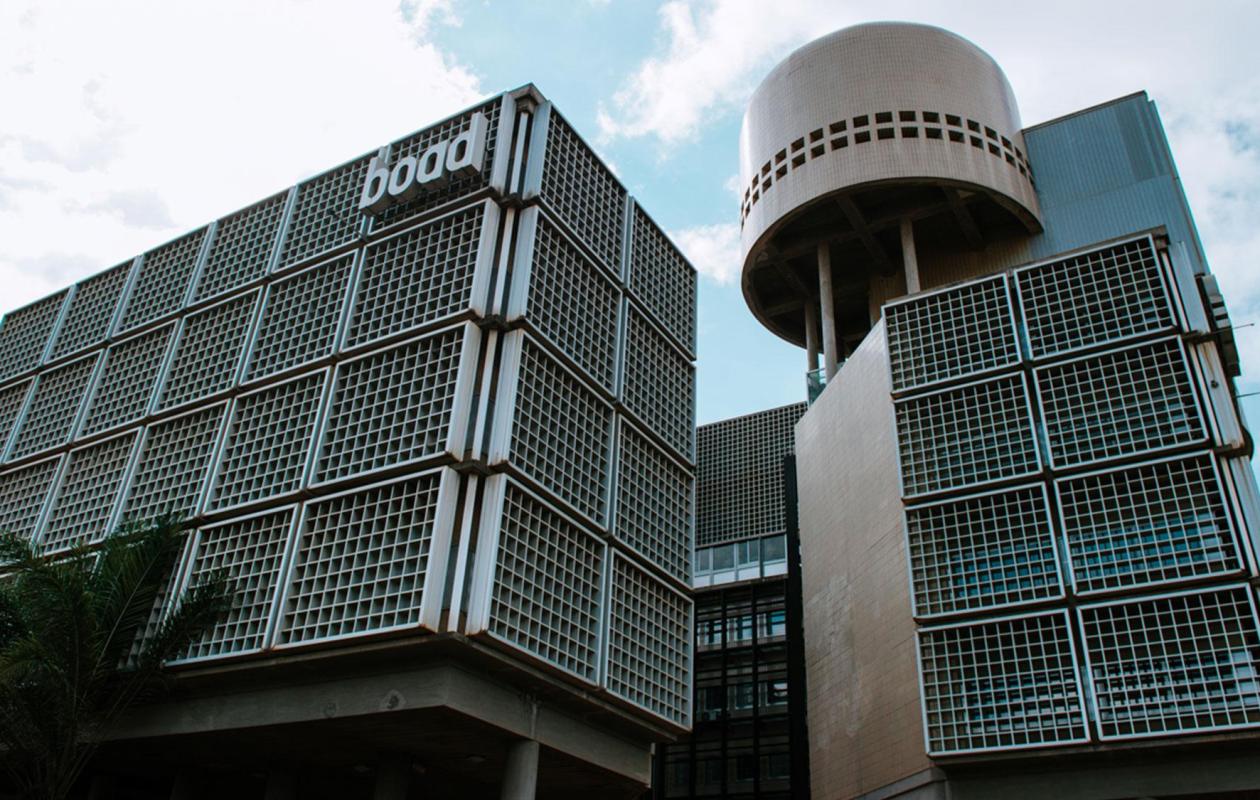
La BOAD, l’institution qui finance une partie de l’intégration économique ouest-africaine
When discussing regional integration in West Africa, attention often focuses on the Central Bank of West African States (BCEAO), which manages the common currency, or the West African Economic and Monetary Union (UEMOA) Commission, which develops the economic rules applicable to the eight member states. However, the existence of a common currency and harmonized regulations is not enough to transform a region. It is also essential to finance roads, electricity grids, logistics infrastructure, agricultural projects, and private investments capable of concretely connecting the economies. This is precisely the mission entrusted to the West African Development Bank, better known by its acronym BOAD.
Established in November 1973, BOAD is the development finance institution of the West African Economic and Monetary Union. Based in Lomé, Togo, it was conceived as a tool to support the region's economic modernization by providing long-term financing for projects considered strategic for member states.
This function addresses a well-known reality in developing economies. Building a highway, a power plant, a port, or a water supply network requires significant investments, the profitability of which often extends over several decades. However, commercial banks generally finance shorter-term projects. A specialized institution like the BOAD therefore helps bridge part of this gap by mobilizing resources tailored to long-term financing needs.
Over the years, the bank has become one of the leading regional lenders in the WAEMU area. According to its institutional data, cumulative financing approvals exceeded 9,300 billion FCFA at the end of 2024. This amount gives an idea of the scale of its intervention in sectors as varied as energy, transport, agriculture, housing, telecommunications, and business support.
The energy sector is a particularly good example of its role. In a region where access to electricity remains a challenge for a portion of the population and where needs are increasing due to population growth and urbanization, BOAD participates in the financing of power plants, energy transmission networks, and renewable energy projects. These investments often have a reach that extends beyond national borders, as regional energy interconnections strengthen the security of supply for several countries simultaneously.
Transport infrastructure is another major area of intervention. Effective economic integration requires that goods, people, and capital can move freely under satisfactory conditions. However, the cost of transport remains one of the main obstacles to regional competitiveness. Several World Bank studies show that logistics costs in West Africa remain higher than those observed in many other regions of the world. Investments in road corridors, port infrastructure, and logistics facilities are specifically aimed at reducing these constraints.
Agriculture also plays a significant role in the bank's financing. This choice reflects the sector's importance in the economies of the Union, where agriculture still represents a substantial share of employment and income. Interventions cover areas ranging from irrigation and agri-food processing to storage and the improvement of agricultural value chains.
Beyond public projects, the BOAD is increasingly focusing on the private sector. This shift reflects a reality shared by many development institutions. The region's financing needs are so significant that public budgets alone cannot cover all the necessary investments. Supporting businesses, financial institutions, and public-private partnerships has therefore become a key focus of its activities.
This growing influence of the private sector is reflected in the bank's Djoliba 2021-2025 strategy, which aimed in particular to increase financing for businesses while strengthening investments related to the energy transition and climate resilience. Through this approach, BOAD seeks to support not only economic growth, but also the structural transformation of the economies of the Union.
To finance its operations, the bank does not rely solely on contributions from member states. It also raises funds on regional and international financial markets. Its strong credit rating allows it to regularly issue bonds and attract international financial partners. In 2024, its total assets exceeded 3.5 trillion CFA francs, making it one of the leading development finance institutions on the continent.
This mobilization capacity is essential, as the needs remain considerable. The African Development Bank estimates that the annual infrastructure financing gap in Africa is between $68 billion and $108 billion. Within the WAEMU region, the needs related to energy, transport, water, sanitation, and digital technology continue to represent several trillion CFA francs.
The BOAD's contribution is therefore not limited to the granting of loans. By financing projects that facilitate trade, improve productivity or strengthen regional connectivity, it directly contributes to the objective that guided the creation of the WAEMU: to progressively build a more integrated and more competitive economic space.
The existence of a regional development bank is, in fact, one of the elements that distinguishes West African integration from many other regional blocs on the continent. A common currency can facilitate trade and harmonized regulations can simplify business, but without investments capable of physically linking economies, integration remains largely theoretical. It is precisely in this intersection of finance, infrastructure, and development that the BOAD now occupies a central place in the West African economic architecture.





















Commentaires (1)
Participer à la Discussion
Règles de la communauté
💡 Astuce : Utilisez des emojis depuis votre téléphone ou le module emoji ci-dessous. Cliquez sur GIF pour ajouter un GIF animé. Collez un lien X/Twitter, TikTok ou Instagram pour l'afficher automatiquement.
Se connecter
Commentez avec votre profil, votre photo, et soyez averti des réponses.