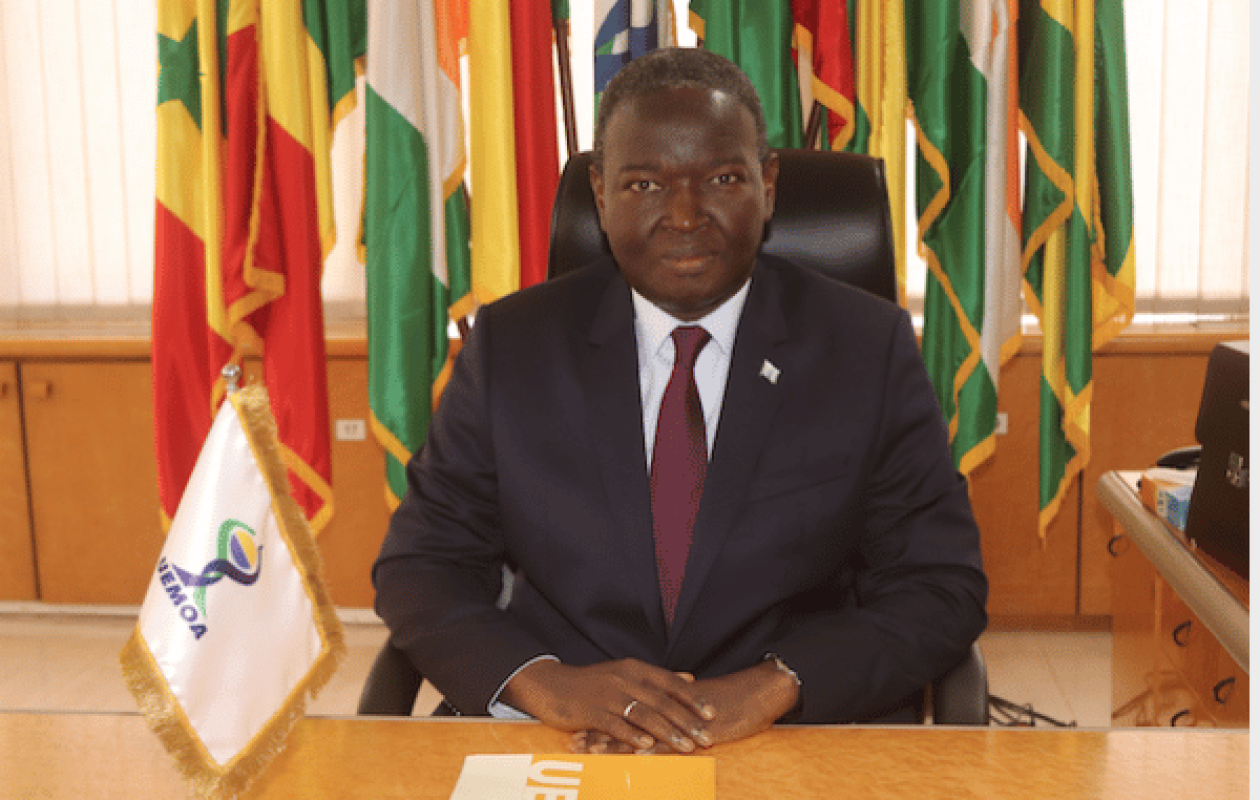
La Commission de l’UEMOA : L’institution qui transforme les ambitions régionales en règles concrètes
When discussing economic integration in West Africa, attention often turns to the CFA franc, the BCEAO (Central Bank of West African States), or the regional financial market. However, many of the decisions that shape the daily operations of the West African Economic and Monetary Union are prepared, coordinated, and monitored by another institution. Based in Ouagadougou, the WAEMU Commission acts as the Union's executive body and oversees the implementation of common policies adopted by the member states.
Created in 1994 with the WAEMU itself, the Commission was born from an ambition that went far beyond sharing a common currency. The eight countries of the Union already shared the CFA franc within the framework of the WAEMU, but they also wanted to align their economic policies, harmonize certain regulations, and gradually build a more integrated regional market.
To achieve this objective, an institution was needed that could ensure continuity between the decisions taken at political summits and their concrete implementation on the ground. This is precisely the role entrusted to the Commission.
Its scope of action is particularly broad. It participates in the development of EU rules relating to competition, trade, taxation, transport, agriculture, energy, digital technology, public procurement, and the business environment. A significant proportion of the texts adopted by the Union thus pass through its services before being submitted to the relevant decision-making bodies.
One of its missions is to reduce the obstacles that still hinder regional economic integration. Despite the progress made since the Union's creation, trade between member countries remains relatively limited compared to other regional areas worldwide. According to data from the WAEMU Commission, intra-community trade represents approximately 15% to 16% of the total trade of member states. This level remains higher than that observed in several other African groupings, but it is still far from the levels recorded within the European Union, where internal trade exceeds 60% of total trade.
This reality explains why the Commission pays constant attention to issues of free movement. Reducing administrative barriers, harmonizing customs procedures, and simplifying trade formalities are among the levers regularly used to facilitate regional trade.
Transportation is another area where its impact is particularly visible. In a region where logistics costs remain high, improving road corridors and transport infrastructure represents a major economic challenge. According to the World Bank, logistics costs in West Africa can represent a significantly higher share of the final price of goods than in industrialized economies. Therefore, any reduction in transport times or administrative formalities can lead to gains in competitiveness for businesses.
The Commission also plays a monitoring role. Member States have committed to respecting several macroeconomic convergence criteria designed to preserve regional economic stability. Public finances, debt, inflation, and certain budgetary balances are subject to regular monitoring. The analyses produced by the Commission make it possible to assess any gaps between EU objectives and the situation observed in each country.
This function has gained more importance in recent years. The economic consequences of the Covid-19 pandemic, rising global energy and food prices, and the tightening of international financing conditions have put the public finances of many countries under pressure. In this context, monitoring macroeconomic balances has become a constant concern for regional institutions.
Taxation is also among the areas where community action is most advanced. The WAEMU has progressively adopted several common rules aimed at harmonizing national tax systems. The harmonization of VAT and certain indirect taxes aims, in particular, to reduce distortions of competition between member countries and to facilitate trade within the regional market.
The institution also plays a role in private sector development. Investment promotion programs, improving the business climate, and supporting certain regional industries fall partly within its remit. This economic dimension has become increasingly prominent as states seek to accelerate industrial transformation and job creation.
The Commission's budget is primarily funded by the Community solidarity levy, a tax applied to imports from third countries. This financing mechanism enables the institution to carry out its programs without relying solely on national budgetary contributions.
The scale of its activities is evident in the numerous regional projects it supports. Transport infrastructure, energy interconnections, regulatory harmonization, regional trade development, and agricultural programs mobilize hundreds of billions of CFA francs in public and private investments each year, in which the Commission acts as coordinator or facilitator.
Unlike the BCEAO, whose interest rate decisions produce quickly perceptible effects, the Commission's actions generally unfold over a longer timeframe. Its results are often measured through the gradual evolution of common rules, the improvement of the flow of goods and services, and the harmonization of national public policies.
The WAEMU Commission thus occupies a unique place in the regional institutional architecture. It does not create the currency, does not directly finance major projects like the BOAD, and does not administer justice like the Court of Justice of the Union. Its role is to ensure the day-to-day implementation of the West African economic integration project by translating the political orientations adopted by the member states into concrete measures applicable at the regional level.














Commentaires (1)
Participer à la Discussion
Règles de la communauté :
💡 Astuce : Utilisez des emojis depuis votre téléphone ou le module emoji ci-dessous. Cliquez sur GIF pour ajouter un GIF animé. Collez un lien X/Twitter, TikTok ou Instagram pour l'afficher automatiquement.