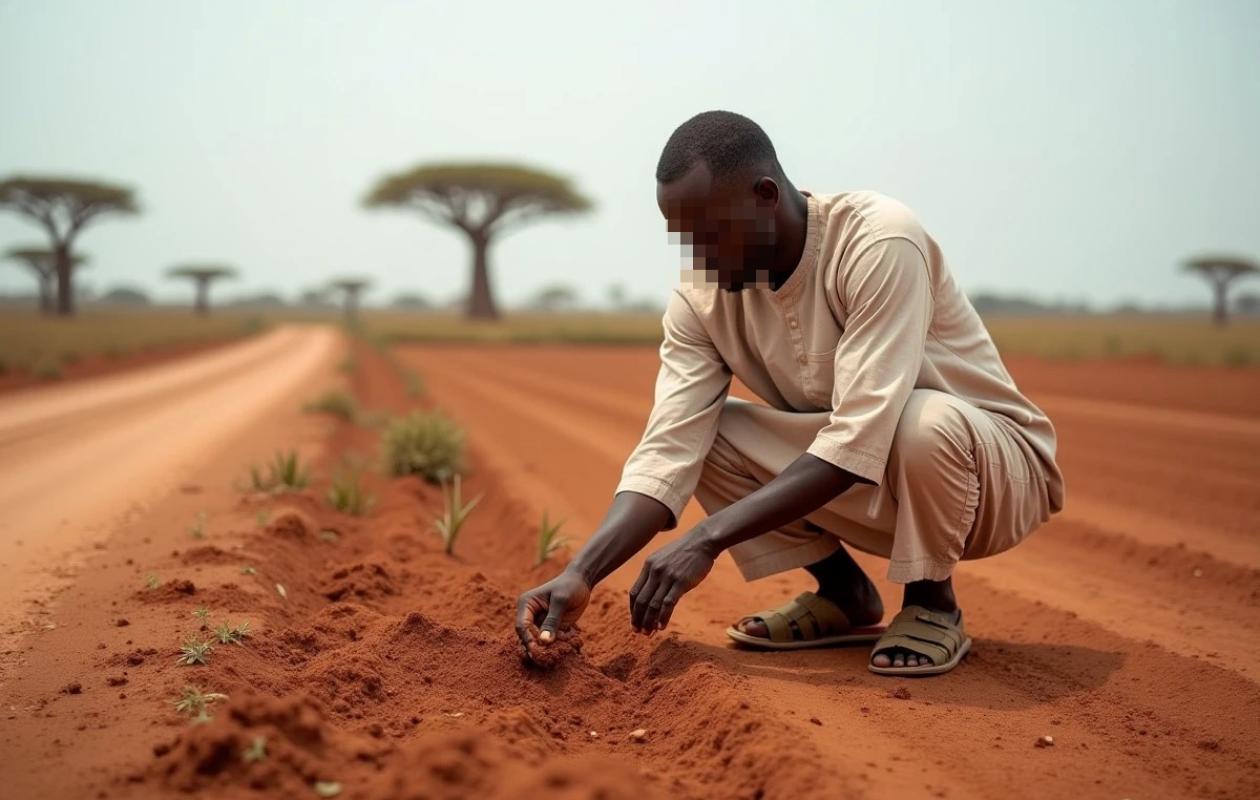
Eau, routes, urbanisation : les facteurs qui font varier le prix des terres
When farmland is put up for sale, the first piece of information that usually attracts attention is its size. Yet, two plots of the same size can have radically different values. A hectare located near an irrigated area, a main road, or an urban center can be worth several times the price of a hectare located in a more remote area. Behind land transactions lies a combination of economic, agricultural, demographic, and sometimes speculative factors that determine the true value of the land.
Agricultural productivity is naturally the primary consideration. Land capable of producing higher yields potentially generates more income for the farmer. Soil quality, natural fertility, water retention capacity, and erosion resistance directly influence the profitability of agricultural activity.
In several agricultural areas of Senegal, the differences are considerable. In the Senegal River valley, where irrigation allows for several production cycles per year for certain crops, land values can be significantly higher than those observed in areas dependent solely on rainfall. This difference is explained by agricultural yields, but also by the predictability of production. An irrigated plot generally offers the farmer greater security than land whose profitability depends entirely on rainfall.
Access to water has become one of the main determinants of agricultural land value. According to the Food and Agriculture Organization of the United Nations (FAO), less than 6% of cultivated land in sub-Saharan Africa benefits from controlled irrigation, compared to more than 40% in Asia. This scarcity mechanically increases the value of areas with efficient water infrastructure.
Infrastructure also plays a major role in price formation. Land located a few kilometers from a year-round usable road is often more economically attractive than an isolated plot. For a farmer, the ability to quickly transport their produce to market can significantly influence the income generated by their farm.
This reality is clearly evident in several regions of West Africa where the modernization of road infrastructure has altered the value of surrounding agricultural land. When a new road significantly reduces transport costs, certain lands become more attractive to investors, farmers, or agribusinesses.
Proximity to urban centers also exerts a growing influence. Africa is currently experiencing one of the fastest rates of urbanization in the world. According to the United Nations, the continent's urban population could exceed 1.4 billion by 2050, compared to approximately 700 million today. This growth is increasing land pressure around major cities.
In the suburbs of Dakar, Abidjan, Accra, and Lagos, some land initially designated for agriculture has seen its value increase less due to its agricultural potential than to its prospects for conversion to residential, commercial, or industrial uses. In these situations, the price of land reflects more the anticipation of a future change in use than the agricultural income it can generate immediately.
This trend sometimes fuels speculative activity. Investors acquire land not to farm it, but in the hope of reselling it later at a higher price. When this behavior becomes widespread, prices can gradually diverge from the actual agricultural value of the plots.
Land rights also influence land value. Land with a clear legal status, with well-established rights of use or ownership, generally attracts more investors than a plot subject to administrative uncertainties or potential conflicts.
This dimension is particularly important in Africa, where the coexistence of modern and customary land tenure systems sometimes creates complex situations. According to the World Bank, land insecurity remains a significant obstacle to agricultural investment in several countries on the continent. When a farmer is uncertain of maintaining long-term land use, they are often less inclined to invest in equipment, irrigation systems, or long-term improvements.
The economic outlook for an agricultural sector can also influence prices. A region specializing in a crop that benefits from strong demand or high market prices may see its land value rise rapidly. Conversely, a sustained decline in profitability within a sector can exert downward pressure on land prices.
The development of agribusiness also contributes to this dynamic. In several African countries, the growing needs of processing industries are creating increased demand for certain agricultural areas. Land located near processing plants or large agribusiness projects often benefits from additional development.
In Senegal, debates surrounding food sovereignty, the development of agricultural value chains, and the exploitation of irrigable land are gradually increasing the economic importance of agricultural land. The government regularly argues that improving agricultural productivity also requires better security and valuation of land resources.
The effects of climate change are now a factor in the equation. Droughts, altered rainfall patterns, and increasing salinization in certain coastal areas are gradually influencing the expectations of economic actors. Land currently perceived as particularly resilient to climate hazards may see its value increase over time.
Ultimately, the price of a hectare of farmland is never determined by a single factor. It reflects the interplay of agronomic, economic, legal, demographic, and sometimes speculative considerations. Understanding these mechanisms helps us better grasp why two plots of land of identical size can have considerable differences in value and why land has become, in many regions of Africa, an increasingly strategic economic asset.




















Commentaires (1)
Participer à la Discussion
Règles de la communauté
💡 Astuce : Utilisez des emojis depuis votre téléphone ou le module emoji ci-dessous. Cliquez sur GIF pour ajouter un GIF animé. Collez un lien X/Twitter, TikTok ou Instagram pour l'afficher automatiquement.
Se connecter
Commentez avec votre profil, votre photo, et soyez averti des réponses.