
Classement des universités : «Comment redorer le blason de l’UCAD», Dr Moussa Samba
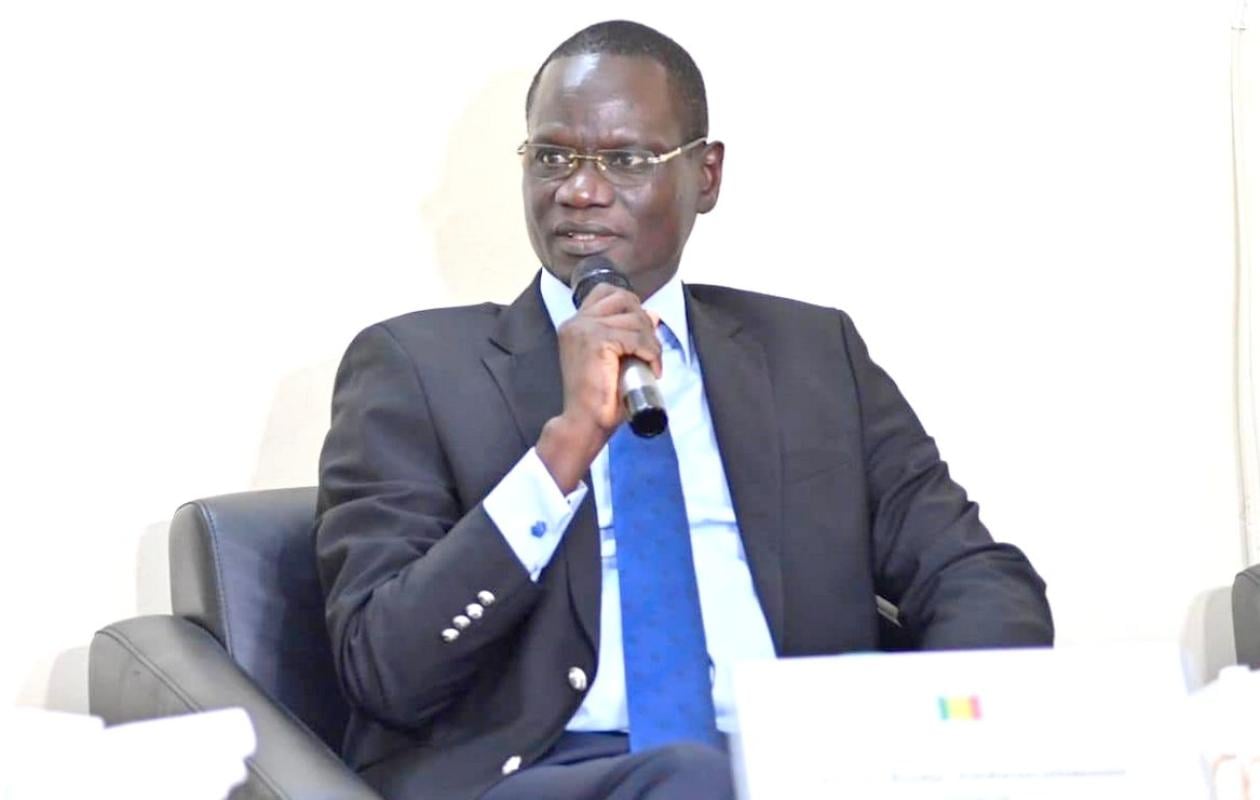
At the helm of the University Press of Cheikh Anta Diop University of Dakar (PUD) since 2023, Dr. Moussa Samba is working to strengthen the dissemination of scientific output. Through initiatives such as the annual Scientific Publications Promotion Week, from April 21 to 25, 2026, he aims to bring research closer to the general public and reposition the university press as a key player in academic and societal influence. Dr. Samba discusses here the actions that could restore Cheikh Anta Diop University's reputation.
A week to promote research and books
Since I took over as director in 2023, I have observed a lack of dissemination of research results. That is why, with my team, we have taken the initiative to strengthen the promotion of scientific publications.
Therefore, we are organizing a week dedicated to this promotion. It is linked to World Book and Copyright Day, celebrated every April 23rd under the auspices of UNESCO. This year, we will welcome 13 authors who will come to present their works.
On April 23rd, we will also be organizing a roundtable discussion on the theme of "Reading at University." This topic was chosen in response to concerns about declining student performance, often attributed to a lack of reading. We will be examining reading practices in particular. Who actually reads at university? This meeting will bring together policymakers, teachers, administrators, students, researchers, and all stakeholders interested in books and research.
Initially, this week was quite simple, without any official ceremony. We set up stands to display the books and allow students, researchers and visitors to discover the publications.
Gradually, we have enriched the format by giving authors a platform to speak directly to the public. Throughout the week, book exhibitions, free distributions, and discounted sales will be offered. Several activities are planned to celebrate books and encourage reading.
University presses: a scientific mission, not a journalistic one.
First, we must speak of "presses" in the plural. This allows us to distinguish them from the traditional press. University presses fall under the umbrella of scientific publishing: they publish monographs and journals, that is to say, books and academic publications.
We are therefore not in journalism, even though we work in the production and distribution of content. Our mission is centered on scientific publishing.
Since 2023, I have worked to raise awareness of this structure, which was still relatively unknown, even within UCAD. Some colleagues were even unaware of its existence.
Today, the situation has changed. Scientific output has increased significantly. Where there were previously very few publications, we now, for example, published seven books in March alone. Initially, I had set a target of two publications per month, but this pace has now been far exceeded.
This progress stems from internal work on the quality of our output, but also from efforts to disseminate it. We want to demonstrate that we serve not only the university community, but society as a whole. The university has three missions: teaching, research, and service to society.
Furthermore, we also publish authors who are not affiliated with UCAD, including independent researchers, provided their work is scientifically validated. I have my own analysis, but I would prefer that this debate be explored further during the roundtable discussion. That said, digital technology and artificial intelligence play a significant role.
Reading was already not a deeply ingrained practice for some groups. With these new technologies, there is a risk of exacerbating this trend. It will be up to the participants to analyze the causes and propose solutions.
UCAD faces the challenge of world ranking
This is a crucial question. This year, UCAD is among the top thousand universities in the world, which is a significant achievement.
The publication and dissemination of scientific work have a direct impact on international visibility. Researchers are read and cited, which enhances the university's reputation and recognition of the quality of Senegalese research.
In recent years, we have also intensified the digitization of journals. Each article now benefits from a DOI (Digital Object Identifier), a digital identifier that guarantees its traceability and accessibility.
Thanks to platforms like CROSSREF, our publications are accessible to millions of users worldwide. This greatly contributes to UCAD's international profile.
I am convinced that UCAD can regain its standing in Africa. At this rate, in the next five years, the question will no longer be which is the leading French-speaking university, but whether UCAD ranks among the best African universities. English-speaking universities currently dominate, particularly in South Africa, Egypt, Ghana, and Kenya.
However, in terms of scientific output, our researchers have nothing to envy. The main challenge remains visibility.
Africa produces a lot, but its products are not sufficiently distributed. That is where efforts need to be focused.
Popularizing scientific research to reach a wider audience
It is very important to make these productions more accessible. In fact, that's one of the goals of this week. We encourage authors to interact directly with the public.
The strength of scientists lies in their ability to explain complex concepts simply. It is therefore essential to strengthen this link between universities and society. University authorities are already aware of this. Now, this commitment must be extended to the national level.
It is important to support the book sector as a whole: publishing, textbooks, scientific and technical information, and vocational training. Books must become an everyday tool, both for learning and for personal enrichment.
The goal is to ensure that reading and scientific publications occupy a central place in society.





















Commentaires (7)
Participer à la Discussion
Règles de la communauté :
💡 Astuce : Utilisez des emojis depuis votre téléphone ou le module emoji ci-dessous. Cliquez sur GIF pour ajouter un GIF animé. Collez un lien X/Twitter, TikTok ou Instagram pour l'afficher automatiquement.