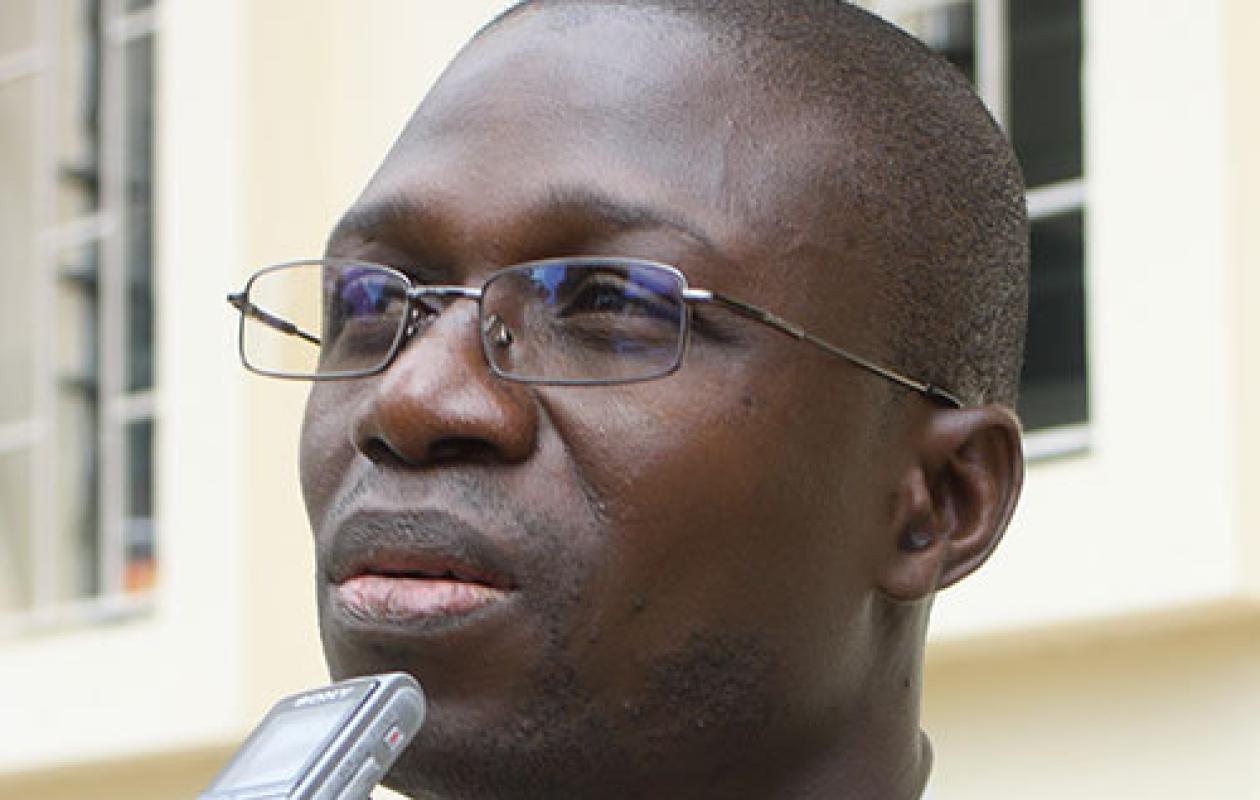
PR Yankhoba Seydi : « Avec 286 mille étudiants, le Sénégal est loin des effectifs nécessaires »
Senegal is not suffering from a student oversupply, contrary to what we have long been led to believe. With only 286,169 students enrolled (in both public and private institutions), our country is still far from the numbers required to propel an emerging economy. This was stated on Wednesday, February 4, 2026, by Professor Yankhoba Seydi, Director of Research at Cheikh Anta Diop University.
During a public conference at UCAD, organized by the Wathi Think Tank, on the challenges of higher education, he emphasized that Senegal is far from international standards in terms of access to higher education. "We have very few high school graduates. If we add up the students enrolled in private and public institutions, we are at around 286,000 students in Senegal (or 1.59% of the population). This represents a deficit of light, to borrow UCAD's motto, 'lux mea lex' (light is the law). According to the World Bank, for a country to aspire to development, at least 2% of its population must be in higher education," he stressed.
Indeed, this is an old UNESCO indicator, often cited to highlight the crucial importance of training managers and fostering innovation. Modern standards, however, raise the bar even higher, setting it at 50% of the total population. "We need to reach at least 360,000 students to meet the standards," explains Professor Seydi, who notes that even with a student deficit, "our higher education institutions (public and private) struggle to absorb the few students we have."
The contrast is even more alarming when considering the student-teacher ratio in higher education. This ratio has reached a critical threshold, estimated at around 1 teacher for every 80 to 112 students in 2023-2025, well above UNESCO standards. With nearly 286,000 students for approximately 2,500 permanent faculty members, "the system suffers from a major imbalance because the student-teacher ratio is inadequate," he explains. However, he is quick to add, "we have pockets of excellence in higher education because in some institutions the situation perfectly meets international standards."
Towards a systemic transformation: the MESRI agenda
Faced with this bottleneck, among many others that hinder access to quality higher education for the majority of Senegalese, the time for temporary fixes is over. The supervising ministry (MESRI) is developing a new roadmap through the Higher Education, Research, and Innovation Transformation Agenda. This agenda aims to shift from a "catch-up approach to a systemic transformation approach," explains Dr. Nouhou Diaby, technical advisor to the Minister of Higher Education.
“In past reforms, the aim was often to absorb the number of students, to manage crises, to create new universities and institutes to relieve congestion in Dakar. Here, we want a total transformation encompassing training, research, governance, financing, innovation and integration. We are no longer aiming to improve what already exists. We want to change the model, giving more space to research. To make it a tool for responding to concerns related to health and agriculture,” he says.
A noble cause indeed, but securing the necessary funding for the endogenous development of research is still a challenge. This is no small feat, according to Professor Seydi. As Director of Research at UCAD, all the calls that come through his office originate from abroad, reducing Senegalese researchers to mere "research workers."
“We position ourselves to capture these funds from donors who are elsewhere. In the end, we are called upon to carry out activities on behalf of people who are elsewhere. To be clear, we are research workers! Many colleagues complain about taking samples and sending them to their research teams abroad and there is no feedback. It is simply because we do not have laboratories that meet the standards,” he argues.
He therefore insists on the need "to finance our own research".




















Commentaires (4)
Participer à la Discussion
Règles de la communauté :
💡 Astuce : Utilisez des emojis depuis votre téléphone ou le module emoji ci-dessous. Cliquez sur GIF pour ajouter un GIF animé. Collez un lien X/Twitter, TikTok ou Instagram pour l'afficher automatiquement.