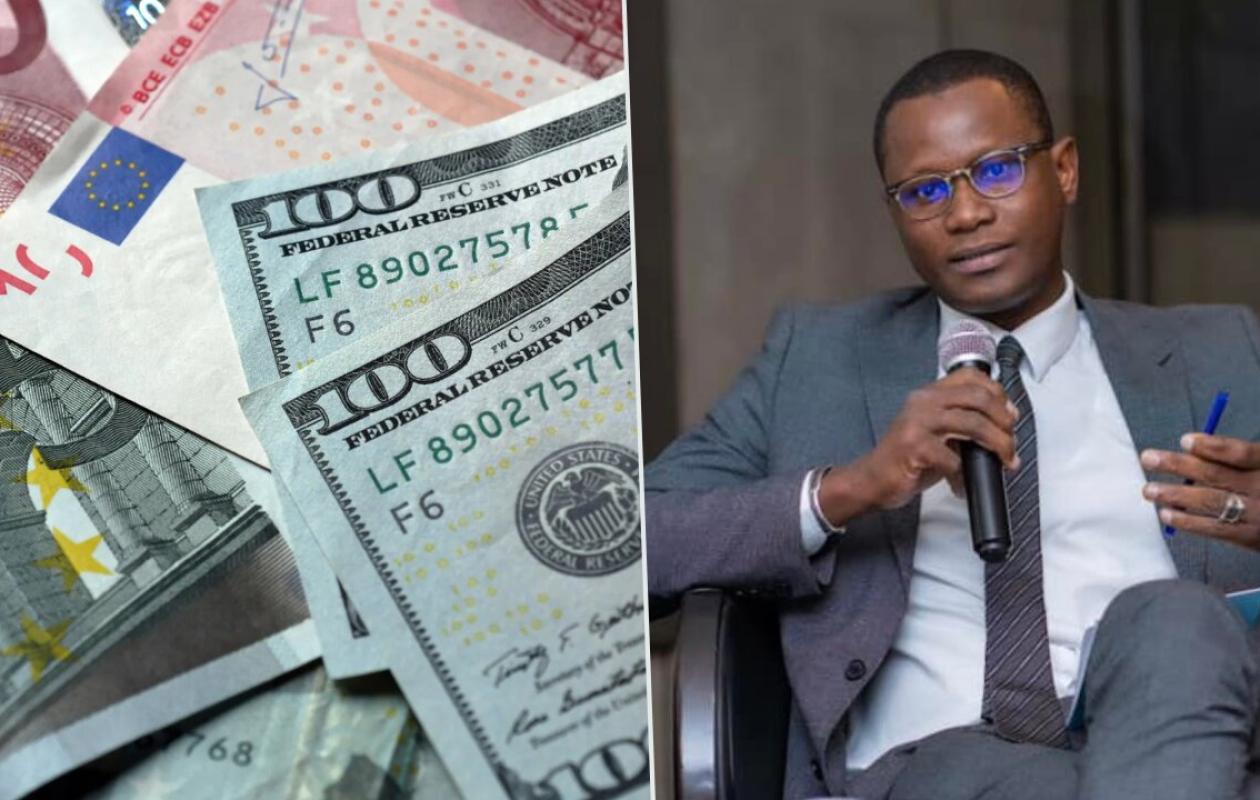
Le Sénégal face aux lourdes échéances de 485 millions de dollars de mars (Dette) : Les éclairages de Dr Serigne Moussa Dia, économiste
In March, the Senegalese government will have to meet several debt deadlines. According to media outlets such as Bloomberg, the country is expected to repay $485 million on its Eurobonds. In this interview with Seneweb, Dr. Serigne Moussa Dia, economist and lecturer-researcher, sheds light on this situation, which is generating considerable debate in the economic community.
Given the current state of Senegalese public finances, is it possible for the Government to meet these heavy deadlines?
The answer is YES; and this confirmation comes from Bloomberg and Reuters, published less than 48 hours ago (the interview was conducted on Tuesday). But the real question is: how did the government raise this money?
What actually happened
The Senegalese state did not simply have a fund available. It mobilized the funds through two simultaneous mechanisms that must be understood to appreciate the solidity; or fragility; of this success.
First mechanism: regional financial markets
In just six weeks, the Senegalese Treasury raised approximately 510 billion CFA francs on the WAEMU market, with the goal of raising an additional 490 billion before the end of March. How? By issuing short-term Treasury bills—instruments with maturities of 3 to 12 months—which banks in the sub-region have purchased in large quantities. This mechanism works because regional banks have a regulatory incentive to hold sovereign bonds, and the BCEAO accepts these bonds as collateral for its refinancing operations.
Second mechanism: robust tax revenues in the first quarter
Q1 is traditionally the most favorable period for Senegalese state revenues. Corporate tax, VAT, and taxes on dividends—now amplified by the first revenues from oil and gas production starting in 2025—have provided a sufficient cash cushion to supplement the system.
This dual mechanism was enough to raise the $485 million. It's a real victory. But it would be inaccurate to present it as financial ease: it's a success achieved under duress.
What would be the consequences if Senegal were unable to meet these March deadlines?
A default in March 2026 would have triggered a cascading crisis whose effects would have been felt far beyond the state's finances.
On international financial markets
Senegal reportedly suffered an immediate bond market crash. Its bonds, already trading at 62 cents per euro of face value a few weeks ago, are said to have plummeted to 30 to 40 cents, the level seen during the Zambian and Ghanaian defaults. The sovereign rating, already downgraded to Caa1 by Moody's, is said to have fallen to category D, signifying a prolonged closure of international markets. It would have taken several years to regain normal access to external capital.
On the regional banking system
This is the least visible but potentially the most serious effect. Senegalese and regional banks hold large amounts of Senegalese sovereign bonds. A default would have generated immediate accounting losses, worsened their prudential ratios, and could have triggered a banking liquidity crisis throughout the WAEMU zone. The BCEAO would have been forced to intervene urgently, with limited resources.
On negotiations with the IMF
A default on this agreement would have derailed ongoing discussions for a new program with the IMF. Without this program, Senegal would not have been able to access financing from bilateral partners, who make their disbursements contingent on an agreement with the Fund. The 2026 budget, with its 6,075 billion CFA franc financing needs, would have been in jeopardy.
On the sovereign reputation of the country
Senegal has been issuing Eurobonds since 2009. Along with Côte d'Ivoire, it is considered one of the most reliable borrowers in West Africa. A default would have destroyed twenty years' worth of creditworthiness overnight. This reputational damage is often underestimated, but its effects last for a decade.
Will the funds raised by Senegal on the regional public securities market since January allow the State to fully meet these deadlines?
Allowing the March deadlines to be met; yes. Meeting them "perfectly"; that's a word that deserves to be discussed.
What the numbers show
The funds raised since January 2026 on the WAEMU market, representing approximately 510 billion FCFA already mobilized and 490 billion FCFA expected before the end of March, cover the March maturity as defined: the principal of the eurobond denominated in euros plus the coupons, amounting to approximately 300 billion FCFA. The operation is fully covered.
The paradox of the solution
These funds are raised almost exclusively through short-term Treasury bills: 3, 6, and 12 months. This means that in 90 to 180 days, these same amounts will have to be either redeemed or refinanced on the market. In other words, the liquidity problem hasn't been solved; it's simply been postponed.
REDD Intelligence analysts are talking about a "liquidity lid"; a liquidity ceiling; which could become unsustainable in the second half of the year if the pace of issuance does not slow down or if regional market conditions deteriorate.
Is it a good idea to commit all these resources to clearing these March debts?
Yes; in the given context, it was the correct decision. But we must consider the cost.
Why the decision was unavoidable
A non-payment in March, even by a single day, would have triggered contractual clauses in other debt instruments; this is known as cross-default risk. In Senegal's debt structure, this risk is real and could have forced the government to repay creditors whose securities had not yet matured. The cost of this scenario would have been far greater than the effort made to pay in March.
The immediate benefit is documented.
As soon as the funds became available, Senegal's 2031 and 2048 bonds saw an immediate rebound, ranking among the best-performing emerging markets that week. This boost in credibility will translate into more favorable borrowing conditions in the coming months. It's an investment in sovereign reputation with a real and measurable return.
The cost should not be ignored
Mobilizing such a large amount of tax revenue in Q1 mechanically reduces the funds available for current public spending in the same quarter. Furthermore, the revenue raised on the regional market directly competes with the needs of the private sector. This cost is real, even if it was preferable to the alternative.
Are public projects and policies likely to be impacted if these resources are dedicated to paying off these debts?
Yes; and that is where the ordinary citizen feels the true cost of the debt crisis; not in financial dashboards, but in everyday public services.
The crowding-out effect on the private sector
When the Senegalese Treasury raises 1 trillion CFA francs in six weeks on the regional market, it enters into direct competition with private companies for the resources available in banks. Banks that subscribe massively to Treasury bonds mathematically have less liquidity to lend to SMEs, farmers, and entrepreneurs. Credit to the private sector contracts. Investment slows. Potential growth takes a hit.
The compression of social spending
With over 40% of tax revenue absorbed by debt servicing alone by 2026, the available funds for education, healthcare, social transfers, and infrastructure are inevitably reduced. Sonko's National Economic Recovery Plan, which aims for 90% domestic financing, will be extremely difficult to implement if these same resources are simultaneously used to repay the debt.
The cruel legacy of a hidden debt:
This is perhaps the most politically significant point. The current government is now paying, at the expense of the Senegalese taxpayer in 2026, for expenditures made in secrecy between 2019 and 2024. It is today's Senegalese who are financing yesterday's mistakes (or malfeasance). The Court of Auditors has determined that the actual deficit was 12.3% of GDP, while the official figure was 4.9%. This 7.4-point discrepancy represents the invisible cost borne by every Senegalese citizen.
What solutions are there to get out of such a situation?
There is no miracle solution. The way out of this crisis requires a combination of measures implemented in a timely manner, from the most urgent to the most structural.
Immediate solution: conclude the IMF program
This is the absolute priority for the coming weeks. An IMF program is not a surrender; it is a certificate of international credibility. It would reopen access to markets on acceptable terms, trigger disbursements from bilateral partners, and sustainably raise the prices of Senegalese Eurobonds. The discussions in October-November 2025 showed that the foundations for an agreement exist. It must be finalized before the favorable market window created by the March payment closes.
Medium-term solution: extend the maturity of regional debt:
The 1 trillion CFA francs in short-term Treasury bills raised to cover March 2026 will need to be renewed in 3 to 12 months. A portion of these instruments must be converted now into 3-5 year bonds on the WAEMU market. The BOAD can act as a partial guarantor to facilitate this operation. This transforms a pyramid of short-term risks into a sustainable financial structure, without constituting a formal restructuring.
Innovative solution: oil-backed bonds
Senegal possesses a unique asset that neither Ghana nor Zambia had during their crises: rising oil and gas revenues. This should be leveraged as a financial instrument. Sovereign bonds backed by a portion of future oil royalties would appeal to institutional investors in the Gulf or Asia who prioritize the quality of the underlying asset over Moody's ratings. Such an instrument could raise 500 to 800 billion CFA francs from investors who would not have subscribed to a conventional Eurobond in the current climate.
Strategic solution: buy back the discounted debt
As long as Senegalese Eurobonds are trading at a discount on the secondary market, the Treasury has a rare opportunity. Buying back today at 75 cents bonds that it will have to repay at 100 cents in 2028 or 2048 constitutes a debt reduction with a positive present value. Technically, it's a de facto restructuring, even though that word is never used.
What is your opinion on the issuance of bonds by the State of Senegal (Year 2026) with a predominance of short maturities?
It is a legitimate short-term survival strategy; but structurally dangerous if it continues beyond six months without a course correction.
Why the short term has become dominant
Senegal did not choose to prioritize short maturities out of ideology. It was forced to do so. Access to international markets at acceptable rates has been closed since the revelation of the hidden debt. The domestic long-term market (5-10 year bonds) cannot absorb sufficient volumes in the current state of the regional banking system. 3-6 month Treasury bills are the ideal emergency liquidity tool. The Treasury has made good use of them, and its operational agility should be acknowledged.
The three cumulative risks to be clearly named
The risk of rollover: these bonds must be renewed every 3 to 6 months. If several WAEMU countries issue simultaneously—Côte d'Ivoire, Benin, Burkina Faso—the Senegalese auctions could be undersubscribed. This scenario has already occurred: in December 2025, only 35 billion of the 95 billion planned was raised in a single session.
Interest rate risk: short maturities mean frequent rate revisions. If Senegal's risk premium on the regional market increases—which is possible in the absence of an IMF program—refinancing costs could escalate rapidly, exacerbating fiscal pressures.
The risk of crowding out: every CFA franc raised by the Treasury is one less CFA franc available for credit to businesses and households. Over a prolonged period, this crowding-out effect stifles private sector growth and undermines the very tax revenues on which the government relies to finance its recovery.
And what conclusion do you draw from this situation?
The March payment created a window of confidence in the markets. This window is rare and limited in time. The government must use it in the coming weeks to extend the maturities of its regional debt and conclude the IMF program. Without this transition, the predominance of short maturities will itself become a systemic risk; and the liquidity crunch of the second half of 2026 will be even more difficult to overcome than the one in March.


















Commentaires (18)
Participer à la Discussion
Règles de la communauté :
💡 Astuce : Utilisez des emojis depuis votre téléphone ou le module emoji ci-dessous. Cliquez sur GIF pour ajouter un GIF animé. Collez un lien X/Twitter, TikTok ou Instagram pour l'afficher automatiquement.