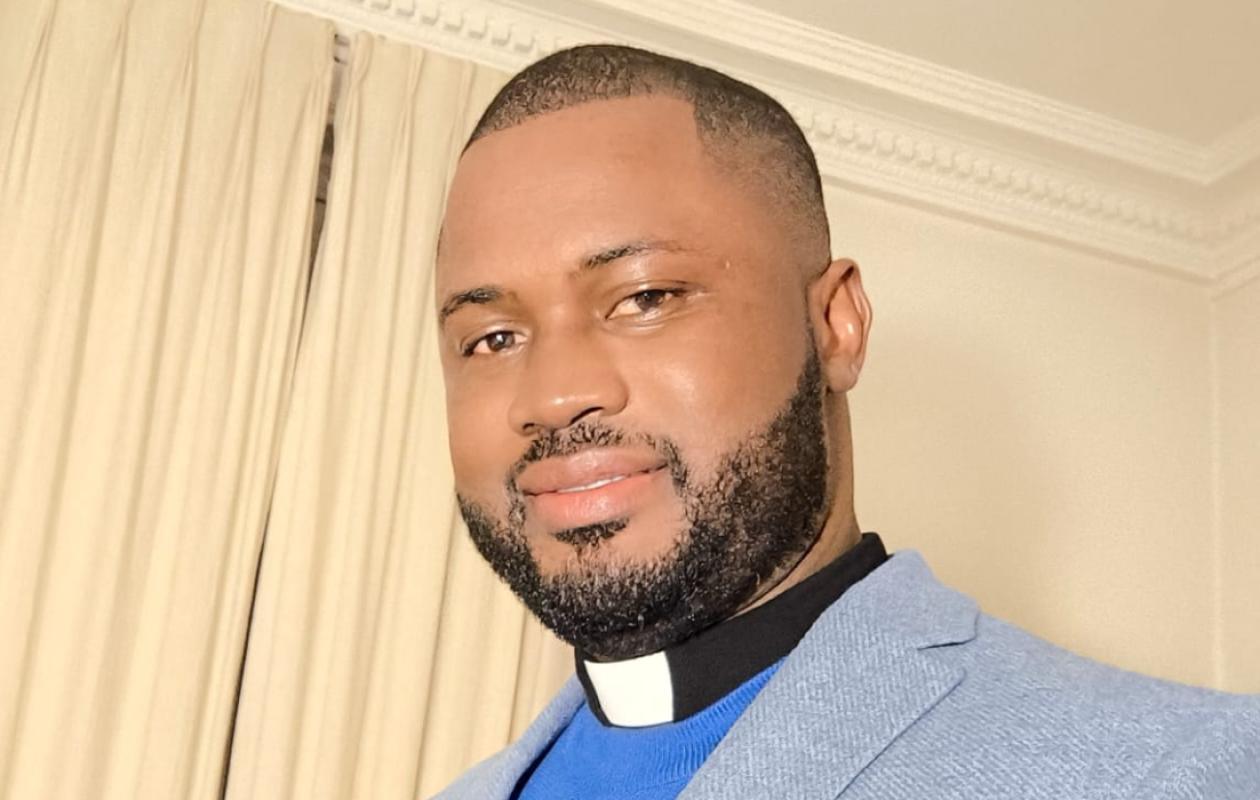
Tout savoir sur le catéchuménat avec l’Abbé Jacques Mendy, Secrétaire national de la catéchèse
The catechumenate is a process of formation and preparation for Christian life for adults who wish to convert to Christianity or deepen their faith. This path of discovery and spiritual growth, which lasts several months or years and unfolds in several stages, allows catechumens to better understand the teachings of Jesus Christ, prepare to receive the sacraments of Christian initiation, and engage in the life of the Church. In this interview, Father Jacques Mendy, National Secretary for Catechesis in Senegal, explains the process and its various stages.
Many people hear about the catechumenate, but what is the catechumenate?
First and foremost, we wish to clarify that the catechumenate is not a make-up session for those who were not baptized as babies. It is important to note that the catechumenate is an implementation of Christian initiation, providing the time, places, spaces, and relationships that will allow initiation to introduce catechumens to the faith. […]
The catechumenate is also a place of learning. People allow themselves to be guided and transformed by the path of experience that the Church offers them to lead them to the Christian mystery.
The catechumenate can be defined as a process of integral formation aimed at the maturation of faith. And to properly accompany catechumens, there is an essential document: the Rite of Christian Initiation of Adults (RCIA).
What are the steps to follow to become a catechumen?
To express their desire to begin their catechumenal journey, individuals can contact the parish priest, the catechesis chaplain, the catechist coordinator, or the leader of their Basic Ecclesial Community (BEC). They can also register at the parish office or with another person responsible for this task.
From what age is a child considered to be a catechumen?
The catechumenate for school-aged children concerns children who have not been baptized by the age of seven. This process is similar to that of adults, but with simplified celebrations adapted to their age. It is spread over three years with intermediate stages and celebrations.
Do you have any figures showing the evolution of the catechumenate in Senegal?
Currently, we do not have official figures showing the progress of the catechumenate in Senegal. However, we note that each year, there are parishes where many catechumens are baptized. For example, we can cite Saint Paul of Grand-Yoff (Archdiocese of Dakar) and Our Lady of the Poor of Tilène (Diocese of Ziguinchor). According to our information, this year, these two parishes will baptize 110 and 161 catechumens, respectively.
What are the objectives of the catechumenate in the mission of the Catholic Church?
Like catechesis in general, the goal of the catechumenate is to bring someone not only into contact, but into communion, into intimacy with Jesus Christ. It aims to form people who know Jesus Christ and his Gospel of liberating salvation, who experience a profound encounter with him, and who choose his way of life… (Cf. Directory for Catechesis, n. 75).
What is the catechumenate process, and how long does it last?
The catechumenate journey comprises liturgical phases and stages. There are four phases: the time of initial evangelization (pre-catechumenate), the time of the catechumenate (an extended period of learning the Christian life), the time of purification and illumination (during Lent), and the time of mystagogy (during Eastertide). It should be noted that, according to the new Directory for Catechesis, mystagogy is not limited to Eastertide. It should be experienced throughout the entire catechumenal journey, "accompanying the celebrated rites with catechetical words that foster their understanding and their integration into the lives of those being catechized."
As for the liturgical stages, there are three of them: entry into the catechumenate, the decisive call (celebrated on the 1st Sunday of Lent) and the celebration of the sacraments of Christian initiation.
According to the Rite of Christian Initiation of Adults (RCIA 104):
The duration of the catechumenate depends on God's grace, the personal participation of each catechumen, and the support provided by the community, as well as other factors such as the organization of the catechumenate, the number of catechists, deacons, and priests, and the availability of access to and accommodation at the catechumenate location. Nothing can be determined in advance: it is the bishop's responsibility to set the duration and oversee the catechumenate. Bishops' Conferences may then provide more specific guidelines based on the individuals and circumstances of each country.
In Senegal, the catechumenate normally lasts three years.
Why does the Church take so much time to prepare?
The length of this journey reflects the importance the Church places on the maturity of the faithful's faith. It takes the necessary time to accompany those who wish to be initiated into the Christian life. This initiation does not end with the sacraments, nor does it end with the sacraments themselves. It is important to remember that "a sacrament is received so that one may live by it. The gift received itself opens up the Christian life as a path to be followed."
How does the formation of catechumens take place?
There are times for meeting and sharing around the themes proposed for each year. And the Decree on the Missionary Activity of the Church could help us better understand the meaning of the catechumenal process. Indeed, it specifies that: "The catechumenate is not simply an exposition of dogmas and precepts, but a formation in the integral Christian life, and an apprenticeship conducted in the appropriate manner—a formation and apprenticeship by which the disciples are united to Christ their master. Catechumens must therefore be properly initiated into the mystery of salvation and the practice of evangelical morals, and introduced, through sacred rites celebrated at successive times, into the life of faith, liturgy, and charity of the People of God."
Baptism and communion often take place at the Easter Vigil. Why this date? Is there a particular reason?
The choice of the Easter Vigil is linked to the fact that "in the catechumenate, everything is oriented towards the mystery of the passion, death, and resurrection of Christ." This means that the catechumenate has a Paschal character. The Easter Vigil is therefore the normal time for the celebration of the sacraments of Christian initiation (Baptism, Confirmation, and Eucharist). And the ritual (RCIA 43) clearly states this regarding these sacraments: "Except where necessary, they are not to be celebrated outside this time [Easter Vigil]." It is therefore for pastoral reasons that the celebration of Confirmation is sometimes postponed until Pentecost.
And how does the Catholic community support catechumens?
It should be noted that the community plays an irreplaceable role, insofar as "the catechumenate is a process that takes place within a concrete community, which experiences the communion given by God and is therefore aware of its responsibility in proclaiming the faith." The community accompanies catechumens through prayer, but also through catechists. This community support is most visible through the role of their sponsors throughout their journey and even beyond.






















Commentaires (9)
Participer à la Discussion
Règles de la communauté
💡 Astuce : Utilisez des emojis depuis votre téléphone ou le module emoji ci-dessous. Cliquez sur GIF pour ajouter un GIF animé. Collez un lien X/Twitter, TikTok ou Instagram pour l'afficher automatiquement.
Se connecter
Commentez avec votre profil, votre photo, et soyez averti des réponses.