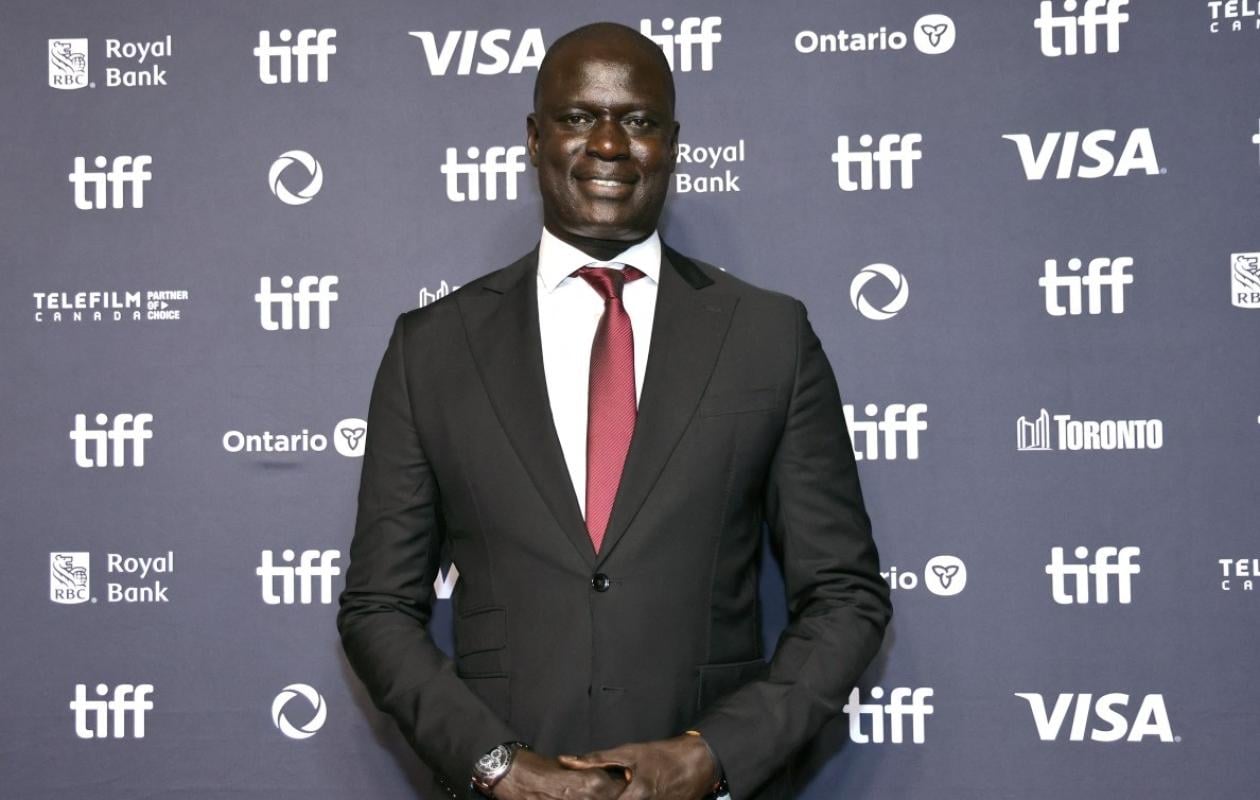
«Pas de BAL à Dakar cette année. Financement, réajustements…»: Amadou Gallo Fall dit tout
Accustomed to pulsating to the rhythm of the Basketball Africa League, the Dakar Arena is not on the schedule for season 6. This absence marks a break for Senegalese fans, but the league's management justifies it by citing economic imperatives and a profound reorganization of the model. In this interview with Seneweb, BAL President Amadou Gallo Fall discusses the adjustments and the league's projections.
Mr. President, you announced season 6 of the Basketball Africa League with two conferences this year. Can you give us the details of this edition?
We have indeed announced Season 6 of the Basketball Africa League, with conferences that will be played in two countries. We will return to South Africa to kick off with the Kalahari Conference from March 27 to April 5. Following that, the Sahara Conference will be held in Morocco from April 24 to May 3. The Finals 8 are scheduled to take place in Kigali, Rwanda, from May 22 to 31.
This sixth season is pivotal, as it follows a record-breaking fifth season. The quality of play and the on-field experience have continued to improve since the inaugural edition, held in a bubble in Kigali in 2021.
We are attracting more and more talent from around the world, but above all, we are discovering and retaining African talent. Jean-Jacques Boissy, MVP of season 5, is a perfect example. Trained at the NBA Academy, he progressed before our very eyes before becoming the league's best player last year.
This confirms our vision: to create a comprehensive pathway in Africa allowing young people to discover basketball, develop their skills, and reach the highest level without necessarily leaving the continent. Since the creation of the NBA Academy in 2017 and the launch of the BAL, these young players have had a truly professional environment in which to showcase their talent.
We can also mention Khaman Maluach, who came through the NBA Academy and was drafted into the NBA last year. The league is progressing, developing players capable of playing anywhere in the world, while also giving us the opportunity to retain some of them to strengthen the local ecosystem.
Why the switch to two conferences, as opposed to the three of the previous season?
Since the first season played at a single venue due to the pandemic, we have constantly adjusted our model. We moved to two conferences (Senegal and Egypt), then to three.
Today, we are looking for the most efficient model, both from a sporting and economic perspective. The BAL is part of the NBA ecosystem and operates with very high standards, which entail significant costs.
Operating in two countries rather than three allows for better control of expenses. But beyond the financial aspect, we are in a strategic phase: after five years, we will evolve the model towards a franchise system.
We want greater stability within the participating teams, to further professionalize the environment, and to demonstrate the league's economic viability. As a reminder, the BAL covers transportation and accommodation costs and provides recruitment grants to teams. This adjustment is therefore also pragmatic.
Is a lack of support the reason for Dakar's absence this season?
No. I am convinced that we will return to Senegal. The two-conference model has already been used in the past.
From a sporting perspective, two groups of six teams offer a more direct qualification: the top four from each group advance. This avoids complex comparisons between third-placed teams from different groups.
In Senegal, we have had private partners such as Wave, Woodside, and Air Senegal. The authorities are also involved. We are in ongoing discussions with the institutions. Senegal remains a key partner.
"Strong public and private support is needed, because the organization is logistically complex."
How did you experience the reactions to Senegal's absence this season?
We've received many messages. We'll miss the atmosphere of Dakar Arena. We worked with numerous local suppliers, created jobs, and generated economic value. But we also have to consider our financial realities. This doesn't change our relationship with Senegal. We remain connected and will come back stronger.
So what are the criteria for choosing host countries?
First, the infrastructure. The Dakar Arena is a world-class facility, as is the Kigali Arena in Rwanda. We have also played in Egypt at the Hassan Mostafa Indoor Sports Complex, in South Africa at the SunBet Arena, and in Morocco at the Moulay Abdellah Complex.
Next, strong public and private support is needed, as the organization is logistically demanding. The country's accessibility is also essential.
After five years of significant investment, we now need to demonstrate the financial sustainability of the project to investors.
"We want a longer-lasting, more stable league."
You mentioned a move towards franchises. Can you elaborate?
Currently, 12 teams from 12 countries participate in the BAL. Six national champions qualify automatically, and the others go through the FIBA qualifiers. This means that the teams can change every year. Only Petro de Luanda has participated in every edition.
This rotation makes it more difficult to retain fans and build lasting rivalries. With permanent franchises, clubs will be able to better structure themselves, recruit for the long term, and develop their brand.
We want a longer-lasting, more stable league, capable of attracting broadcasters and sponsors. The business world seeks predictability.
What is the cost of organizing an edition?
I won't give precise figures. But an independent study showed that the first four seasons generated approximately $250 million in economic impact and nearly 37,000 jobs on the continent.
Can we expect an increase in bonuses this year?
Every year we strive to improve conditions: the quality of play, supervision, and training for referees, coaches, and journalists. Our matches are broadcast in 214 countries and in 17 languages. This entails increasing costs. Interest is growing, but we still need a strong commitment from public and private partners.
You are also an ambassador for the Youth Olympic Games. What does this appointment represent?
It's a tremendous honor. Everywhere I go, I talk about it. The Youth Olympic Games represent a historic opportunity for Senegal and for Africa. I'm happy to see my brother Omar Sy also join the circle of ambassadors. And I'm sure there are many more.
I was talking about it with Akon during the Africa Cup of Nations. All these people are carrying the torch. I also talked about it with people like Boris Kodjoe, who have their sphere of influence, their network and many other friends, whether they are Afro-Brazilian or African-American, wherever they may be in the diaspora.
Many prominent figures are committed to supporting this event. The BAL will play its full role in contributing to this continental momentum.








Commentaires (8)
Participer à la Discussion
Règles de la communauté :
💡 Astuce : Utilisez des emojis depuis votre téléphone ou le module emoji ci-dessous. Cliquez sur GIF pour ajouter un GIF animé. Collez un lien X/Twitter, TikTok ou Instagram pour l'afficher automatiquement.