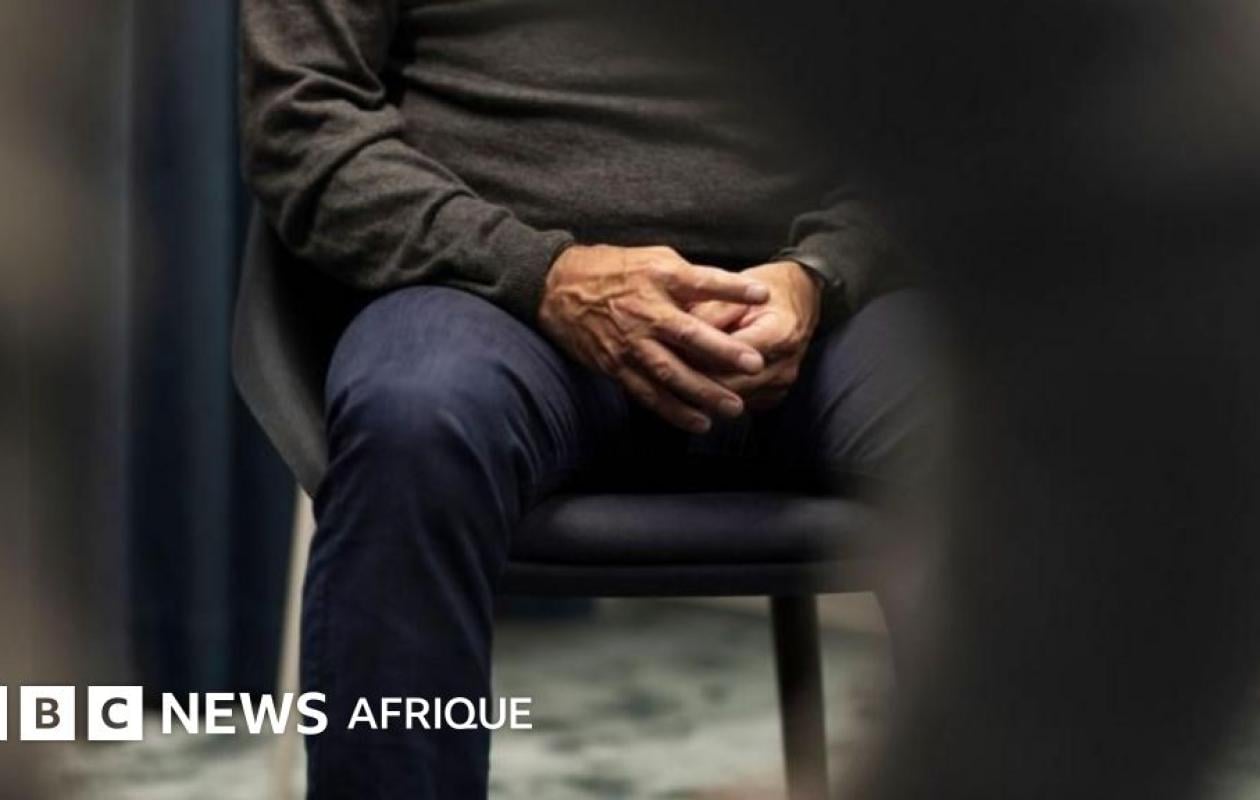
« Je me sens décapité » : pourquoi de plus en plus d'hommes se font amputer le pénis au Brésil ?
A wart on his penis prompted João*, 63, to consult a doctor for the first time in 2018.
"I started going to health centers to find out what it was, but all the doctors told me it was due to excess skin and prescribed me medication," he says.
Despite taking medication, the retiree noticed that the wart continued to grow.
He went back to see the specialists, who prescribed more medication and ordered further biopsies, that is, tissue samples from an organ for analysis.
"It was incredible, the tests showed nothing serious and the doctors kept prescribing me more and more medication. Nothing worked. He only learned what he had in 2023, when he was treated in a public hospital in São Paulo and sent to the São Paulo State Cancer Institute (ICESP), where he underwent another biopsy.
"It was a very unpleasant surprise for everyone at home, especially since I had to have part of my penis amputated. I feel decapitated," says João.
"It's a type of cancer that you can't talk about with people because they might make fun of you."
A survey by the Brazilian Society of Urology (SBU), based on statistics from the Ministry of Health, shows that the number of cases of this type has increased in Brazil.
Between 2013 and 2022, approximately 19,900 men were diagnosed with penile cancer, of whom 5,600 required amputation due to the severity of the disease. On average, this equates to slightly more than ten amputations per week.
According to the SBU, almost all cases of penis amputation recorded in the country are due to cancer, with cases of amputation due to other causes, such as accidents, being rare.
Since 2008, the number of penis amputations due to cancer has increased in Brazil.
There were 411 that year, and there were 573 from January to November of last year, almost 40% more.
"Unfortunately, due to shame or lack of access to health services, it is very common for men to resort to treatments recommended by acquaintances or to these 'ointments' from the pharmacist," explains Diogo Abreu, a doctor in the urology section of the National Institute of Urology.
"This delays early diagnosis and harms treatment outcomes."
A late diagnosis increases the risk of needing to amputate the penis, as the passage of time without adequate treatment increases the severity of the disease.
This also increases the risk of death from the disease, which averages 0.29 cases per 100,000 inhabitants.
Brazil is the third country in the world where the highest number of men die from penile cancer.
To give you an idea, the SBU's latest global survey on deaths from the disease, conducted in 2020, shows Brazil (539 deaths) behind only India (4,760 deaths) and China (1,565 deaths).
`
"The huge deficit of quality education in Brazil creates great difficulties in accessing information, including basic hygiene habits to avoid disease," said Maurício Cordeiro, coordinator of the uro-oncology department of the Brazilian Society of Urology (SBU).
When asked about the high incidence of penile cancer compared to other countries in the world, the Ministry of Health stated that it was working on awareness campaigns about the disease.
The ministry also stated that the current administration has resumed investments in health policies and cancer patient care through the radiotherapy expansion plan.
"In the first stage, 92 radiotherapy solutions have been planned - which include, in addition to the work, linear accelerators - with an investment of 575 million reais," the ministry said.
"The second stage, planned in the New Growth Acceleration Program (PAC), has a total investment of 605 million BRL, of which 205 million BRL for the completion of the work of the first phase and 400 million BRL for the feasibility of 40 new radiotherapy solutions.
The ministry also highlighted that the Unified Health System (SUS) offers comprehensive and free treatment to cancer patients (read more below).
Experts interviewed by BBC News Brasil point out that unlike other types of cancer, penile cancer is one of the most preventable.
Indeed, the disease is directly linked to poverty and the lack of good socio-economic conditions.
"Although it is a rare disease in rich and developed countries, penile cancer has a high incidence (of new cases) in poor countries," explains Abreu, from Inca.
In Brazil, studies show that the North and Northeast regions, where poverty rates are highest, have the highest incidence of the disease, while the wealthier South has rates almost similar to those of developed countries, with few cases.
"Unfortunately, Brazil is still a country with a huge deficit in quality education, which creates great difficulties in accessing information, including on hygiene habits," stressed Maurício Cordeiro, coordinator of the SBU's Uro-oncology Department.
"Good hygiene contributes to the prevention of penile cancer and to the early diagnosis of the disease, which is essential for treatment without resorting to more radical procedures, such as amputation," he added.
As an example, Marcus Vinicius Baptista Queiroz, professor of urology at the Federal University of Pará (UFPA), cites research conducted by four universities and research centers in Brazil, published in 2018.
The study identified Maranhão – the poorest state in Brazil – as the place with the highest proportion of penile tumors in the world: about 6.1 cases per 100,000 inhabitants.
"That's why it's important that men have access to advice and correction of factors that can lead to the disease, such as untreated phimosis," explains Queiroz.
Phimosis is characterized by an excess of skin covering the penis, preventing the head, also called the glans, from being exposed.
This is a more common condition when you are still a baby, but it can also develop in adulthood, caused by an infection or trauma to the area.
As a general rule, men with phimosis have more difficulty cleaning their penis because of the foreskin – an excess of skin.
This difficulty in cleaning the penis, as the organ becomes more moist and warm, promotes the emergence of fungi which, in the long term, increase the risk of penile cancer.
In Brazil, penile cancer primarily affects men over 50.
"Any penile wound that does not heal should be evaluated by a healthcare professional and, preferably, a urologist," recommends Diogo Abreu.
Among the warning signs, the Inca physician cites:
Changes in penis color;
Skin thickening;
Nodules or ulcers that do not heal;
Wounds with bad odor or secretions.
Experts interviewed by BBC News Brasil emphasize that a few simple actions can help prevent the disease.
Washing the penis daily with soap and water, fully exposing the glans in the case of uncircumcised men, and always after sexual contact, helps reduce the risk of contracting the disease, explains Abreu.
"Furthermore, it is important to stop smoking and always use a condom during any type of sexual contact to prevent HPV and other sexually transmitted infections," the doctor emphasizes.
Maurício Cordeiro, coordinator of the SBU's Uro-oncology Department, also emphasizes the importance of HPV vaccination (available at the SUS for the population aged 9 to 14 years and immunocompromised up to 45 years) as an important tool to prevent the disease.
"Currently, we have two types of HPV vaccines: the quadrivalent (HPV4), which is made available by the SUS and covers most of the oncogenic types, those that predispose to cancer, and the ninevalent (HPV9), which covers more subtypes, now available on the private network."
"Both are composed of viral particles prepared using recombinant DNA technology, which creates one of the proteins that make up the HPV capsid. These particles are capable of inducing the formation of neutralizing antibodies at high titers, sufficient to protect those who receive the virus and the vaccine," Cordeiro explained.
Once penile cancer is diagnosed, treatment involves removing the lesion or completely removing the organ, as well as removing lymph nodes from the pelvis, groin, or inside of the abdomen, according to the Ministry of Health.
Radiotherapy and chemotherapy may also be recommended to reduce the tumor or in non-surgical cases.
When diagnosed at an early stage, penile cancer has a high cure rate, the ministry stressed.
"In the early stages, we can treat it by removing only the skin, avoiding removing the penis," explains Roni de Carvalho Fernandes, director of the Escola Superior de Urologia.
However, according to the Ministry of Health, more than half of patients wait up to a year after the first injuries to consult a doctor, which can lead to complications of the disease, allowing it to spread to other parts of the body.
Penile cancer accounts for 2% of all types of cancer that affect men.
At the request of BBC News Brasil, urologist and communications director of the Brazilian Society of Urology, Karin Anzolch, clarified the main doubts men have about ways to prevent penile cancer.
How many times a day should you wash your penis and what is the correct method?
It depends a little on the location, whether it's hot or cold, humid or dry, on age, type of physical activity, whether someone sweats a lot or urinates frequently, whether they have a foreskin or not, whether they wear poorly ventilated clothing, and even if they have had local infections in the past.
But, in general, a thorough washing with soap and water should be done at least once a day, pulling the foreskin back and removing the smegma residue, which is a thick, whitish secretion produced by the penis.
The water should not be too hot, and abrasive substances and germ-killing soaps should be avoided. Always opt for neutral options, such as glycerin.
Furthermore, boys need to learn from a young age how to clean properly in order to integrate it into their habits.
Why is it important to let the penis area dry after showering?
Humidity, combined with body or ambient heat, increases the risk of the proliferation of fungi and bacteria.
After urinating, is it sufficient to shake the penis?
Simply by shaking or squeezing the penis, drops of urine eventually remain, especially in men who have a foreskin, creating a bad odor and increasing the risk of contamination, irritation, and infections.
Ideally, after urinating, you should wash or dry yourself with toilet paper.
What should you do to clean your penis during sexual intercourse?
In addition to using a condom, it is important to practice proper hygiene, eliminating secretions and any chemical residue.
Is blood in the urine a sign of penile cancer?
Unless the tumor is advanced and has already invaded the urethra or urinary tract, this is not a common symptom.
But this should always be investigated, as it can signal other serious illnesses, such as bladder and kidney cancer.
What can cause penile cancer?
Penile cancer is also linked to smoking, HIV infection, and the presence of phimosis, which makes hygiene and smegma removal difficult, facilitating infection by fungi and bacteria.
However, one of the main causes is also infection with the human papillomavirus (HPV).
Data from Cancer Research UK shows that approximately 60% of cases of this type of cancer are linked to an HPV infection.
*The interviewee's name has been changed to protect their identity.





















Commentaires (4)
Participer à la Discussion
Règles de la communauté :
💡 Astuce : Utilisez des emojis depuis votre téléphone ou le module emoji ci-dessous. Cliquez sur GIF pour ajouter un GIF animé. Collez un lien X/Twitter, TikTok ou Instagram pour l'afficher automatiquement.